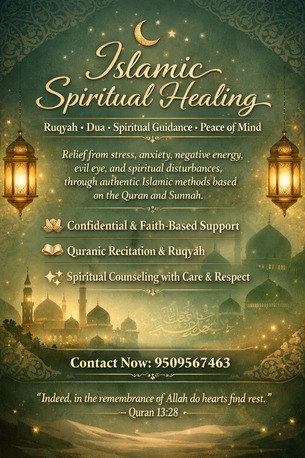
Discover how Islamic spiritual healing helps with stress, anxiety, emotional pain, and spiritual imbalance through Quranic guidance, dua, ruqyah, and faith-based practices.
Life can feel overwhelming at times. Stress, emotional pain, anxiety, negative thoughts, and personal struggles can affect both the heart and mind. In Islam, healing is not only physical—it is also spiritual. Islamic spiritual healing focuses on reconnecting with Allah, strengthening faith, and finding peace through Quranic guidance and prophetic practices.
For many Muslims around the world, spiritual healing provides comfort, clarity, and emotional balance during difficult times.
What Is Islamic Spiritual Healing?
Islamic spiritual healing is a faith-centered approach that uses Quranic verses, dua (supplication), dhikr (remembrance of Allah), and ruqyah to support emotional and spiritual wellbeing. It is based on the belief that true healing comes from Allah and that the Quran is a source of mercy and guidance.
This practice may help people dealing with:
Anxiety and stress
Sadness or emotional heaviness
Fear and negative thoughts
Relationship difficulties
Spiritual disconnection
Lack of inner peace
Islamic healing does not replace medical care. Instead, many people use it alongside professional support to strengthen their emotional and spiritual health.
The Role of the Quran in Healing
The Quran is considered a source of healing for the heart and soul. Reciting and listening to Quranic verses can bring calmness, hope, and spiritual comfort.
Some commonly recited verses for spiritual healing include:
Surah Al-Fatihah
Ayat al-Kursi
Surah Al-Ikhlas
Surah Al-Falaq
Surah An-Nas
These verses are often read during ruqyah, a form of Islamic spiritual treatment based on authentic Quranic recitation and supplication.
What Is Ruqyah in Islam?
Ruqyah is the recitation of Quranic verses and authentic duas for protection and healing. It is a well-known Islamic practice used for spiritual support and seeking Allah’s help during hardship.
A person may perform ruqyah for themselves or seek help from a trusted and knowledgeable practitioner who follows authentic Islamic teachings.
Common Elements of Ruqyah
Quran recitation
Daily adhkar (remembrance)
Dua for protection and healing
Strengthening trust in Allah
Maintaining regular prayers
Many people report feeling emotionally lighter, calmer, and spiritually stronger after consistent spiritual practices.
Benefits of Islamic Spiritual Healing
Islamic spiritual healing focuses on restoring balance between the heart, mind, and soul. While every person’s experience is different, many seek spiritual healing for:
Emotional Peace
Regular prayer, dhikr, and Quran recitation can help calm the mind and reduce emotional tension.
Stronger Connection With Allah
Spiritual healing encourages deeper faith, patience, and reliance on Allah during difficult times.
Protection From Negativity
Islamic teachings emphasize spiritual protection through daily remembrance and supplication.
Inner Strength During Hardship
Faith-based healing helps many people cope with grief, uncertainty, and emotional struggles with greater resilience.
Daily Islamic Practices for Spiritual Wellness
Simple daily habits can support spiritual and emotional wellbeing.
1. Read Quran Daily
Even a few verses each day can bring comfort and peace.
2. Maintain the Five Daily Prayers
Salah strengthens discipline, faith, and spiritual connection.
3. Practice Morning and Evening Adhkar
These supplications are widely recommended for protection and inner calm.
4. Make Dua Regularly
Speaking to Allah sincerely can ease emotional burdens and create hope.
5. Avoid Negative Influences
Creating a peaceful environment supports spiritual clarity and emotional balance.
Finding Trusted Islamic Spiritual Healing Support
If someone chooses to seek guidance from a spiritual healer or ruqyah practitioner, it is important to choose someone who follows authentic Islamic teachings and avoids superstition, fear-based practices, or un-Islamic methods.
A trustworthy practitioner should:
Use only Quran and authentic duas
Encourage prayer and reliance on Allah
Avoid exaggerated claims
Respect privacy and dignity
Promote balance between faith and practical support
Final Thoughts
Islamic spiritual healing offers a compassionate and faith-based path toward inner peace, emotional strength, and spiritual wellbeing. Through Quran recitation, prayer, ruqyah, and remembrance of Allah, many people find comfort during life’s most difficult moments.
Healing is a journey, and in Islam, hope, patience, and trust in Allah remain at the heart of that journey. # https://getduaforlove.com/