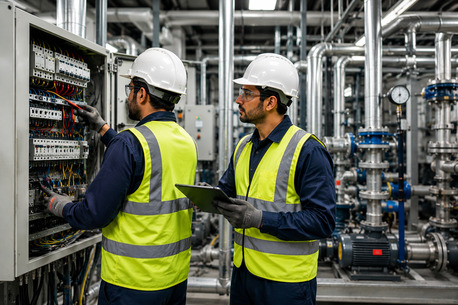
Dubai’s rapid urban development has transformed the city into one of the world’s most technologically advanced metropolitan centers. Much of this success depends on the technical expertise of electrical and mechanical contractors who design, install, and maintain the systems that ensure the smooth functioning of industries and buildings. Electrical contracting in Dubai is thus crucial for proper working and safety.
As construction becomes more technologically advanced, contractors are obligated to integrate engineering accuracy with sustainability. They have gone beyond their previous obligations of installing electrical wiring and providing mechanical assistance into automation, energy control, and building systems integration.
Understanding Electrical and Mechanical Contracting
The term "electrical and mechanical contracting" is used when designing, installing, operating, and maintaining the systems that enable buildings and industries to operate effectively. These systems are usually integrated using MEP (mechanical, electrical, and plumbing) systems.
Common systems in electrical work usually consist of:
Distribution of power
Lighting systems
Fire alarm systems
Generator backups
Control panels
Low-voltage systems
On the other hand, mechanical works usually incorporate the following:
HVAC systems
Ventilation systems
Industrial piping systems
Water systems
Cooling systems
Pumping stations
An electrical and mechanical contractor must ensure that the two sets of systems interact smoothly without any operational conflict. It is even more crucial in Dubai due to the nature of projects undertaken there.
Reasons Why Electrical Contracting in Dubai Needs Specialized Skills
The climate conditions, along with the high quality of the required infrastructure, pose particular challenges in Dubai. Given Dubai's extreme climate, substantial energy demands, and rigorous government regulations, engineering projects must be meticulously designed and implemented to achieve the highest standards of reliability.
Several issues influence the process of electrical contracting in Dubai:
Weather
Extreme temperatures can reduce the performance and lifespan of electrical equipment. The use of thermally resistant materials is highly recommended.
Large Energy Consumption
Extremely robust and dependable systems are vital to guarantee the uninterrupted and stable operation of facilities and their equipment.
Government Standards
Contractors are required to comply with the technical regulations and safety standards established by DEWA, Dubai Municipality, and other governing authorities.
Use of Smart Solutions
Technological advancement has increased the adoption of smart systems for lighting, climate control, and safety monitoring.
All the mentioned points prove that electrical contracting in Dubai requires special skills.
Major Stages in Electrical and Mechanical Project Execution
Generally, large-scale construction projects are designed according to an established engineering process. The contractor works with the consultant, architect, and project manager at every stage.
1. Design and Planning
The initial stage involves evaluating the structural requirements, developing the design, and analyzing both electrical and mechanical load demands.
Key tasks to be done include:
Electrical loads assessment
HVAC sizing computations
Cable routing design
Safety evaluation
Machinery selection
Industry-standard software such as AutoCAD and Revit is extensively utilized during this phase to streamline design and planning processes.
2. Materials Sourcing
After the design is completed, the contractor buys the electrical and mechanical equipment in accordance with project requirements.
The materials used may include the following:
Switchgear systems
Transformers
Ventilation systems
Pumps and motors
Fire-resistant wires
Automation control units
3. Installation and Coordination
The installation process needs the coordination of many engineering disciplines. Electrical and mechanical systems must be carefully coordinated with architectural and structural components to ensure smooth project execution.
Some typical tasks that fall under installation include:
Panel board installation
HVAC duct installation
Lighting system installation
Pump installation
Cable tray installation
Generator installation
4. Testing and Commissioning
Contractors rigorously test all systems before handover to verify optimal functionality and compliance with project standards.
Some tests involved in testing systems include:
Voltage and insulation testing
HVAC airflow balancing
Functionality testing of fire alarms
Synchronization of generators
Verification of the automation system
Effects of Technology on Current Contracting Trends
There is a growing reliance by the construction industry in Dubai on engineering and automation technology. Contractors are adapting to these technological advancements by adopting project management and monitoring mechanisms.
Building Information Modeling (BIM)
BIM technology enables engineers to visualize and coordinate electrical and mechanical systems before construction begins, reducing design conflicts and installation errors.
Internet of Things (IoT)
IoT technology enables real-time monitoring of power consumption, operational status, and equipment maintenance, enhancing efficiency and reliability.
Artificial Intelligence in Maintenance
AI-powered predictive maintenance helps identify equipment issues before failures occur, reducing downtime and improving operational efficiency.
Modern Energy-Efficient Systems
For modern contractors, key priorities include:
LED lighting systems
Sensors
Variable speed drives
Solar energy-friendly infrastructure
Energy monitoring systems
These initiatives support Dubai’s long-term sustainability objectives.
Electrical and Mechanical Contracting Safety Standards
Maintaining safety standards is one of the most important responsibilities of electrical and mechanical contractors.
Some major safety practices are as follows:
Correct grounding and earthing installations
Installation of fire-rated cables
Insulation testing
Ventilation safety measures
Power backup systems
Regular system checks
Safety training programs equip technicians with the knowledge and skills to work safely in hazardous environments.
Workforce Development and Technical Training
With the growing complexity of infrastructural projects, there is an increased need for highly qualified technical professionals. Various training organizations in the UAE have now developed specialized courses for MEP engineering and electrical work.
Some of the topics that are covered in such training sessions include:
Drafting of electrical drawings
Design concepts of HVAC
Automation in industries