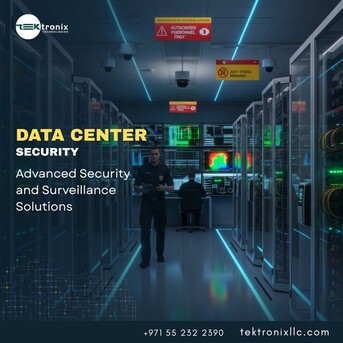
Whether you are a CIO evaluating a colocation partner, an IT manager responsible for on-premises infrastructure, or a compliance officer navigating PDPL, PDPDL, and NIST CSF requirements, this guide delivers the authoritative, practitioner-grade insight you need.
1. Why Data Center Security Is a GCC Board-Level Priority
The GCC is home to some of the world’s fastest-growing digital economies. Bahrain’s FinTech Bay, Saudi Arabia’s NEOM smart city, the UAE’s cloud-first government, and Qatar’s World Cup digital legacy have collectively attracted billions in technology investment. This growth creates an expanding attack surface that adversaries — state-sponsored, criminal, and hacktivist — are actively exploiting.
Key regional risk drivers include:
• Geopolitical exposure: The GCC sits at the crossroads of global energy and trade, making data assets a high-value target.
• Regulatory acceleration: Bahrain’s PDPDL, Saudi Arabia’s PDPL, and UAE Federal Decree Law 45/2021 mandate documented security controls, breach notification windows, and localised data residency.
• Supply chain complexity: Hyper-connected ecosystems increase the risk of third-party intrusion vectors.
• Talent gap: Cybersecurity professionals remain scarce across the region, placing a premium on technology-driven, automated defences.
Organisations that treat Data Center Security GCC as a compliance checkbox rather than a resilience strategy consistently suffer higher breach costs, longer recovery times, and reputational damage that erodes investor confidence.
2. The Six-Layer Security Model: An Industry-Standard Framework
Leading analysts and the Uptime Institute endorse a concentric, defence-in-depth approach. Each layer compensates for weaknesses in adjacent layers, ensuring that a failure in one zone does not cascade into a full compromise. The six layers are:
1. Perimeter Security — Physical boundary protection
2. Facility Controls — Building-level hardening
3. Data Center Access Control — Identity-based entry management
4. Data Center Surveillance — Continuous visual monitoring
5. Data Center Intrusion Detection — Automated threat alerting
6. Data Center Firewalls & Cybersecurity — Network-layer enforcement
Let’s examine each layer in practitioner-level detail.
3. Physical Perimeter and Facility Hardening
The first two layers establish the secure zone before any digital control is relevant. A data center facility in Bahrain or the wider GCC must account for the regional threat landscape: desert climate extremes, seismic micro-zones, and the possibility of civil unrest in neighbouring regions.
3.1 Perimeter Controls
• Reinforced barriers: Anti-ram bollards, concrete blast walls, and vehicle exclusion zones around server halls.
• Mantraps and airlocks: Sequential door entry points that prevent tailgating — a primary vector for insider-threat actors.
• Perimeter lighting: High-lumen LED arrays with motion-triggered intensification eliminate shadow zones.
• Security personnel: Trained guards conducting randomised patrol schedules, verified against log records to prevent routine exploitation.
3.2 Environmental Hardening
• Raised floors and hot/cold aisle containment: Prevent accidental or deliberate tampering with cable infrastructure.
• Water and fire suppression: Dual-interlock pre-action systems that reduce false discharge risk while maintaining rapid suppression capability.
• Redundant power and cooling: N+1 or 2N UPS and generator configurations ensure continuity during grid disruptions common in emerging GCC markets.
Conclusion
The digital ambitions of Bahrain and the GCC depend entirely on the integrity of the infrastructure that underpins them. Data Center Security is not a one-time project but a continuous programme encompassing physical hardening, identity-based access governance, AI-powered surveillance, layered intrusion detection, next-generation firewall enforcement, end-to-end encryption, and proactive threat detection.
Organisations that invest in this multi-dimensional framework do not merely protect data — they protect business continuity, regulatory standing, customer trust, and competitive position. As the threat landscape evolves and regional regulators raise the compliance bar, those with mature, tested security programmes will lead, while those relying on legacy controls will face mounting exposure.
For more information contact us on:
Tektronix Technology Systems Dubai-Head Office
[email protected]
+971 55 232 2390
Office No.1E1 Hamarain Center 132 Abu Baker Al Siddique Rd – Deira – Dubai P.O. Box 85955