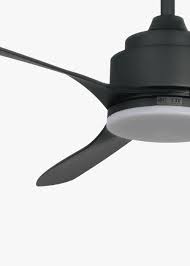
How Ceiling Fans Create Airflow
Unlike air conditioners, ceiling fans do not actually lower the temperature of a room. Instead, they create airflow that makes people feel cooler. This process works through the movement of air generated by rotating blades.
As the blades spin, they push air downward, creating a breeze. This moving air increases the rate of evaporation from the skin, helping the body release heat more efficiently. The result is the well-known “wind chill effect,” which can make a room feel several degrees cooler even though the actual air temperature remains the same.
The Importance of Blade Design
The effectiveness of a ceiling fan depends heavily on its blade design. Factors such as blade pitch, length, and shape influence how much air the fan can move.
Blade Pitch
Blade pitch refers to the angle of the blades. A steeper pitch allows the fan to move more air with each rotation. Most efficient ceiling fans have a blade pitch between 12 and 15 degrees.
Phone - +65 64456144
Email - [email protected]
Address - 512 Chai Chee Lane #02-09/08/07 S469028
Visit - https://acornceilingfan.com/