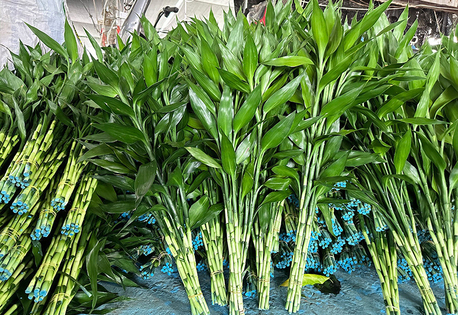
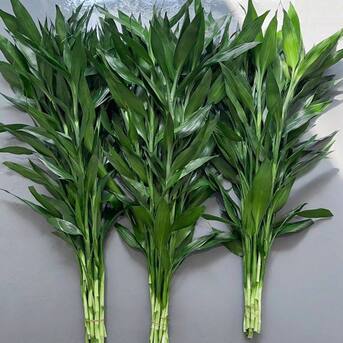
Dracaena sanderiana is celebrated across the world for its clean lines, striking geometric patterns, and unmatched resilience as an indoor companion. While uniform, straight stems offer a beautiful minimalist aesthetic, the spiral form of this famous plant brings an entirely new level of artistic elegance into a room. Often called spiral lucky bamboo, these twisting living sculptures feature rhythmic, coiled stems that look like they were pulled directly from a high-end botanical gallery.
Many people assuming they see these dramatic twists for the first time believe that the stems are bent by hand using heavy wires or internal clamps. In reality, the shaping process is far more elegant, relying entirely on the natural biology of the plant and its instinctual relationship with light. Understanding the mechanics behind how these curls are formed, and learning how to preserve that beautiful shape once you bring the plant into your own home, allows you to enjoy a dynamic piece of living art for years to come.
The Science of Plant Movement: Phototropism Explained
To appreciate how a spiral lucky bamboo is created, you have to understand a fundamental biological concept known as phototropism. This is the natural tendency of a plant to grow toward its primary light source. In a dense tropical forest, plants that run out of energy beneath a shaded canopy will push their new shoots aggressively toward any gap in the leaves where sunlight streams through.
The plant achieves this directional growth using natural growth hormones called auxins. When light hits one side of a green stem, the auxins migrate to the shaded side of the stalk. These hormones cause the cells on the darker side to elongate and stretch much faster than the cells on the illuminated side. As a result of this uneven cell stretching, the stem naturally bends and curves toward the light.
Professional growers take advantage of this natural survival mechanism to train the stalks into beautiful, intricate coils. By systematically altering the direction of the light over many months, the straight stem is gently coaxed into a uniform, rolling spiral without ever forcing or stressing the structural tissues of the stalk.
The Step-by-Step Training Process in the Nursery
Training a straight stem into a perfect spiral requires incredible patience, consistency, and a deep understanding of agricultural timing. It is a slow, meditative process that cannot be rushed, which is why premium curled stalks are so highly valued by collectors and interior designers.
The training typically starts with a healthy, vigorous straight stalk that has established a robust root system. The plant is placed inside a specialized, light-controlled environment, often using an open-front box or a dark shroud that completely blocks out ambient light from all directions except for one single opening or window at the top.
As the plant searches for light, the top shoot naturally grows directly toward that single opening. Once the shoot has grown an inch or two in that direction, the grower gently rotates the container by a few degrees. Attracted to the slightly shifted light source, the new growth curves along with the movement.
By rotating the pot a tiny bit every few weeks, the straight upward growth is converted into a continuous, sweeping curve. To complete a single, full three-hundred-and-sixty-degree spiral loop, a grower must carefully monitor and turn the plant for up to a year. Multiple loops require even more time and dedication, making each finished spiral a true testament to horticultural craftsmanship.
Selecting a Premium Spiral Specimen
When shopping for a spiral arrangement, choosing a high-quality specimen ensures that the plant transitions smoothly into your home and retains its striking form without declining.
First, examine the thickness and consistency of the main stem. A top-tier spiral should feature a thick, rigid stalk that maintains a uniform width throughout the entire length of the twist. Avoid stalks that look thick at the base but become thin, weak, and thread-like through the curls, as this indicates the plant was forced to grow too quickly under insufficient light during its final production stages.
The color should be a deep, uniform jade green from the bottom roots all the way up to the leafy crown. Pass over any stalks showing signs of a pale, washed-out yellow hue or a dull gray cast along the stem. The coils themselves should be smooth, symmetrical, and free of sharp creases, cracks, or scars, which can happen if a stem is bent mechanically rather than guided naturally by light. Finally, check the top cut of the stalk; it should be clean, flat, and sealed with a neat layer of protective green wax to keep moisture inside and prevent fungal airborne spores from entering the inner tissues.
Maintaining the Spiral Shape at Home
Once you have brought your beautiful spiral bamboo plant home, the next goal is preserving its structural integrity. While you do not necessarily need to continue twisting it to create new loops, you do need to manage your indoor environment so the existing coils stay crisp and defined.
Balancing Indoor Illumination
The most crucial factor in maintaining the shape is light placement. If you place your spiral arrangement in a room where the light is completely uniform and diffused from all angles, or directly beneath a bright overhead ceiling fixture, the plant will stop curving. The new growth emerging from the top center of the spiral will start growing straight up toward the ceiling, creating an awkward, top-heavy look that ruins the balance of the original design.
To prevent this, place the container in a spot that receives strong, directional, indirect light, such as a few feet away from an east or west-facing window. To keep the top growth centered and neat, rotate the vase by ninety degrees once a week when you perform your regular maintenance. This weekly rotation ensures that the light hits all sides of the top shoot evenly over time, preventing the new leaves from stretching excessively toward one side of the room.