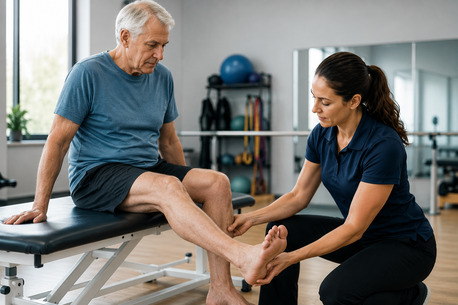
Peripheral neuropathy affects millions of Americans, disrupting daily function, increasing fall risk, and significantly reducing quality of life. And yet, many neuropathy patients are told there's little that can be done beyond medication management. At our physical therapy clinic in Thousand Oaks, we believe—and see, every day—that there is far more that can be done.
Neuropathy is a clinical specialty at Reform PT. Physical therapy in Thousand Oaks at our clinic offers a structured, evidence-based approach to neuropathy rehabilitation that addresses symptoms, improves function, and helps patients reclaim mobility and confidence.
What Is Peripheral Neuropathy?
Peripheral neuropathy is damage or dysfunction of the peripheral nerves—the vast network of nerves outside the brain and spinal cord that carry signals between the body and the central nervous system. When these nerves are damaged, their ability to transmit signals accurately is disrupted—producing the characteristic symptoms of numbness, tingling, burning pain, muscle weakness, and loss of coordination.
Common causes include:
Diabetes—the leading cause of peripheral neuropathy worldwide
Chemotherapy-induced neuropathy—a frequent side effect of cancer treatment
Post-traumatic nerve injury—from accidents, fractures, or surgical complications
Autoimmune conditions—including lupus, rheumatoid arthritis, and Guillain-Barré syndrome
Vitamin deficiencies—particularly B12 and folate
Idiopathic neuropathy—where no clear cause is identified despite thorough investigation
Regardless of the cause, the functional consequences are similar—and physical therapy addresses them directly.
Why Neuropathy Increases Fall Risk
One of the most serious consequences of peripheral neuropathy is its impact on balance and fall prevention. Proprioception—the body's ability to sense its own position in space—relies heavily on sensory input from the feet. When neuropathy reduces or distorts that input, the brain receives inaccurate information about where the body is and how it's moving.
The result is instability, compensatory movement patterns, and a dramatically elevated fall risk. Falls in neuropathy patients frequently result in fractures and hospitalizations—with serious consequences, particularly for older adults. Addressing balance dysfunction is not optional in neuropathy rehabilitation—it is essential.
How Physical Therapy Treats Neuropathy
At our physical therapy clinic in Thousand Oaks, neuropathy rehabilitation is individualized, comprehensive, and focused on the functional outcomes that matter most to you.
Your treatment program may include:
Sensory retraining—progressive stimulation of the affected nerves and sensory pathways to improve the accuracy of sensory input and retrain the brain's processing of signals from the feet and hands
Balance and proprioceptive training—targeted exercises using balance boards, foam surfaces, and unstable platforms to challenge and improve postural stability despite reduced sensory input
Strengthening programs—addressing the muscle weakness that frequently accompanies neuropathy, particularly in the intrinsic foot muscles and lower leg, to improve functional stability
Manual therapy and soft tissue mobilization—reducing tissue restriction around affected nerves and improving circulation to support nerve health
Gait retraining—correcting compensatory walking patterns that develop as a result of neuropathy, reducing fall risk and improving efficiency of movement
Kinesiotaping—providing sensory feedback through the skin to partially compensate for reduced proprioceptive input from the feet
Pain management strategies—addressing the neuropathic pain that disrupts sleep, activity, and quality of life through movement, manual techniques, and education
Our PNF (Proprioceptive Neuromuscular Facilitation) certification is particularly valuable in neuropathy rehabilitation—using hands-on neuromuscular facilitation techniques to improve sensory-motor integration and restore more accurate, coordinated movement.
What to Expect from Neuropathy Rehab at Reform PT
Neuropathy rehabilitation requires patience and consistency—nerve recovery is gradual. But with structured, expert-guided physical therapy, most patients experience meaningful improvements in balance, strength, pain levels, and functional confidence.
We track your progress with objective balance and functional assessments at every stage—so you can see, in measurable terms, how your body is responding to treatment.
Why Thousand Oaks Patients Trust Reform PT for Neuropathy
Neuropathy is a stated clinical specialty at Reform Physical Therapy in Thousand Oaks—not a condition we treat occasionally alongside everything else. Our team brings deep, focused expertise to every neuropathy patient:
One-on-one care with a licensed therapist every session
Certifications in PNF, Kinesiotaping, Maitland joint mobilization, and Balance Rehabilitation
Specialist experience with diabetic, chemotherapy-induced, and post-traumatic neuropathy
Fall prevention programming integrated into every neuropathy treatment plan
18+ years treating Conejo Valley patients from 8 to 97
In-clinic and telehealth options for patients whose symptoms limit mobility
Two locations—Thousand Oaks and Camarillo
Take the First Step Toward Better Balance and Less Pain
Neuropathy doesn't have to mean a life of limitation. With the right rehabilitation, you can move more confidently, reduce your fall risk, and manage your symptoms more effectively than medication alone allows.
📞 (805) 383-0470
📧 [email protected]
📍 850 Hampshire Rd A, Thousand Oaks, CA 91361
Book your appointment online—and discover what specialist neuropathy care at Reform PT can do for you.