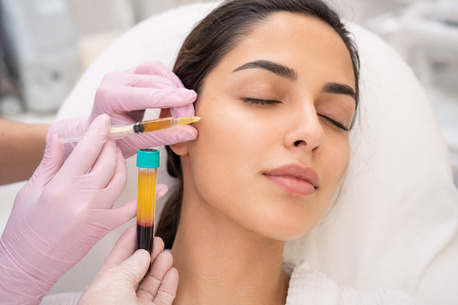
In recent years, aesthetic medicine has evolved to emphasize a deeper understanding of skin health. The focus has shifted from merely correcting surface-level issues to how the skin naturally repairs and renews itself. This change represents a growing preference for treatments that work in harmony with the body’s biological systems, rather than against them.
PRP for the face has received significant attention because of its regenerative potential and its ability to support the skin's natural recovery processes.
A Deeper Look at the Skin’s Natural Regeneration Process
The skin is a dynamic organ, constantly undergoing renewal. Each day, it reacts to environmental factors, minor injuries, and internal biological changes through a continuous repair cycle.
This regenerative activity is driven by key processes such as:
Cellular turnover
Collagen and elastin production
Tissue repair and remodeling
Microcirculation support
Moisture balance regulation
When functioning optimally, these mechanisms help maintain smooth, resilient, and youthful-looking skin.
However, with age and environmental stress, this efficiency gradually declines. As the skin’s natural regenerative processes become less efficient, visible changes may begin to appear, including:
Reduced skin elasticity
Uneven texture
Fine lines and early wrinkles
Dull or tired appearance
Slower recovery from irritation or inflammation
Why Skin Repair Becomes More Challenging in Dubai’s Environment
Living in Dubai presents unique environmental conditions that can place additional stress on the skin’s natural repair system.
Key contributors include:
High UV exposure throughout the year
Dry heat and humidity fluctuations
Air-conditioned indoor environments
Urban pollution and airborne particles
Lifestyle factors, including chronic stress, inadequate sleep, and dehydration, can further compromise the skin’s natural repair and regenerative processes.
Over time, these external pressures can accelerate collagen breakdown and compromise the skin’s structural integrity, making regenerative support increasingly important.
The Shift Toward Regenerative Aesthetic Treatments
Modern aesthetic preferences have evolved significantly. Instead of focusing solely on surface-level correction, many individuals now seek treatments that enhance the skin’s internal functionality.
This shift has contributed to the growing interest in PRP treatment in Dubai, which aligns with the principle of working with the body’s own repair systems.
Rather than masking concerns, regenerative treatments aim to improve how the skin behaves, functions, and heals over time.
Understanding the Role of Platelets in Skin Renewal
Platelets are widely known for their role in wound healing, but their regenerative function extends far beyond clotting.
When activated, platelets release a concentrated mix of growth factors that influence key biological processes, such as:
Tissue regeneration
Cellular communication
Collagen synthesis
Angiogenesis (new blood vessel formation)
Natural wound healing response
These growth factors are central to how the skin repairs itself after damage, making platelet-based therapies highly relevant in regenerative skincare.
PRP for Facial Skin: A Functional Approach, Not Just Aesthetic
Unlike conventional cosmetic treatments that primarily address visible concerns, PRP for facial skin focuses on enhancing the skin’s biological performance.
It is best understood as a skin quality improvement approach aimed at supporting
Natural collagen production
Improved skin density and firmness
Enhanced elasticity and resilience
Overall texture refinement
Long-term skin health maintenance
This makes PRP less about artificial enhancement and more about restoring optimal skin function.
Clinically, PRP is used to stimulate fibroblast activity, which plays a central role in collagen remodeling and dermal regeneration.
Collagen: The Foundation of Youthful Skin
Collagen is essential for maintaining the strength, structure, and elasticity of the skin. It is the framework that keeps skin firm, smooth, and resilient.
However, natural collagen production begins to decline with age, and this reduction is often accelerated by environmental stressors such as UV exposure and pollution.
As collagen levels decrease, the skin may gradually show signs of:
Fine lines and wrinkles
Loss of firmness
Thinner skin texture
Reduced elasticity
Regenerative treatments like PRP are often explored to help stimulate the body’s own collagen-building activity.
The Importance of Lifestyle in Skin Recovery
While advanced treatments can support skin regeneration, everyday habits remain equally important in maintaining long-term results.
Key lifestyle factors include:
Sun protection
Protecting the skin from UV exposure can help reduce collagen breakdown and visible signs of aging. Regenerative aesthetics is becoming a cornerstone of modern dermatology, offering innovative approaches to skin renewal, collagen stimulation, and tissue repair.
Hydration
Staying properly hydrated improves skin elasticity and supports cellular function.
Nutrition
A balanced diet rich in antioxidants and vitamins contributes to repair and renewal processes.
Sleep quality
Deep rest allows the body to activate essential regenerative functions.
Stress management
Lower stress levels help reduce inflammation that can affect skin clarity and healing.
Together, these factors create the foundation for healthier, more resilient skin.
The Future of Regenerative Skincare
Regenerative aesthetics is becoming a cornerstone of modern dermatology, offering innovative approaches to skin renewal, collagen stimulation, and tissue repair. As scientific understanding deepens, treatments that utilize the body’s own biological intelligence are becoming increasingly central to skincare strategies.
PRP represents this evolution clearly—offering a science-backed approach that focuses on enhancing the skin’s inherent ability to repair and renew itself.
As demand continues to rise, especially in advanced aesthetic markets like Dubai, regenerative treatments are expected to play an even more prominent role in long-term skin health management.
PRP (Platelet-Rich Plasma) is an autologous treatment that uses growth factors from a patient’s own blood to stimulate collagen production and skin tissue repair.
Frequently Asked Questions
Q1. What is PRP for the face in Dubai used for?
PRP is used to support natural skin regeneration by enhancing collagen production and improving overall skin quality and texture.
Q2. Is PRP only for anti-aging purposes?
No. While it is commonly used for signs of aging, it also helps improve skin texture, radiance, and recovery.
Q3. How does PRP support skin health?
PRP works by utilizing growth factors derived from platelets that support tissue repair and collagen stimulation.
Q4. How important is lifestyle in skin recovery?
Very important. Factors like sleep, hydration, sun exposure, and nutrition significantly influence how well the