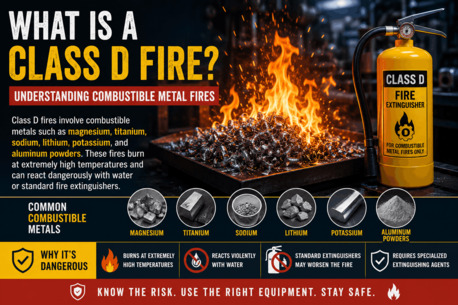
Class D fires are commonly found in industrial facilities, manufacturing plants, metal fabrication units, research laboratories, and chemical processing industries. Effective fire prevention requires proper storage of combustible metals, routine safety inspections, employee awareness programs, and access to specialized Class D fire extinguishers.
This informative resource explains how Class D fires start, the dangers they pose, and the best methods for controlling and extinguishing them safely. It also highlights the importance of fire risk assessments, emergency preparedness plans, and compliance with workplace safety standards. By understanding the unique characteristics of combustible metal fires and implementing proactive fire protection measures, organizations can improve workplace safety, reduce operational risks, and safeguard valuable assets from potentially devastating fire incidents.