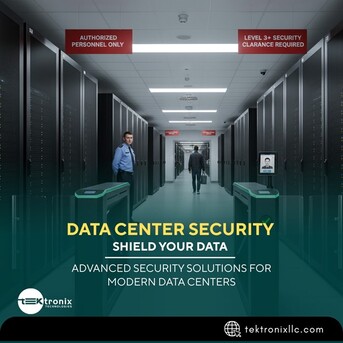
The Saudi Arabia and GCC Digital Infrastructure Landscape
Saudi Arabia's National Cybersecurity Authority (NCA) classifies data centres supporting government, financial, energy, and telecommunications services as Critical National Infrastructure (CNI), subject to the Essential Cybersecurity Controls (ECC) and Critical Systems Cybersecurity Controls (CSCC) frameworks. Landmark investments — including STC's hyperscale data centre expansion, Saudi Aramco Digital's infrastructure programme, and the National Data Management Office's sovereign cloud initiatives — reflect the scale of the Kingdom's digital ambitions. Across the wider GCC, comparable regulatory frameworks apply: the UAE's NESA National Information Assurance Policy (NIAP) and Dubai Electronic Security Center (DESC) Information Security Regulation, Bahrain's Central Bank of Bahrain (CBB) Technology Risk Management (TRM) framework, Kuwait's CITRA cybersecurity framework, and Oman's ICTD guidelines for critical systems.
This concentration of high-value digital assets creates a target-rich environment for nation-state actors, organised cybercriminal groups, and insider threats. Non-compliance with applicable regulatory frameworks carries licence suspension, financial penalties, and — for facilities supporting government or financial services — potential loss of operating mandate. End-to-end security, spanning both physical and logical domains in a single coherent architecture, is therefore the regulatory baseline rather than an optional enhancement.
The Six-Layered Data Center Security Architecture
Tektronix LLC's data centre security methodology is built around six interlocking layers, each addressing a distinct category of risk while feeding a unified event-correlation platform. This layered approach ensures that a failure or compromise at any single layer does not result in a facility-wide breach — a principle directly aligned with the Uptime Institute's Tier Standard zoning model and the defence-in-depth philosophy mandated by ECC and NESA NIAP alike.
Layer 1 — Cybersecurity for Data Center Networks and Systems
The foundational layer of Cybersecurity for Data Center environments is built on the NIST Cybersecurity Framework (CSF) and ISO/IEC 27001:2022, providing dual governance references that map cleanly to both ECC's organisational controls and NESA NIAP's management requirements. This layer encompasses network segmentation with zero-trust micro-perimeters, identity and access management (IAM) integrated with the physical access platform, Security Information and Event Management (SIEM) deployment using IBM QRadar or Splunk, and 24/7 Security Operations Centre (SOC) monitoring. All controls are documented in a Data Centre Security Policy mapped simultaneously to ECC, CSCC, NESA NIAP, and CBB TRM control families — a single compliance artefact acceptable across multiple regulators.
Layer 2 — Data Center Threat Detection: Unified Physical and Cyber Visibility
Effective Data Center Threat Detection requires correlated visibility across physical and logical domains simultaneously. Tektronix LLC deploys Dahua WizSense video analytics with on-edge AI inference to detect tailgating at mantraps, loitering in cage aisles, and unattended objects near server rows — generating physical security events that are correlated with network access logs in the SIEM platform. On the logical side, Darktrace's self-learning AI engine establishes a baseline of normal network behaviour for every device on the data centre fabric, raising alerts when lateral movement, credential-stuffing, or data-exfiltration patterns deviate from that baseline. This unified detection posture — combining physical anomaly detection with network behavioural analytics — is recommended under IEC 62443 for critical infrastructure environments and increasingly expected by NCA assessors during ECC compliance reviews.
Layer 3 — Data Center Firewalls: Perimeter and East-West Protection
Legacy stateful inspection firewalls cannot adequately protect modern hyperscale environments where east-west (server-to-server) traffic volumes dwarf north-south (user-to-server) flows. Tektronix LLC deploys Data Center Firewalls from Palo Alto Networks (PA-7000 series) and Cisco Secure Firewall (Firepower 4100/9300), both holding Common Criteria EAL4+ certification, configured with application-layer inspection, SSL/TLS decryption, and threat intelligence feeds from regional CERT bodies — including Saudi Arabia's National Cybersecurity Authority threat intelligence sharing programme and the UAE's aeCERT. Micro-segmentation policies enforce zero-trust principles between compute, storage, and management networks, ensuring that a compromised workload cannot traverse the fabric without explicit policy authorisation — a control that maps directly to ECC's network security domain and CSCC's segmentation requirements for critical systems.
Conclusion
The digital economies of Saudi Arabia and the GCC are scaling at a pace that demands data centre security architectures built for end-to-end resilience from day one. A six-layered approach — combining robust Cybersecurity for Data Center foundations, proactive Data Center Threat Detection, hardened Data Center Firewalls, pervasive Data Center Encryption, rigorous Data Center Access Control, and intelligent Data Center Surveillance paired with real-time Data Center Intrusion Detection — is no longer aspirational; it is the regulatory baseline across every jurisdiction in the region. Whether your facility requires Data Center Security KSA expertise for Kingdom-based operations or Data Center Security GCC coverage across a multinational portfolio, Tektronix LLC's certified engineers and regulatory expertise ensure your facility is protected, compliant, and operationally resilient.
For more information contact us on:
Tektronix Technology Systems Dubai-Head Office
[email protected]
+971 55 232 2390
Office No.1E1 Hamarain Center 132 Abu Baker Al Siddique Rd – Deira – Dubai P.O. Box 85955