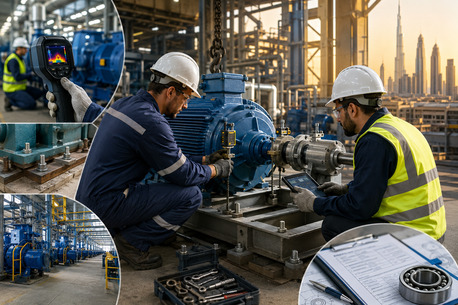
Discussions surrounding Marine Loading Arms Installation often focuses on engineering specifications, structural design, and hydraulic systems. However, long-term operational success depends just as much on human factors, training, and operational readiness as it does on technical execution.
Why Human Factors Matter in Marine Loading Arms Installation
Even the most advanced marine loading arm design relies on effective execution by installation teams, operators, and maintenance personnel. Some challenges in the installation process cannot be fully conveyed through diagrams alone.
Common human-factor challenges include:
Misunderstandings between shore engineers and marine crew when performing offshore lifting operations
Mistakes caused by fatigue from long hours of installation work under inclement weather conditions
Misinterpretations when studying complicated hydraulic designs
Ergonomic challenges associated with accessing swivel joints and maintenance points
This approach ensures that personnel are adequately prepared for real-world scenarios by reinforcing technical knowledge with hands-on practice, thereby improving coordination, safety awareness, and execution reliability during critical installation activities.
Industry Performance and Risk Trends
Marine terminals operate in highly regulated environments where interruptions can lead to significant financial and safety issues. Studies indicate that human factors, such as communication breakdowns and procedural deviations, contribute to many incidents during the commissioning and early operation of complex equipment. As marine loading arms incorporate more sophisticated technologies, the need for operator preparedness becomes critical. Projects with structured readiness programs often see smoother commissioning and fewer post-handover maintenance issues.
Industry Standards and Engineering Compliance
These standards provide a structured framework for design verification, installation procedures, and commissioning practices, helping ensure consistent performance and safe operation across different terminal environments. Key references include the American Petroleum Institute and the Oil Companies International Marine Forum, which offer guidance on terminal safety, lifting operations, and equipment verification.
Commonly referenced standards include:
API RP 2D for offshore crane and lifting operations
OCIMF Marine Terminal Management and Safety Guidelines
EN 1474 standards for LNG transfer systems and loading arms
ISO standards governing welding quality, inspection, and pressure testing
Compliance with these frameworks helps ensure consistency in alignment verification, hydraulic pressure testing, emergency release system validation, and commissioning procedures while supporting global best-practice safety requirements.
Operational Readiness Framework for Marine Loading Arms
Operational readiness should be treated as a structured commissioning phase rather than an informal transition period. A comprehensive readiness framework typically includes:
Testing the functionality of emergency release systems under simulated load conditions.
Operator competency validation through scenario-based drills
Verification of maintenance accessibility and ergonomic safety checks
Critical spare parts inventory validation for first-year operations
Shift handover and control room procedure standardization
Facilities that implement structured readiness frameworks demonstrate significantly improved startup stability and reduced early-life operational incidents.
Environmental Factors During Installation Windows
The installation of marine loading arms often takes place under difficult conditions affected by seasonal factors. Tidal variations impact crane barge positioning and access to installation areas, while high temperatures affect bolt tightening and sealing accuracy. In winter, ice can pose risks to lifting equipment. Typically, installation sequencing allows 12–24-hour tidal windows for crane barge repositioning at jetties, with tasks such as instrument calibration and hydraulic system filling performed when crane operation is not possible.
Engineering Tolerances and Installation Constraints
Marine loading arms require precise alignment to ensure safety under dynamic conditions. Flange misalignment must stay within millimeter tolerances to prevent seal stress. Hydraulic systems should be tested for integrity at pressure levels that exceed normal operating conditions. Small deviations in bolt torque or joint alignment can impact long-term stability and increase maintenance needs. Accurate alignment is essential, as vessel motion and product transfers can heighten stress on components, leading to accelerated wear and reduced equipment availability.
Field-Usable Operational Documentation
This ensures that operators have practical, simplified, and situation-specific guidance available at the point of use, enabling faster and more accurate decision-making during abnormal or high-risk operational scenarios.
Effective documentation systems typically include:
Laminated emergency response flow diagrams positioned at operator stations
Color-coded maintenance maps identifying lubrication and inspection points
Simplified troubleshooting matrices for hydraulic motion restrictions
Visual installation reference guides for seal orientation and alignment checks
This enables critical information to be applied effectively in real-time operations, ensuring that procedures remain practical, accessible, and aligned with actual site conditions.
Installation Risk Assessment and Safety Planning
These combined activities require strict planning, precise sequencing, and continuous communication between all stakeholders to ensure safe execution, minimize operational risks, and maintain installation efficiency. Comprehensive risk assessments should be completed before each critical installation phase.
Key risk mitigation measures often include:
Lift plan verification and independent review
Weather monitoring and stop-work criteria
Permit-to-work compliance
Emergency response preparedness
Communication protocols between marine and shore-based personnel
Proactive safety planning helps reduce installation delays while maintaining compliance with terminal safety requirements.
Human Performance Reliability in Offshore Installation
Human performance variability poses a significant risk in marine loading arm installation. Outcomes are affected by decision-making under pressure, environmental stress, and team coordination. Fatigue during long offshore operations can lead to miscommunication between marine crews and shore teams, resulting in rigging or hydraulic alignment errors. To minimize human error, it's essential to implement structured pre-task briefings, fatigue management plans, and real-time supervision.
Digital Technologies Supporting Installation Quality
Modern marine loading arm projects increasingly utilize digital inspection and monitoring technologies to improve installation quality and commissioning efficiency.
Examples include:
Laser alignment verification systems
Digital torque monitoring tools