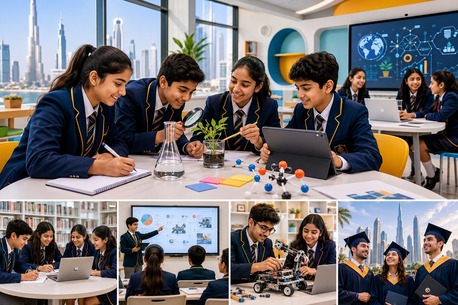
In Dubai's evolving educational landscape, parents increasingly seek schools that foster critical thinking, curiosity, and real-world problem-solving skills rather than relying solely on rote memorization. A quiet transformation is taking place in many CBSE schools in Dubai, where classrooms have evolved into environments that encourage students to ask questions, design projects, and take ownership of their learning. This article explores how inquiry-based learning is redefining what it means to be the best CBSE school in Dubai.
Shifting the Focus: From Content to the Learning Process
Traditionally, the CBSE curriculum emphasized building strong foundations in mathematics, science, and languages. Today, educators in leading CBSE schools in Dubai are redefining education by embracing student-centered learning and supporting each learner's overall development. Rather than introducing a predetermined body of content at the beginning of each unit, teachers use this method to provide an open-ended question. This encourages students to develop the skills needed to:
Ask a research question.
Design an experiment or investigation.
Gather and analyze the data independently.
Present their findings using evidence, reasoning, and clear communication.
Student Agency and Decision-Making
One of the defining characteristics of progressive CBSE schools is their commitment to strengthening student agency. Instead of following a teacher-directed approach, students are encouraged to make meaningful choices about project topics, learning methods, and, where appropriate, the pace of their learning. These include:
Elective projects for Grades 6 to 10
Student involvement in designing assessment rubrics for some assignments
Student councils dedicated to creating school culture and organizing events
Reflection journals encourage students to set goals, track their progress, and thoughtfully reflect on their learning experiences.
When students have meaningful ownership of their learning, they are often more engaged, motivated, and confident. This emphasis on student agency has become one of the key reasons many parents choose leading CBSE schools in Dubai.
Local Context, Global Lens
Dubai's unique environment provides valuable opportunities for place-based learning. Many CBSE schools in Dubai integrate the local environment—such as desert flora and fauna, urban water management, renewable energy initiatives, and UAE heritage—into their curriculum while connecting these topics to global themes like climate change and migration. Examples of inquiry-based projects include:
Investigating soil salinity in desert environments and its impact on global food security.
Analyzing energy consumption in high-rise buildings and exploring ways to improve efficiency.
Exploring Arabic and Indian literary traditions alongside global youth literature.
Collaborating with NGOs on community clean-up initiatives or food distribution projects.
Through these experiences, students learn how classroom knowledge can be applied to understand and address real-world challenges.
Assessment That Reflects Growth
The shift toward inquiry-based learning has also transformed the way student progress is assessed. While the CBSE exam remains essential for evaluating external knowledge and skills, many schools have adopted a balanced assessment approach to better measure students’ ongoing progress and learning. Assessment methods may include:
Portfolios containing drafts, revisions, and completed work
Oral presentations or discussions where students explain their thinking and reasoning.
Skill-based rubrics for collaboration, creativity, and communication
Self-assessment and peer review systems as part of routine activities
These assessment methods provide a broader picture of student learning while reducing excessive dependence on examinations. As a result, many parents now look beyond examination scores and consider how schools assess creativity, collaboration, and critical thinking.
For instance, students studying sustainability may investigate energy consumption within their school campus, analyze the findings, and present recommendations for reducing energy use.
Teacher Roles in an Inquiry-Based Setting
In a learner-centric approach to education, teachers move beyond simply delivering information to become learning designers and facilitators. This includes:
Creating inquiry-based units that span several weeks and feature clear, explicit learning objectives.
Supporting students as they research, evaluate information, and analyze their findings.
Adapting instruction through formative assessments.
Collaborating across different subject areas to design meaningful interdisciplinary projects.
Many CBSE schools in Dubai invest in continuous professional development to help teachers adopt innovative teaching strategies and emerging educational technologies.
Digital Tools as Supports, Not Drivers
Technology is used to support inquiry-based learning rather than replace meaningful classroom interactions. Students may use technology to:
Explore scientific concepts through coding and programming activities.
Use virtual science experiments to enhance and reinforce hands-on classroom learning.
Collaborate with classmates on shared presentations, research projects, and digital documents.
Incorporate real-world data analysis into environmental, science, and social studies projects.
Parents often notice that students become more confident when they are encouraged to explore questions independently rather than simply memorizing answers.
Why This Matters for Future Success
Adaptability, critical thinking, collaboration, and independent learning are increasingly valued by universities and employers worldwide. With inquiry-based learning increasingly integrated into the CBSE curriculum across Dubai schools, students are being equipped for:
Interdisciplinary problems at a university level
Dynamic workplaces where problem-solving, adaptability, and practical skills are highly valued.
Cultural diversity and communication within a multicultural environment
For many parents, the best CBSE school in Dubai is one that combines academic excellence with the ability to develop confident, curious, and capable learners.
Research from organizations such as the OECD and UNESCO suggests that inquiry-driven learning can strengthen problem-solving, collaboration, and critical-thinking skills.
FAQs
Q1. Why is a CBSE school in Dubai considered "future-ready"?
A “future-ready” CBSE school combines strong academic foundations with inquiry-based learning, student agency, project-based approaches, and assessment methods that extend beyond traditional exams.
Q2. How do CBSE schools in Dubai integrate inquiry learning with the preparation for board examinations?
Schools align inquiry-based learning activities with the CBSE curriculum while continuing structured preparation for board examinations. Students are