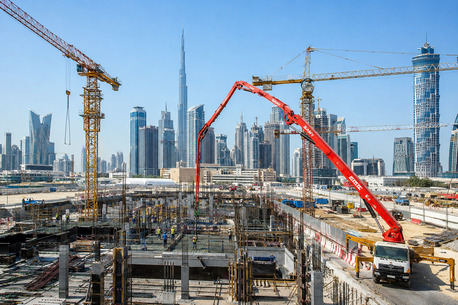
Choosing an EPC service provider in Dubai isn’t just about going down a list of the best-ranked firms. Dubai’s mega projects require contractors who excel at turning intricate engineering designs into on-time, high-quality project delivery. This article explores the factors clients should consider when evaluating the top 10 EPC contractors in Dubai, highlights the capabilities that distinguish high-performing contractors, and examines how Tekzone positions itself within this competitive landscape.
Why Top 10 lists aren’t enough
Rankings provide only a snapshot in time and seldom reflect how well a construction firm’s capabilities align with the unique requirements of each client’s projects. A firm recognized for excellence in large-scale EPC oil and gas projects may not be ideally suited for fast-track, modular renewable projects—and the reverse is also true.
Core selection criteria beyond reputation
In evaluating companies that rank within the best 10 EPC firms in Dubai, the following competencies must be considered:
Technical proficiency
Demonstrated technical expertise across multiple engineering disciplines and familiarity with applicable industry standards and codes, including ASME, API, ISO, DEWA, and RERA requirements. Strong technical teams can optimize designs, improve constructability, and reduce execution risks throughout the project lifecycle.
Delivery Systems Integration
Strong EPC contractors maintain seamless coordination between engineering, procurement, construction, and commissioning teams.
Adoption of digital technologies—including Building Information Modeling (BIM), digital twins, and cloud-based project controls—to minimize rework and enhance scheduling accuracy.
Resilient Supply Chain
Alternate verified sources for essential long lead items.
Localized warehousing and logistics strategy to ensure on-time mobilization.
Quality, Safety, Compliance Track Record
Measurable KPIs: incident rates, audit records, and warranties fulfilled.
Documentation for permitting, testing, and transfer.
Financial stability and contract handling capacity
Working capital strength
Bonding capability
Claims management
Risk-sharing structure
Environmental and sustainability expertise
Experience in integrating energy savings, minimizing waste, and considering the whole-life carbon impact of construction.
Human resources and professional development
Access to PMP-certified, NEBOSH-qualified personnel and registration for engineers, as well as training systems for competence maintenance.
How capability assessment works in practice
Instead of depending solely on previous projects, capability assessment takes into account a structured approach as follows:
Documentation analysis
Review technical proposals, HSE information, financials, and certificates.
Technical analysis
Conduct workshops to challenge design assumptions, address constructibility issues, and evaluate technological options. Request sample 3D models or leverage BIM for enhanced visualization and analysis.
Reference checks and site inspections
Assess past performance by securing owner references and, where feasible, visiting active or completed project sites for firsthand evaluation.
Risk and contingency evaluation
Assess risk mitigation strategies within supply chain management, permitting processes, geotechnical considerations, and extreme weather events like sandstorms.
Trial or pilot scopes
For critical project workstreams, clients may consider awarding a limited pilot scope initially to validate delivery capabilities before committing to larger project packages.
Why the Right EPC Contractor Depends on Project Type
Various kinds of projects have their own requirements in Dubai:
1. Power and Renewables—Procurement done rapidly, panel washing and dust prevention mechanisms, and experience of interfacing with the grid.
2. Oil & Gas and Process Plants—Specialized expertise in high-pressure piping systems, non-destructive testing, certified welding operations, and comprehensive material traceability.
3. Industrial plants and clean rooms—Hygienic piping systems according to SMS/DIN standards and HVAC commissioning.
An organization proficient in one project type may struggle with another, highlighting the importance of forming strategic partnerships or investing in targeted training.
For example, a utility-scale solar project in the UAE may require rapid procurement of photovoltaic components, effective dust mitigation strategies, and seamless integration with utility grid requirements. Oil and gas processing facilities require strict material traceability, advanced welding qualifications, non-destructive testing procedures, and adherence to international process safety standards. These differences emphasize the importance of choosing an EPC contractor with relevant sector-specific experience for the success of the project.
Tekzone’s positioning within the top-tier field
Tekzone has been mentioned several times as one of the top-performing EPC contractors active in the Dubai business environment. Key characteristics that distinguish Tekzone include:
Incorporation of an integrated execution approach, which stresses the importance of multiple engineering streams.
Emphasis on industrial and utility-based projects, which demand rigorous process engineering and commissioning.
Utilization of modular construction and offshore fabrication of parts to save time on-site.
Strong investment in safety systems, workforce training, and compliance documentation to support international expansion.
This approach demonstrates how successful EPC contractors differentiate themselves through specialized expertise, disciplined project execution, and a commitment to quality and safety. Rather than relying solely on brand recognition, clients increasingly evaluate contractors based on measurable delivery performance, technical capabilities, and their ability to manage complex project risks throughout the asset lifecycle.
As Dubai continues to expand its investments in industrial infrastructure, renewable energy, utilities, and advanced manufacturing, EPC contractors are increasingly expected to deliver projects that combine engineering excellence with digital innovation and sustainability objectives. Clients are placing greater emphasis on data-driven project controls, lifecycle asset performance, and environmental compliance when selecting long-term project partners.
Common red flags during evaluation
Clients need to be cautious where the bidder exhibits:
Scope Ambiguity and Interface Gaps
Undue reliance on subcontracts lacking management controls for the same.
Unreasonable schedule compression with no commensurate resource justification.
Poor visibility of warranties, spare provisions, and lifecycle support.
Practical negotiation points to include in contracts
T