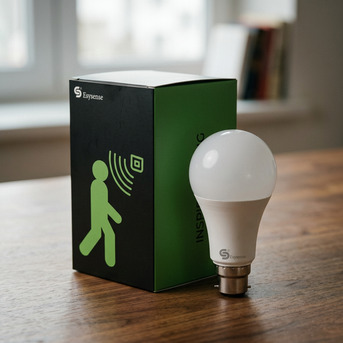
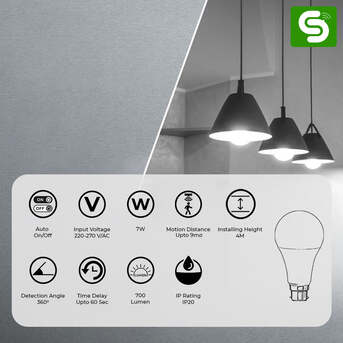
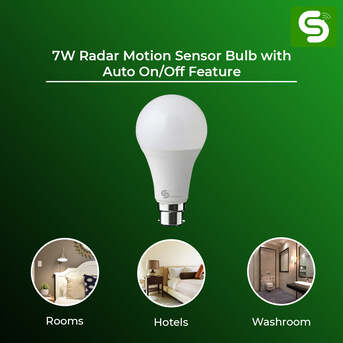
A motion sensor bulb for bathroom use automatically turns ON when a person enters the bathroom and switches OFF after the area becomes vacant. This hands-free lighting solution improves convenience, enhances safety during night-time visits and reduces electricity wastage.
Modern radar motion sensor bulbs can detect movement efficiently, making them ideal for bathrooms, washrooms, powder rooms and attached toilet areas where lights are frequently forgotten after use.
Product Comparison:
Feature: Operation
(i) Motion Sensor Bulb: Auto ON/OFF
(ii) Motion Sensor Dimmable Bulb: Auto Bright & Dim
Feature: Motion Detection
(i) Motion Sensor Bulb: Radar Sensor
(ii) Motion Sensor Dimmable Bulb: Radar Sensor
Feature: Energy Saving
(i) Motion Sensor Bulb: Excellent
(ii) Motion Sensor Dimmable Bulb: Excellent
Feature: Installation
(i) Motion Sensor Bulb: Standard Bulb Holder
(ii) Motion Sensor Dimmable Bulb: Standard Bulb Holder
Feature: User Comfort
(i) Motion Sensor Bulb: High
(ii) Motion Sensor Dimmable Bulb: Very High
Feature: Ideal Location
(i) Motion Sensor Bulb: Bathrooms & Passages
(ii) Motion Sensor Dimmable Bulb: Premium Bathrooms
Why Bathrooms Need Motion Sensor Bulbs?
Bathrooms are among the most frequently visited spaces in any home, especially during the night.
Common issues with traditional bathroom lighting include:
(i) Forgetting to switch lights OFF
(ii) Searching for switches in darkness
(iii) Increased electricity consumption
(iv) Inconvenience for elderly family members
(v) Difficulty for children
A motion sensor bulb solves these problems by automating the entire lighting process.
Bottom Line:
Bathrooms are ideal candidates for motion sensor lighting because occupancy is temporary and frequent.
How a Motion Sensor Bulb Works?
A radar motion sensor continuously monitors movement within its detection range.
When Someone Enters the Bathroom:
(i) Motion is detected.
(ii) The bulb switches ON automatically.
(iii) Full illumination is provided.
(iv) Lighting remains active while movement continues.
When the Bathroom Becomes Vacant:
(i) No movement is detected.
(ii) Delay timer starts.
(iii) The bulb switches OFF or enters dim mode.
(iv) Electricity consumption stops.
This process occurs automatically without any user intervention.
Benefits of Motion Sensor Bulbs in Bathrooms
(i) Hands-Free Operation: Users never need to touch switches, making operation more hygienic and convenient.
(ii) Improved Night-Time Safety: Automatic illumination reduces the risk of slips and falls when visiting the bathroom during the night.
(iii) Energy Savings: Lights remain active only when someone is present.
(iv) Child-Friendly Operation: Children do not need to locate switches in dark conditions.
(v) Elderly-Friendly Lighting: Automatic activation makes movement easier and safer for senior citizens.
Bottom Line:
Motion sensor bulbs improve comfort, convenience and safety for every family member.
Motion Sensor Bulb vs Traditional Bathroom Bulb
Feature: Manual Switching
(i) Traditional Bulb: Required
(ii) Motion Sensor Bulb: Not Required
Feature: Electricity Saving
(i) Traditional Bulb: Low
(ii) Motion Sensor Bulb: High
Feature: Night-Time Convenience
(i) Traditional Bulb: Basic
(ii) Motion Sensor Bulb: Excellent
Feature: User Experience
(i) Traditional Bulb: Standard
(ii) Motion Sensor Bulb: Smart
Feature: Safety
(i) Traditional Bulb: Good
(ii) Motion Sensor Bulb: Excellent
Bottom Line:
Motion sensor bulbs offer a more advanced and energy-efficient solution than traditional bathroom lighting.
Motion Sensor Bulb vs Motion Sensor Dimmable Bulb
Standard Motion Sensor Bulb:
(i) Fully ON when motion detected
(ii) Fully OFF after vacancy
(iii) Maximum energy savings
(iv) Simple operation
Motion Sensor Dimmable Bulb:
(i) Full brightness during occupancy
(ii) Low brightness during vacancy
(iii) Better visibility at night
(iv) Premium lighting experience
Bottom Line:
For most homes, a standard motion sensor bulb is sufficient. Premium bathrooms may benefit from dimmable motion sensor technology.
Best Bathroom Applications
(i) Attached Bathrooms: Automatic lighting ensures convenience during night-time use.
(ii) Guest Bathrooms: Visitors enjoy a hassle-free experience without searching for switches.
(iii) Powder Rooms: Occupancy-based lighting reduces unnecessary energy consumption.
(iv) Hotel Bathrooms: Sensor lighting enhances guest comfort and modern aesthetics.
(v) Senior Citizen Homes: Automatic operation reduces dependence on manual controls.
How Much Electricity Can You Save?
Bathroom lights are often left ON accidentally for extended periods.
By ensuring operation only during occupancy, motion sensor bulbs significantly reduce unnecessary usage.
Benefits include:
(i) Lower electricity bills
(ii) Reduced lamp operating hours
(iii) Extended bulb lifespan
(iv) Improved energy efficiency
The exact savings depend on usage patterns, but sensor-controlled lighting consistently outperforms manually operated systems in areas with intermittent occupancy.
Frequently Asked Questions
Q: Is a motion sensor bulb suitable for bathrooms?
A: Yes. Bathrooms are one of the best applications because occupancy is temporary and automatic lighting improves convenience and energy efficiency.
Q: Can motion sensor bulbs detect movement through bathroom doors?
A: Detection performance depends on installation conditions, wall materials and sensor technology. Proper placement ensures reliable operation.
Q: What is the difference between a radar motion sensor bulb and a standard bulb?
A: A radar motion sensor bulb automatically controls lighting based on occupancy, while a standard bulb requires manual switching.
Q: Do motion sensor bulbs save electricity?
A: Yes. They prevent lights from remaining ON unnecessarily when bathrooms are unoccupied.
People Also Ask
Q: Which is the best motion sensor bulb for bathroom use?
A: A radar motion sensor bulb with automatic ON/OFF functionality provides an ideal balance of convenience, safety and energy savings.
Q: Can motion sensor bulbs work at night?
A: Yes. Motion sensor bulbs are specifically designed to provide automatic illumination during low-light conditions.
Q: Are motion sensor bulbs safe for bathrooms?
A: Yes. When installed correctly in appropriate fixtures, they provide reliable and convenient operation.
Q: Can a motion sensor bulb replace a normal bathroom bulb?
A: Absolutely. Most motion sensor bulbs use standard bulb holders and can directly replace conventional bulbs.
Conclusion
A motion sensor bulb for bathroom applications is one of the simplest and most effective smart lighting upgrades available today. By automatically illuminating the space only when required, it improves convenience, enhances safety and reduces ele