Why Qatari Enterprises Are Rethinking Building Security
Qatar's rapid commercial growth has brought larger office towers, multi-tenant business parks, and high-security industrial facilities, all of which outgrow traditional lock-and-key security quickly. A lost key or an unreturned card from a former employee creates a lingering vulnerability that is expensive and disruptive to fully close with mechanical locks alone. Enterprises now need a way to grant, restrict, and revoke access instantly, without rekeying a single door, which is exactly the gap connected access technology was built to close.
What Is an Access Control System?
Access Control System technology refers to the combined hardware and software that manages entry to a building or specific zone within it, verifying a presented credential - a card, code, mobile pass, or biometric scan - before unlocking a door. Rather than relying on a single master key that grants access everywhere, the system applies individual permissions per person, per door, and per time window, all managed from a central administrative platform.
Advanced Access Control System Capabilities for Modern Enterprises
Beyond simple door unlocking, an Advanced Access Control System adds scheduling rules, anti-pass back logic that prevents a single credential from being used twice in a row without exiting first, and integration with HR systems so access is automatically revoked the moment an employee's record is deactivated. These capabilities matter most in larger enterprises where manually tracking hundreds of permissions across dozens of doors would otherwise require a dedicated administrative team.
Biometric Access Control System: Verifying the Person, Not Just the Credential
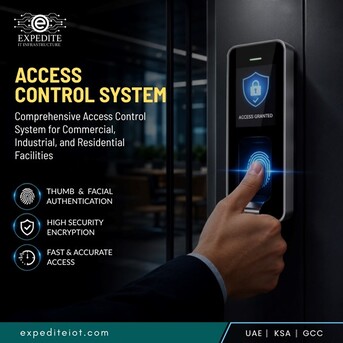
A card or code only proves someone has the right credential, not that they are the authorized individual. A Biometric Access Control System, using a fingerprint or facial scan, closes that gap by confirming the actual identity of the person at the door, which is particularly valuable for server rooms, finance departments, and other zones where credential sharing has historically been a recurring weak point.
Security Access Control System Design for High-Risk Zones
Not every door in a facility carries the same risk, and a well-planned Security Access Control System reflects that by applying tiered protection - standard card access for general office areas, combined with biometric or dual-factor verification for data centers, executive floors, or compliance-sensitive archives. This tiered design avoids the common mistake of either over-securing low-risk areas, which frustrates staff, or under-securing the zones that actually need the strongest protection.
Door Access Control System Components at Every Entry Point
At the physical door itself, a Door Access Control System typically combines an electronic lock, a reader, and a small controller that communicates the access decision back to the central platform in real time. This per-door architecture allows a facility to apply different rules to a staff entrance, a loading dock, and a server room individually, rather than forcing the entire building onto one uniform security policy.
Access Control Device Hardware: What Staff and Visitors Interact With
Whatever sits at the door - a card reader, a keypad, or a biometric scanner - is the Access Control Device employees and visitors interact with directly every day. These units need to operate reliably across a full working day, handle Qatar's high ambient heat for outdoor-facing entrances, and respond quickly enough that staff never feel like they're waiting at their own office door.
Choosing Devices That Match Daily Usage Patterns
A high-traffic main entrance benefits from a fast card or mobile reader that keeps queues moving, while a sensitive server room is better served by a slower, more deliberate biometric check that prioritizes certainty over speed. Matching device type to actual usage patterns avoids both unnecessary bottlenecks and unnecessary security gaps.
Access Control Solutions: Bringing Every Component Together
Hardware alone does not make a deployment successful; enterprises need complete Access Control Solutions that integrate door hardware, software permissions, visitor management, and reporting into one coherent platform. A well-designed solution also accounts for future growth, allowing new doors, buildings, or tenant spaces to be added to the same system without starting from scratch each time the business expands.
Practical Benefits for Enterprises Across Doha
• Instant credential revocation when an employee leaves, without rekeying locks
• Tiered access levels matching each zone's actual risk profile
• Complete, timestamped entry logs for audits and incident investigation
• Integration with HR systems to automate onboarding and offboarding
• Remote management of multiple sites from a single administrative dashboard
Compliance and Operational Reporting
Enterprises operating in regulated sectors across Qatar increasingly need to demonstrate documented entry controls during audits, insurance reviews, or client security assessments. A connected platform produces exportable access logs and permission histories on demand, giving facility managers verifiable evidence of who accessed which area and when, rather than relying on an honour system or an outdated spreadsheet.
Conclusion
Lock-and-key security can no longer keep pace with the scale and risk profile of modern Qatari enterprises. A complete Access Control Solutions approach combines a reliable Door Access Control System and well-chosen Access Control Device hardware with the tiered protection of a Security Access Control System, strengthened by Biometric Access Control System verification and the scheduling intelligence of an Advanced Access Control System. Enterprises ready to modernize entry security can review Expedite IoT's access control platform built for regional enterprises to compare proven configurations against current building procedures.