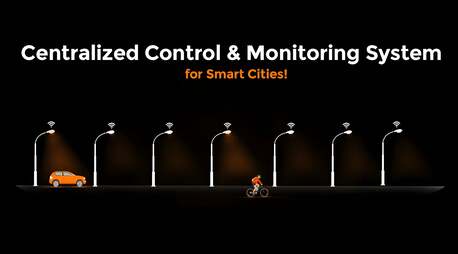
Smart Street Lighting Solutions are intelligent lighting systems that use connected controllers, wireless communication and cloud-based software to automatically manage street lights. Instead of operating every light on fixed schedules, these systems monitor each lighting point individually, detect faults remotely, optimize switching schedules and reduce electricity consumption. Modern smart street lighting forms an essential part of Smart City infrastructure by improving public safety, reducing maintenance costs and enabling data-driven municipal street lighting management.
Solution Overview:
1. Smart Street Lighting Management
Primary Application: Municipal Roads
Key Benefit: Centralized monitoring
2. CCMS Street Light Control
Primary Application: Highway & Urban Networks
Key Benefit: Remote switching & fault detection
3. IoT Street Lighting Control
Primary Application: Smart Cities
Key Benefit: Real-time communication
4. Wireless Lighting Control Systems
Primary Application: Large Lighting Networks
Key Benefit: Reduced wiring & scalability
5. Smart Lighting Dashboard
Primary Application: Municipal Operations
Key Benefit: Live monitoring & analytics
6. Energy Monitoring System
Primary Application: Government & Industrial Campuses
Key Benefit: Track electricity consumption
What are Smart Street Lighting Solutions?
Smart Street Lighting Solutions combine LED lighting, intelligent controllers, communication gateways and cloud software to automate the operation of public lighting infrastructure.
Unlike conventional street lighting, which relies on timers or manual switching, smart lighting systems continuously monitor the performance of each lighting point and automatically adjust operation based on predefined schedules, sensor inputs or remote commands.
A modern Smart Street Lighting Solution typically includes:
1. LED street lights
2. Smart controllers
3. Communication gateways
4. Centralized Control & Monitoring System (CCMS)
5. Cloud-based management software
6. Energy monitoring tools
7. Lighting asset management software
By connecting all lighting assets to a central platform, municipalities can improve reliability while significantly reducing operational expenses.
Bottom Line:
Smart Street Lighting Solutions transform traditional public lighting into an intelligent, connected infrastructure capable of delivering higher efficiency, better reliability and lower maintenance costs.
Why are Smart Street Lighting Solutions Important?
Public street lighting represents one of the largest recurring electricity expenses for municipal corporations, industrial townships and smart city projects. Traditional street lighting systems often face challenges such as:
1. Lights operating throughout the night regardless of traffic
2. Manual fault reporting
3. Delayed maintenance
4. High electricity consumption
5. Lack of operational visibility
6. Increased maintenance costs
Smart Street Lighting Solutions address these issues by enabling intelligent control, remote monitoring and automated fault detection. For municipalities managing thousands of lighting points, even a modest improvement in energy efficiency can result in substantial annual savings while enhancing public safety.
Bottom Line:
Smart lighting is no longer just an energy-saving upgrade—it has become a critical component of modern urban infrastructure.
How Do Smart Street Lighting Solutions Work?
The system operates through a connected network of intelligent lighting nodes and centralized software.
Step 1 – Data Collection
Each street light or lighting controller continuously collects operational information such as:
1. Power status
2. Energy consumption
3. Voltage
4. Current
5. Operating hours
6. Fault conditions
Step 2 – Wireless Communication
Information is transmitted using communication technologies such as:
1. LoRaWAN
2. RF Mesh
3. NB-IoT
4. GSM
5. Ethernet
This allows field devices to communicate with the central management platform in real time.
Step 3 – Central Monitoring
A Smart Lighting Dashboard displays:
1. Live status of every street light
2. Fault notifications
3. Switching schedules
4. Energy reports
5. Maintenance alerts
6. Geographic location of assets
Step 4 – Remote Control
Authorized operators can remotely:
1. Switch lights ON/OFF
2. Modify operating schedules
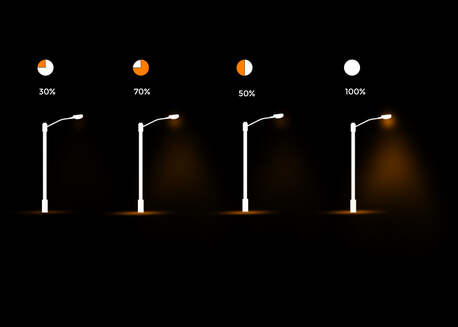
3. Create dimming profiles
4. Receive maintenance notifications
5. Generate performance reports
Bottom Line:
Instead of sending maintenance teams to inspect every street light manually, operators can monitor and manage the entire lighting network from a single dashboard.
What is CCMS Street Light Management?
CCMS (Centralized Control & Monitoring System) is the backbone of modern municipal street lighting management. Rather than controlling each feeder manually, CCMS enables centralized monitoring and control of multiple street lighting networks from one platform.
Key capabilities include:
1. Remote switching
2. Automatic scheduling
3. Fault detection
4. Energy consumption monitoring
5. Maintenance alerts
6. Historical reporting
7. Operational analytics
For large municipalities and industrial campuses, CCMS significantly reduces maintenance effort while improving system reliability.
Bottom Line:
A CCMS transforms conventional street lighting into an intelligent, centrally managed public lighting network.
What is IoT Street Lighting Control?
The Internet of Things (IoT) has transformed conventional street lighting into intelligent, connected infrastructure. Instead of functioning as standalone lighting points, IoT-enabled street lights communicate continuously with a centralized management platform, allowing operators to monitor, analyze and control every lighting asset remotely.
An IoT Street Lighting Control System enables:
1. Automatic ON/OFF scheduling
2. Adaptive dimming based on time or traffic conditions
3. Remote fault diagnostics
4. Real-time energy monitoring
5. Predictive maintenance
6. Centralized reporting
By connecting thousands of street lights into a single network, municipalities gain complete visibility over their public lighting infrastructure.
Bottom Line:
IoT Street Lighting Control improves operational efficiency, minimizes downtime and significantly reduces maintenance costs.
What is Remote Street Light Monitoring?
Traditional street lighting maintenance depends heavily on manual inspections or citizen complaints. This approach often results in delayed repairs and increased operational expenses. Remote Street Light Monitoring allows maintenance teams to receive real-time notifications whenever an issue occurs.
Typical faults detected include:
1. Lamp failures
2. Driver failures
3. Voltage abnormalities
4. Communication loss
5. Power outages
6. Cont