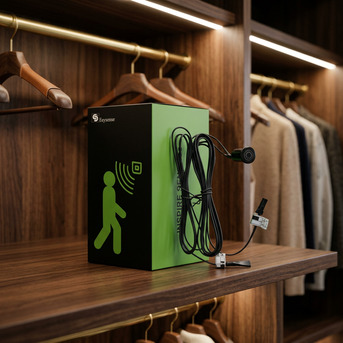
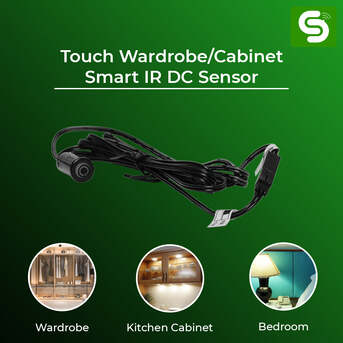
A PIR cabinet sensor is a smart lighting controller that automatically switches cabinet or wardrobe LED lights ON when motion, a hand gesture or a cabinet door is detected and switches them OFF after use. It eliminates manual switches, improves convenience and helps reduce unnecessary electricity consumption.
For modern furniture, Esysense offers intelligent cabinet sensors including the ESY-M40 IR Touch Sensor and ESY-M37 Touch Sensor with Smart Dimming, designed for 12V–24V DC LED lighting systems with concealed installation inside wardrobes, kitchen cabinets, drawers and display units.
Product Comparison:
1. ESY-M40 Touch IR Sensor
(i) Operating Voltage: 12–24V DC
(ii) Load Capacity: Up to 60W
(iii) Detection Type: IR Touch / Door Detection
(iv) Detection Distance: Up to 8 cm
(v) Smart Dimming: No
(vi) Best For: Wardrobes & Cabinets
2. ESY-M37 Touch Sensor with Dimmer
(i) Operating Voltage: 12–24V DC
(ii) Load Capacity: Up to 40W
(iii) Detection Type: Touch & Hand Sweep
(iv) Detection Distance: Around 5 cm
(v) Smart Dimming: Yes
(vi) Best For: Premium Cabinet Lighting
What is a PIR Cabinet Sensor?
A PIR cabinet sensor is designed to automate lighting inside furniture. Instead of operating a conventional switch, the sensor detects cabinet usage and controls the connected LED lights automatically.
Typical operation:
(i) Cabinet door opens or hand approaches
(ii) Sensor detects activity
(iii) LED light switches ON instantly
(iv) Light switches OFF when the cabinet is closed or no interaction is detected
This automation provides a cleaner furniture design while making everyday use more convenient.
Bottom Line:
Cabinet sensors make wardrobes and modular furniture smarter by providing automatic lighting exactly when required.
Why Install a Cabinet Sensor?
Modern modular furniture increasingly includes integrated LED lighting.
A cabinet sensor offers several advantages:
(i) Hands-free lighting
(ii) Automatic operation
(iii) Cleaner interior appearance
(iv) Reduced electricity wastage
(v) Longer LED lifespan
(vi) Better visibility inside wardrobes
These benefits make cabinet sensors a popular addition to premium residential interiors.
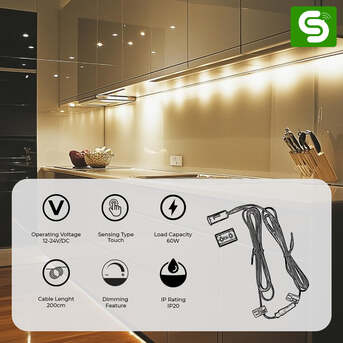
ESY-M40 Touch IR Cabinet Sensor:
The Esysense ESY-M40 is designed for automatic cabinet lighting.
Key specifications include:
(i) 12–24V DC operation
(ii) Up to 60W load
(iii) Detection range up to 8 cm
(iv) Smart IR touch sensing
(v) 200 cm cable
(vi) Aluminium alloy body
(vii) IP20 protection
(viii) Compact concealed installation
Suitable for:
(i) Wardrobes
(ii) Kitchen cabinets
(iii) Drawers
(iv) Under-shelf lighting
(v) Vanity units
(vi) Display cabinets
ESY-M37 Cabinet Sensor with Smart Dimming:
Users looking for adjustable brightness can choose the ESY-M37 Touch Sensor with Dimmer.
Main features include:
(i) Touch and hand-sweep control
(ii) Smart dimming
(iii) 12–24V DC compatibility
(iv) Up to 40W load
(v) Compact design
(vi) Matte black finish
It is particularly suitable for:
(i) Designer wardrobes
(ii) Mirror lighting
(iii) Premium furniture
(iv) Decorative shelving
(v) Luxury modular kitchens
Best Applications:
(i) Bedroom Wardrobes: Automatic illumination while selecting clothes.
(ii) Kitchen Cabinets: Hands-free lighting during cooking.
(iii) Crockery Units: Highlights glassware and decorative items.
(iv) Display Cabinets: Improves product presentation.
(v) Bookshelves: Creates ambient lighting.
(vi) TV Units: Provides concealed decorative illumination.
Bottom Line:
Cabinet sensors are useful anywhere low-voltage LED lighting is integrated into furniture.
Cabinet Sensor vs Conventional Switch
1. Conventional Switch
(i) Manual Operation: Yes
(ii) Automatic Lighting: No
(iii) Hidden Installation: No
(iv) Smart Appearance: Standard
(v) LED Compatibility: Good
(vi) User Convenience: Moderate
2. Cabinet Sensor
(i) Manual Operation: No
(ii) Automatic Lighting: Yes
(iii) Hidden Installation: Yes
(iv) Smart Appearance: Premium
(v) LED Compatibility: Excellent
(vi) User Convenience: Excellent
Bottom Line:
Automatic cabinet sensors offer a significantly more premium user experience than traditional switches.
Installation Recommendations
For the best performance:
1. Install close to the cabinet opening.
2. Use compatible 12V–24V DC LED lights.
3. Keep the sensing area unobstructed.
4. Conceal wiring inside furniture.
5. Test sensor alignment before final fixing.
Professional installation ensures reliable operation and neat cable management.
Benefits of Smart Cabinet Lighting:
Installing a cabinet sensor offers multiple long-term benefits:
1. Reduced energy consumption
2. Automatic lighting control
3. Better furniture aesthetics
4. Improved user convenience
5. Longer LED operating life
6. Modern smart-home experience
As modular furniture becomes more popular, automated cabinet lighting continues to gain demand in residential and commercial interiors.
Frequently Asked Questions
Q: What is a PIR cabinet sensor?
A: A PIR cabinet sensor is an automatic lighting controller that switches cabinet or wardrobe lights ON when the cabinet is accessed and OFF after use, improving convenience and energy efficiency.
Q: Can cabinet sensors work with LED strip lights?
A: Yes. Esysense cabinet sensors are designed for 12–24V DC LED strip lighting systems.
Q: Does Esysense offer a cabinet sensor with dimming?
A: Yes. The ESY-M37 Touch Sensor with Dimmer supports smart dimming for premium cabinet lighting applications.
Q: Where can cabinet sensors be installed?
A: They are suitable for wardrobes, kitchen cabinets, drawers, vanity mirrors, bookshelves, display units and under-shelf lighting.
People Also Ask
Q: Which is the best cabinet sensor for modular furniture?
A: A concealed 12–24V DC cabinet sensor with automatic ON/OFF functionality is ideal for wardrobes and modular furniture.
Q: Can cabinet sensors save electricity?
A: Yes. Automatic switching ensures lights operate only when the cabinet is in use.
Q: Are cabinet sensors easy to install?
A: Yes. They are compact, low-voltage devices designed for concealed furniture installation.
Q: What is the difference between a cabinet sensor and a touch sensor with a dimmer?
A: A standard cabinet sensor provides automatic ON/OFF operation, while a touch sensor with dimmer also allows brightness adjustment for enhanced lighting control.
Conclusion
A PIR cabinet sensor is an effective way to automate lighting inside wardrobes, cabinets and modular furniture. By eliminating manual switches, it improves convenience, enhances furniture aesthetics and reduces unnecessary power consumption.
The Esysense range includes the ESY-M40 IR Touch Sensor for automatic c