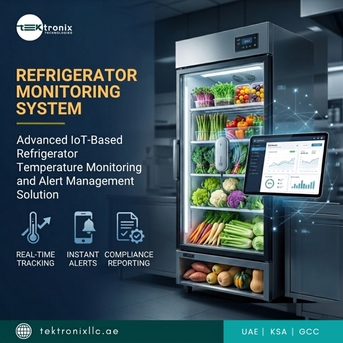
The UAE Food Processing Cold Chain: Why Monitoring Is Non-Negotiable
The UAE food processing sector — encompassing meat processing facilities in ICAD (Industrial City of Abu Dhabi), dairy manufacturers in Al Ain, seafood processing operations at Umm Al Quwain and Fujairah, bakery and confectionery producers across JAFZA and Dubai Industrial City, and the UAE's growing ready-meal and meal-kit manufacturing sector — handles temperature-sensitive raw materials and finished products that have no tolerance for cold chain deviation. The UAE Food Safety Law (Federal Decree No. 10 of 2015) establishes the legal framework, Gulf Standard GSO 167 specifies the cold chain temperature bands for stored and distributed food categories, and ADAFSA's food facility licensing requirements mandate that cold storage temperature records are maintained, accessible to inspectors, and demonstrate continuous compliance — not just compliance at the time of a scheduled inspection.
The practical consequence of these obligations is straightforward: manual temperature checks performed by QC staff at defined intervals create compliance gaps between readings during which a compressor fault, a door seal failure, or an unexpected load of warm raw material can drive temperatures into the danger zone without generating a record. For UAE food processors operating under ISO 22000 or FSSC 22000 food safety management system certification — increasingly required by UAE-based international retail chains including Carrefour, Spinneys, and Lulu Hypermarket as a supplier qualification criterion — continuous automated temperature monitoring is not an optional enhancement but a certification prerequisite that manual logging cannot substitute.
Contact Us:
+971 50 814 4086