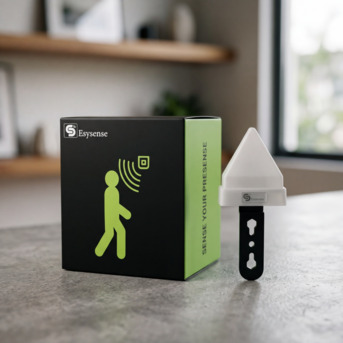
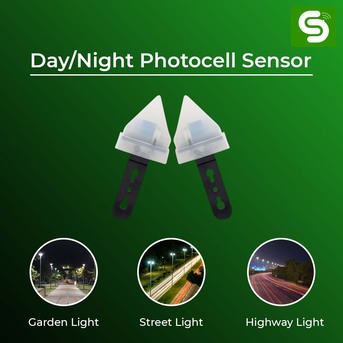
An LDR Sensor (Light Dependent Resistor Sensor) is an automatic lighting controller that switches lights ON at dusk and OFF at dawn by detecting changes in ambient light. Unlike motion sensors that respond to movement, an LDR sensor reacts only to natural light levels, making it ideal for street lights, garden lighting, parking areas, boundary walls, security lights and outdoor commercial lighting.
Esysense offers multiple IP65-rated LDR Photocell Sensors in 6A, 10A, 16A and 20A variants with adjustable light sensitivity for reliable outdoor lighting automation.
Product Comparison:
1. 6A LDR Sensor
(i) Voltage: 220–270V AC
(ii) Protection: IP44
(iii) Operation: Auto Day/Night
(iv) Adjustable Lux: Yes
(v) Installation: Pole Mount
(vi) Best Use: Homes
2. 10A LDR Sensor
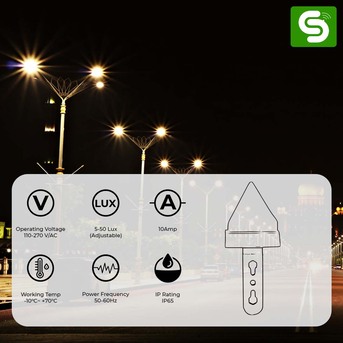
(i) Voltage: 110–270V AC
(ii) Protection: IP65
(iii) Operation: Auto Day/Night
(iv) Adjustable Lux: Yes
(v) Installation: Pole Mount
(vi) Best Use: Gardens
3. 16A LDR Sensor
(i) Voltage: 110–270V AC
(ii) Protection: IP65
(iii) Operation: Auto Day/Night
(iv) Adjustable Lux: Yes
(v) Installation: Pole Mount
(vi) Best Use: Commercial
4. 20A LDR Sensor
(i) Voltage: 220–270V AC
(ii) Protection: IP65
(iii) Operation: Auto Day/Night
(iv) Adjustable Lux: Yes
(v) Installation: Pole Mount
(vi) Best Use: High-Load Outdoor Lighting
What is an LDR Sensor?
An LDR (Light Dependent Resistor) sensor measures surrounding light intensity.
1. During daylight:
Ambient light is high.
The connected lights remain OFF.
2. As evening approaches:
Ambient light falls below the preset level.
The sensor automatically switches the connected lights ON.
3. When sunrise arrives:
Natural light increases.
The sensor switches the lights OFF automatically.
This automatic operation removes the need for timers or manual switching.
Bottom Line:
LDR sensors provide reliable dusk-to-dawn lighting control while reducing electricity wastage.
How does an LDR Sensor Works?
The sensor continuously monitors ambient light.
1. Daytime:
High natural light detected.
Lighting remains OFF.
2. Sunset:
Light level drops below the configured Lux threshold.
The sensor energizes the lighting circuit.
3. Night:
Lights remain ON throughout darkness.
4. Sunrise:
Ambient light increases.
The sensor disconnects the lighting automatically.
Because the operation depends on daylight instead of time, the lighting schedule automatically adjusts throughout the year.
Key Features of Esysense LDR Sensors:
Current Esysense LDR sensors offer:
1. Automatic dusk-to-dawn switching
2. Adjustable light sensitivity (typically 5–50 Lux; premium models up to 2–100 Lux)
3. IP65 weatherproof housing
4. Pole-mount installation
5. 110–270V AC or 220–270V AC operation (model dependent)
6. Multiple current ratings including 6A, 10A, 16A and 20A
7. Operating temperature from -10°C to +70°C
These features make them suitable for long-term outdoor installations.
Best Applications:
1. Street Lights: Automatically illuminates roads after sunset.
2. Garden Lighting: Operates landscape lighting without manual intervention.
3. Parking Areas: Improves visibility while minimizing electricity usage.
4. Boundary Walls: Enhances perimeter safety during nighttime.
5. Commercial Buildings: Automates facade and entrance lighting.
6. Warehouses & Industrial Sites: Provides dependable outdoor illumination for operational safety.
Bottom Line:
Any outdoor lighting system that follows a day/night cycle can benefit from an LDR sensor.
LDR Sensor vs Motion Sensor
1. LDR Sensor
(i) Detects Ambient Light: Yes
(ii) Detects Human Motion: No
(iii) Works All Night: Yes
(iv) Best For: Outdoor Lighting
(v) Energy Saving: High
2. Motion Sensor
(i) Detects Ambient Light: No
(ii) Detects Human Motion: Yes
(iii) Works All Night: Only When Motion is Detected
(iv) Best For: Indoor & Occupancy Lighting
(v) Energy Saving: Very High
Bottom Line:
Choose an LDR sensor for dusk-to-dawn outdoor lighting and a motion sensor for occupancy-based indoor lighting.
Advantages of Automatic Day/Night Lighting
Installing an LDR sensor provides several benefits:
(i) Eliminates manual switching
(ii) Reduces electricity waste
(iii) Improves security
(iv) Extends lamp life
(v) Automatically adapts to changing seasons
(vi) Suitable for residential and commercial projects
Because lighting operates only when natural light is insufficient, energy efficiency is significantly improved.
Installation Tips:
For reliable operation:
(i) Mount the sensor where it can receive natural daylight.
(ii) Avoid direct exposure to the controlled light source.
(iii) Install at a suitable height for unobstructed sensing.
(iv) Use weatherproof wiring practices.
(v) Follow the recommended wiring diagram for the selected model.
Proper placement helps prevent false switching and ensures accurate dusk-to-dawn operation.
Frequently Asked Questions
Q: What is an LDR sensor?
A: An LDR sensor is a light-dependent resistor that automatically switches electrical loads ON at dusk and OFF at dawn by monitoring ambient light levels.
Q: What is the difference between an LDR sensor and a motion sensor?
A: An LDR sensor responds to changes in daylight, whereas a motion sensor responds to movement. They are designed for different automation applications.
Q: Can an LDR sensor control street lights?
A: Yes. LDR sensors are widely used for street lights, garden lights, parking lots and other outdoor lighting systems.
Q: Are Esysense LDR sensors weatherproof?
A: Yes. Esysense outdoor LDR sensors feature IP65-rated weatherproof housings suitable for rain and dust protection.
People Also Ask
Q: Which is the best LDR sensor for outdoor lighting?
A: An IP65-rated LDR photocell sensor with adjustable Lux sensitivity is ideal for reliable outdoor lighting automation.
Q: Can an LDR sensor save electricity?
A: Yes. It ensures outdoor lights operate only when natural light levels are low, reducing unnecessary daytime operation.
Q: What current ratings are available?
A: Esysense offers LDR sensors in 6A, 10A, 16A and 20A variants for different lighting loads.
Q: Where should an LDR sensor be installed?
A: Install it in an open outdoor location where it can accurately detect ambient daylight without interference from nearby artificial lighting.
Conclusion
An LDR sensor is one of the most effective solutions for automating outdoor lighting. By switching lights ON at dusk and OFF at dawn, it improves convenience, enhances security and reduces unnecessary electricity consumption.
The Esysense range of IP65 Day/Night Photocell Sensors is available in 6A, 10A, 16A and 20A variants with adjustable light sensitivity, making them suitable for