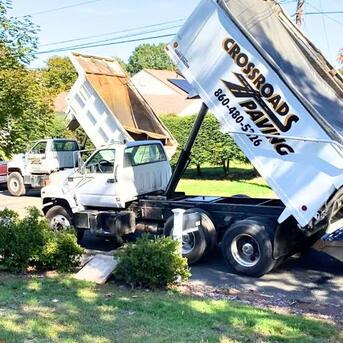
At the center of this structured execution is Crossroads Paving CT, a company recognized for integrating technical planning with field-level craftsmanship. Their approach to asphalt paving reflects a balance between engineering discipline and on-site adaptability, ensuring each layer of the project performs under real-world stress conditions.
The workflow is divided into controlled phases, each influencing the next:
1. Site Evaluation & Subsurface Analysis
The process starts with soil testing, slope measurement, and drainage mapping. Weak subgrades are identified early to prevent future deformation or cracking. This stage is crucial for long-term pavement integrity.
2. Excavation and Grading Precision
An experienced team handles everything from excavation and grading to final asphalt installation, ensuring proper drainage and a smooth finished surface. This step determines load distribution and water runoff behavior—two critical performance factors often overlooked in low-cost installations.
3. Base Layer Engineering
Crushed aggregate is compacted in calibrated layers. The density and compaction levels are monitored using advanced equipment to ensure stability under heavy traffic loads.
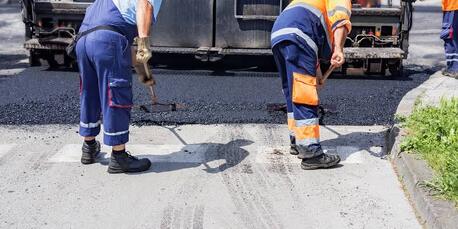
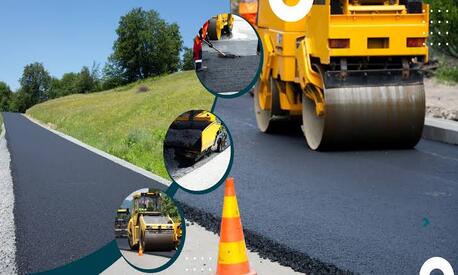
4. Asphalt Application & Compaction
Hot-mix asphalt is applied at controlled temperatures. Rolling patterns are pre-planned to eliminate air gaps and ensure uniform surface density.
5. Finishing, Sealing & Quality Assurance
Driveway sealing is applied to protect the surface from UV damage, moisture intrusion, and chemical erosion. Final inspections verify slope accuracy and surface smoothness.
Customer Reviews
⭐ Review 1 – Residential Homeowner
“Crossroads Paving CT completely rebuilt our driveway. The grading was done carefully, and water drainage issues we had for years are finally gone. The surface is perfectly smooth.”
⭐ Review 2 – Property Manager
“We manage multiple rental properties, and their resurfacing work saved us significant costs. The team is consistent and understands large-scale workflow planning.”
FAQs:
Q1: How long does a new asphalt driveway last?
A properly installed and maintained driveway can last 15–25 years depending on traffic load and climate conditions.
Q2: When should driveway sealing be done?
Sealing is recommended 6–12 months after installation and then every 2–3 years for optimal protection.
Q3: What causes driveway cracking?
Common causes include poor drainage, weak base layers, freeze-thaw cycles, and heavy load stress.
Q4: Is resurfacing better than full replacement?
If the base is structurally sound, resurfacing is a cost-effective alternative that restores surface integrity.
Conclusion:
Advanced asphalt workflow planning is the backbone of durable paving systems. With structured execution—from excavation and grading to sealing and maintenance—Crossroads Paving CT delivers solutions built for performance, not just appearance.
Source URL: https://crossroadspavingct. ...