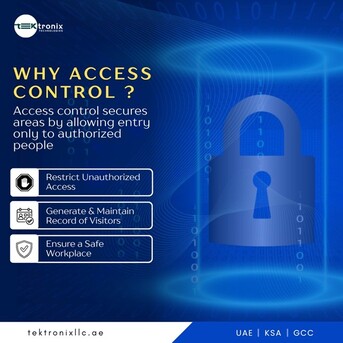
What Is an Access Control System?
Access Control System technology refers to the combined hardware and software that manages entry to a building or specific zone within it, verifying a presented credential - a card, code, mobile pass, or biometric scan - before unlocking a door. Rather than relying on a single master key that grants access everywhere, the system applies individual permissions per person, per door, and per time window, all managed from a central administrative platform.
Start with a Proper Site Assessment, Not a Product Catalogue
Before comparing hardware brands or feature lists, the most valuable first step is walking the actual building and documenting every entry point, its current traffic pattern, and what's behind it. A loading dock, a main lobby, and a data room all carry completely different risk profiles, and a security plan built around an honest assessment of each will always outperform one built around whatever equipment a vendor happens to be promoting that quarter.
Step One: Decide Where You Need an Advanced Access Control System
Not every door in a building carries the same risk, and that's the first major decision to make. An Advanced Access Control System - with scheduling rules, anti-passback logic, and direct HR integration - makes sense for larger facilities with many employees and complex permission structures, while a smaller office may only need straightforward card access at the main entrance. Matching system complexity to actual facility size avoids both unnecessary cost and an administrative burden that exceeds what the team can realistically manage day to day.
Signs Your Facility Has Outgrown Basic Access Control
If staff are sharing override codes, if permission changes require manually reprogramming several individual locks, or if there's no way to instantly see who entered a specific door last week, these are common signs that a facility has outgrown a basic system and would benefit from a more advanced platform with centralized, searchable administration.
Step Two: Identify Where Biometric Access Control Dubai Buildings Actually Need It
Biometric verification is powerful, but it isn't necessary at every door. Biometric Access Control Dubai deployments make the most sense at server rooms, finance departments, or executive floors where credential sharing has historically been a problem, confirming the actual identity of the person at the door rather than just verifying they're holding a valid card. Applying biometric checks everywhere, including low-risk general office areas, often creates unnecessary friction without a meaningful security benefit, and can slow down high-traffic entrances unnecessarily.
Step Three: Apply Tiered Protection with a Security Access Control System
Once high-risk areas are identified, the next step is designing tiered protection across the building. A well-planned Security Access Control System applies standard card access for general office areas, combined with stronger verification for compliance-sensitive archives or restricted departments. This tiered design avoids both extremes - over-securing low-risk areas, which frustrates staff, and under-securing the zones that genuinely need the strongest protection available within the same building.
Step Four: Choose the Right Door Access Control System Per Entrance
At the physical door itself, a Door Access Control System typically combines an electronic lock, a reader, and a small controller that communicates the access decision back to the central platform in real time. This per-door architecture allows a facility to apply different rules to a staff entrance, a loading dock, and a server room individually, rather than forcing the entire building onto one uniform security policy that doesn't fit every location equally well.
Step Five: Select the Right Access Control Device for Each Use Case
Whatever sits at the door - a card reader, a keypad, or a biometric scanner - is the Access Control Device employees and visitors interact with directly every day. A high-traffic main entrance benefits from a fast card or mobile reader that keeps queues moving, while a sensitive server room is better served by a slower, more deliberate biometric check that prioritizes certainty over speed. Matching device type to actual usage patterns avoids both unnecessary bottlenecks and unnecessary security gaps across the building.
Step Six: Look for Complete Access Control Solutions, Not Just Hardware
Hardware alone does not make a deployment successful; facilities need complete Access Control Solutions that integrate door hardware, software permissions, visitor management, and reporting into one coherent platform. A well-designed solution also accounts for future growth, allowing new doors, buildings, or tenant spaces to be added to the same system without starting from scratch each time the business expands or relocates to a larger premise.
Budgeting Realistically for an Access Control Project
Cost is rarely just the price of the readers and locks themselves; installation, network cabling, software licensing, and ongoing support all factor into the total investment. A common mistake is comparing quotes purely on hardware price without confirming what level of software support, warranty coverage, and future scalability is actually included, which can lead to a system that looks affordable upfront but becomes expensive to expand or maintain later.
Common Mistakes to Avoid During Specification
• Selecting a system based on the cheapest hardware without considering software licensing costs
• Applying biometric verification uniformly instead of targeting genuinely high-risk doors
• Failing to plan for future expansion, leading to a costly system replacement later
• Overlooking integration with existing HR, visitor management, or CCTV systems
• Skipping a proper site walk-through in favour of a generic, one-size-fits-all proposal
Conclusion
Choosing the right Access Control System comes down to matching protection to actual risk rather than defaulting to the most expensive option available. An Advanced Access Control System suits larger, complex facilities, while Biometric Access Control Dubai deployments belong at genuinely high-risk doors. A tiered Security Access Control System combined with the right Door Access Control System and Access Control Device choices at every entrance, supported by complete Access Control Solutions, is what delivers lasting value for any Access Control System UAE property owners invest in. Facility managers ready to plan a project can review Tektronix LLC's access control platform built for UAE properties to compare proven configurations against current building needs.