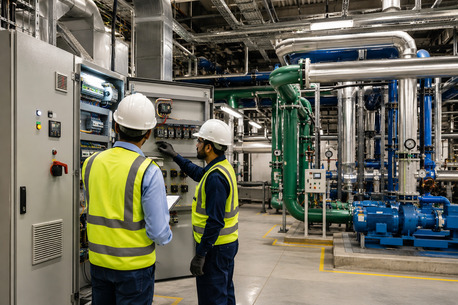
Dubai’s infrastructure is renowned for its world-class architecture and rapid, ongoing expansion. Yet behind every thriving industrial installation, commercial center, logistics hub, or utility network lies something even more essential: a highly efficient system of electrical and mechanical equipment operating seamlessly around the clock. At the center of this complex infrastructure is the expertise of electrical and mechanical contractors who ensure that critical systems operate efficiently and reliably.
As industries increasingly rely on automation, data-driven operations, and uninterrupted services, the role of contractors is no longer limited to installation alone. Electrical contracting in Dubai has become a critical factor in reducing operational risks and enhancing infrastructure reliability.
The Shift from Construction to Infrastructure Reliability
Traditionally, contractors were evaluated based on their ability to complete installations on time and within budget. In the modern era, things have become far more complex.
Today, systems must be built to endure for many years, maintaining reliable performance across a wide range of operating conditions.
The responsibilities of electrical and mechanical contractors now extend beyond installation to include:
Planning for system reliability
Risk assessment
Energy efficiency
Future scalability
Lifecycle management
Emergency planning
Contractors today contribute not only to project completion but also to the long-term performance and reliability of infrastructure assets.
Why Reliability Matters More Than Ever
Unexpected failures can have significant consequences across industrial and commercial environments.
A single electrical fault can disrupt production lines, compromise IT systems, and interrupt essential services. Likewise, mechanical problems with heating, ventilation, air conditioning, pumps, or process equipment can decrease efficiency and increase maintenance costs.
Reliable systems require:
Adequate design
High-quality components
Proper installation practices
Comprehensive system testing
Maintenance strategies
In Dubai, electrical installation services are increasingly relying on reliability engineering concepts.
The Importance of Integrated System Thinking
Modern facilities do not have independent electrical and mechanical systems. All infrastructure components are interconnected and operate as part of a unified environment.
For instance:
HVAC systems rely on a stable electrical supply and precise control systems.
Fire protection systems rely on backup power supplies.
Industrial machinery is controlled mechanically and electrically.
Building management systems integrate multiple facility operations into a single platform.
A professional electrical and mechanical contractor considers all these factors and delivers effective solutions that ensure seamless integration between systems.
Integrated planning prevents:
Equipment clashes
Wasted electricity usage
System constraints
Unnecessary downtime
Redundant designs
This integrated engineering approach has become essential for complex projects across Dubai.
Infrastructure Resilience in Challenging Environments
Dubai presents unique environmental challenges that influence infrastructure performance.
These include heat, humidity variation, dust, exposure to harsh environmental conditions, and constant operational pressure.
To address these challenges, contractors often implement:
Heat-resistant electrical systems
Corrosion-resistant mechanical parts
Enhanced ventilation strategies
Redundant power systems
Advanced monitoring technologies
This approach enables critical systems to maintain stable performance even under demanding environmental conditions.
The Growing Role of Automation
Automation has changed the operations of modern facilities.
Facilities once depended heavily on manual monitoring; today, intelligent systems perform the same functions with far greater accuracy and efficiency.
Modern electrical contracting in Dubai involves the installation of the following systems:
Industrial control systems
Smart sensors
Building management software
Monitoring systems
Remote diagnostic systems
These systems not only provide real-time visibility into facility operations but also enable immediate response to emerging situations.
Risk Management Through Engineering
Among the most beneficial aspects of working with an Electrical and Mechanical Contractor is the identification of potential risks that may affect project performance.
Critical factors that require evaluation include:
Load capacity requirements
Compatibility of the equipment
Failure scenarios
Emergency stoppage procedures
Maintenance accessibility
Identifying risks during the planning stage helps avoid costly modifications and unplanned repairs after project completion.
Effective risk management contributes to:
Increased employee safety
Increased longevity of the equipment used
Reduction of maintenance costs
Compliance with regulations
More efficient operation
Supporting Industrial Growth and Expansion
Dubai continues to attract investment across sectors such as manufacturing, logistics, energy, information technology, and infrastructure.
Scalable design strategies may include:
Modular electrical power systems
Extendable utility grids
Flexible automation solutions
Future-ready control system architectures
Reserved infrastructure capacity
Safety as a Foundation of Infrastructure Performance
Safety remains one of the most critical aspects of electrical and mechanical projects.
Some safety-oriented strategies include:
Proper grounding systems
Emergency shutdown controls
Fire detection integration
Equipment protection systems
Safe maintenance access routes
The inclusion of robust safety measures reduces the likelihood of accidents and enhances operational continuity.
This highlights the close connection between infrastructure effectiveness and the strength of its safety measures.
The Value of Lifecycle Planning
Infrastructural investments are designed to yield benefits that extend over many years to come.
Consequently, modern contractors focus on the entire lifecycle of infrastructure rather than solely on installation activities.
Some of the elements considered when planning the lifecycle of a project include:
Capital cost during initial stages
Cost of maintenance
Operating expenses
Energy efficiency
Upgrading potential
Such assessments help organizations make more informed infrastructure decisions.
Future Trends in Electrical Contracting in Dubai
Several emerging technologies are expected to shape the future of electric