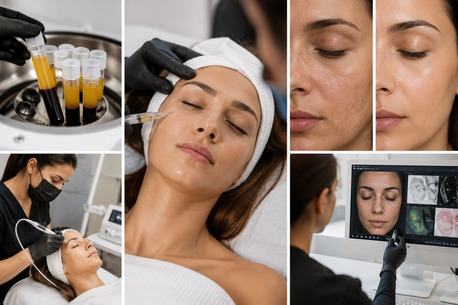
In Dubai's image-conscious culture, before-and-after photos have become one of the most influential tools in aesthetic medicine. Whether shared on social media or displayed on clinic websites, these images often create the impression that every cosmetic treatment produces the same dramatic transformation. However, when it comes to PRP for face Dubai treatments, photographs reveal only a fraction of the real story.
Platelet-Rich Plasma (PRP) therapy is a regenerative treatment that uses the body's own healing mechanisms to improve skin quality, stimulate collagen production, and promote natural rejuvenation. Unlike procedures that deliver instant changes, PRP works gradually and produces results that vary from one person to another.
The success of PRP treatment in Dubai depends on several factors that cannot be captured in a single photograph. Patient selection, treatment customization, lifestyle factors, and long-term skin health all play a critical role in determining outcomes. Understanding these factors helps patients develop realistic expectations and make more informed decisions about their skin rejuvenation journey.
Why PRP Has Become Popular in Dubai
Dubai's climate presents unique challenges for maintaining healthy skin. Prolonged sun exposure, high temperatures, environmental pollutants, and frequent transitions between air-conditioned environments and outdoor heat can contribute to:
Premature ageing
Dehydration
Uneven skin tone
Fine lines and wrinkles
Loss of skin elasticity
Pigmentation concerns
As more individuals seek minimally invasive treatments that enhance the skin's natural appearance, PRP has gained significant popularity. Because the treatment uses the patient's own blood components, it offers a natural approach to skin rejuvenation with little downtime and a low risk of allergic reactions.
The Importance of Choosing the Right Candidate for PRP
One of the biggest misconceptions about PRP is the belief that it is suitable for everyone. In reality, patient selection is one of the most important factors influencing treatment success.
Experienced practitioners evaluate several aspects before recommending PRP.
Skin Condition
Patients with early signs of ageing, mild skin laxity, uneven texture, or superficial acne scars often achieve the most noticeable improvements. Individuals with severe volume loss or advanced photoageing may require combination treatments to achieve their desired outcomes.
Overall Health
The body's ability to regenerate tissue significantly affects PRP results. Certain conditions can reduce the effectiveness of treatment, including:
Uncontrolled diabetes
Blood disorders
Active infections
Smoking
Certain medications that interfere with healing
Treatment Expectations
PRP is not an instant facelift. It gradually stimulates collagen production and tissue regeneration over several weeks and months. Patients expecting immediate lifting or dramatic wrinkle reduction may benefit from additional procedures alongside PRP.
Previous Aesthetic Treatments
A patient's skincare history also matters. Previous laser procedures, chemical peels, and retinoid use can influence healing responses and affect treatment planning.
Who Is an Ideal Candidate for PRP for Face Dubai Treatments?
PRP is often recommended for individuals who:
Have early signs of ageing.
Want to improve skin texture and tone.
Have mild acne scars.
Prefer natural skin rejuvenation.
Want minimal downtime.
Seek gradual, natural-looking improvements.
PRP may not be suitable for individuals who have:
Uncontrolled diabetes
Certain autoimmune diseases
Blood-clotting disorders
Active skin infections
Pregnancy or breastfeeding
A thorough consultation helps determine whether PRP is the right treatment option and whether additional therapies may improve overall outcomes.
Why Personalized PRP Protocols Matter
No two patients have identical skin concerns. For this reason, PRP treatment in Dubai should never follow a one-size-fits-all approach.
Modern PRP protocols are designed to deliver personalized care based on individual needs and treatment goals.
Platelet Concentration
The quality and concentration of platelets can influence treatment effectiveness. Practitioners carefully prepare PRP to achieve an optimal concentration that supports tissue repair and collagen stimulation.
Method of Delivery
PRP can be administered in several ways:
Microneedling with PRP
Intradermal injections
Topical application following specific procedures
Each method triggers different biological responses and is selected according to the patient's skin concerns.
Combination Treatments
Many practitioners combine PRP with other procedures to enhance results, including:
Microneedling
Radiofrequency treatments
Fractional laser procedures
Skin biostimulators
Hyaluronic acid treatments
The timing and sequencing of these procedures can significantly affect both safety and effectiveness.
Why Before-and-After Photos Can Be Misleading
Photographs can provide a visual representation of improvement, but they cannot tell the complete story.
Several factors can influence how before-and-after images appear:
Lighting Conditions
Different lighting angles can make fine lines, pigmentation, and skin texture appear more or less noticeable.
Camera Positioning
Slight changes in facial expression, posture, and camera angles can dramatically affect the appearance of results.
Image Editing
Filters and digital enhancements can alter how treatment outcomes are perceived.
Individual Variation
Every patient responds differently to PRP therapy. A photograph cannot show differences in collagen production, skin quality, or long-term improvements.
For these reasons, patients should view before-and-after photos as examples rather than guarantees of specific outcomes.
Many patients choose PRP because they want healthier, fresher-looking skin without dramatically changing their appearance.
How Clinics Measure the Success of PRP Treatments
Modern aesthetic medicine increasingly relies on objective measurements rather than photographs alone.
Many clinics use advanced evaluation methods, including:
Standardized Photography
Images taken under identical lighting and positioning conditions provide more reliable comparisons over time.
Skin Analysis Technology
Advanced devices can measure:
Skin hydration
Elasticity
Pigmentation
Texture
Transepidermal water loss
These objective measurements help practitioners track progress and refine treatment plans.
Scar and Wrinkle Assessments
Validated scoring systems can monitor improvements in acne scars, fine lines, and skin quality.
Patient-Reported Outcomes
Patient satisfaction remains an essential component of treatment success. Many individuals report improvements in:
Skin radiance
Confidence
Overall appearance
Skin smoothness
Makeup application
Combining objective data with patient experiences creates a more comprehensive understanding of treatment effectiveness.
What Results Can You Expect From PRP Treatment?
One of the biggest advantages of PRP is that improvements develop