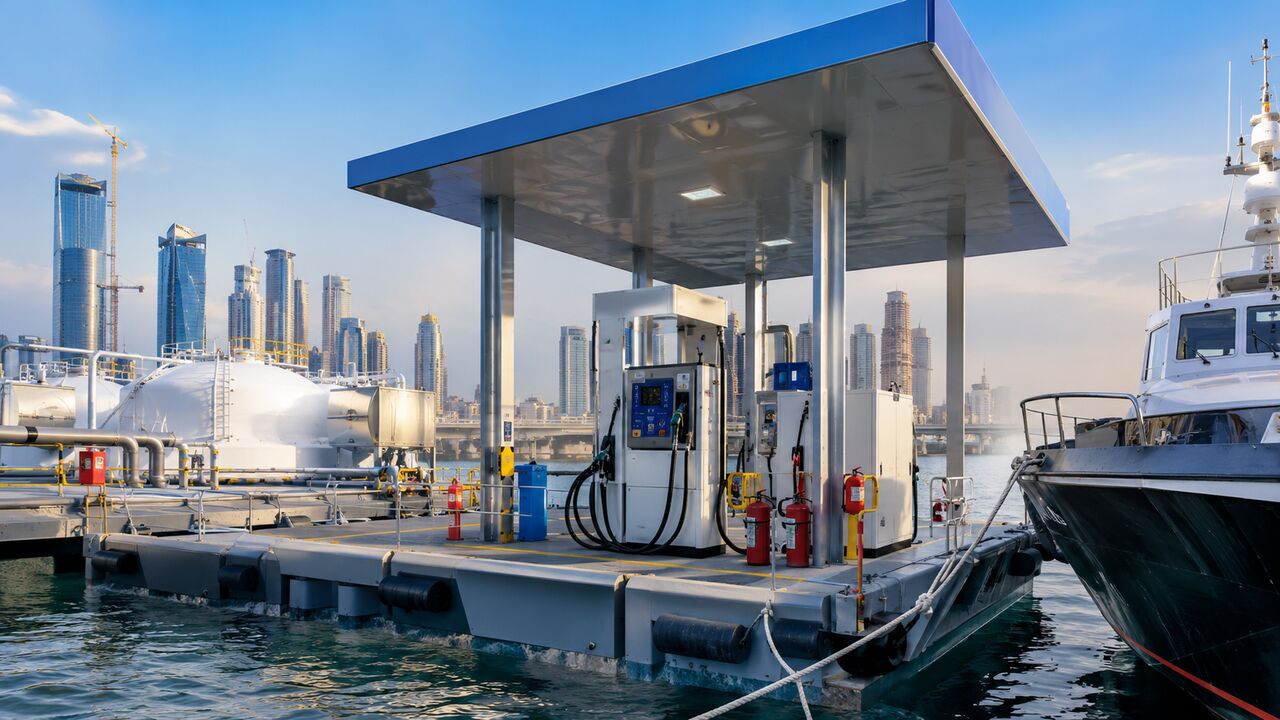
Fuel dispenser installation companies in the UAE work in a highly regulated environment where engineering accuracy, compliance, and operational efficiency directly influence long-term business performance. As the country advances its energy systems, selecting the right installation partner has become a critical strategic decision—one that extends well beyond the initial deployment phase. The success of a fuel dispenser system is best evaluated after several years of operation.
The Shift from Cost-Centric to Value-Centric Evaluation
Fuel dispenser activities in the GCC are carried out under margin regimes that allow for little inefficiency. A malfunctioning dispenser impacts the customer experience from the outset, creating inefficiencies throughout the process—not merely causing transaction delays. When customers experience issues with the machinery and decide not to return, the resulting losses extend far beyond decreased fuel sales—they also affect non-fuel retail, vehicle services, and the likelihood of future visits.
The financial equations have clearly changed. Operators are now assessing the risks of income loss from downtime, errors, and regulatory non-compliance, rather than focusing solely on purchase costs. In such circumstances, the short-term savings from lower initial costs are no longer worthwhile.
Technical Specifications That Determine Long-Term Performance
Selection of Materials and Environmental Durability
The climate conditions in the UAE are so demanding that they distinguish truly sustainable structures from those likely to fail prematurely. The conditions, which include very high temperatures and humidity levels as well as salty and corrosive environments, call for materials whose selection takes into consideration sustainability rather than cost savings. Lower-quality products look like they could be similar but are different in many ways.
GRP pontoons are remarkably lightweight and provide exceptional corrosion resistance. They can be used in both recreational and industrial applications. Material selection should take into account environmental conditions, required maintenance, and the projected lifespan.
Secondary Containment Systems
The double-wall piping system provides essential environmental protection since the inner pipe contains the fuel, whereas the outer pipe forms the containment wall. Any fuel leak in the inner pipe is quickly detected by sensors positioned between the two walls, effectively preventing environmental contamination. Such a secondary containment system is mandatory for all marine fuel stations.
Regulatory Compliance as an Ongoing Operational Requirement
In the UAE, regulatory compliance is not merely a post-installation obligation—it is an ongoing requirement that must be upheld throughout every stage of a project’s lifecycle. All fuel tank facilities must be registered with the DoE within thirty days of beginning operations. Civil Defense approval is required for all fire safety measures, and the Environment Department must approve the leak detection system.
Recent regulatory initiatives have further strengthened this system of oversight. This is because the Department of Energy of Abu Dhabi, along with the Supreme Council of Energy of Dubai, has devised collaboration arrangements for common licensing, inspection, and data exchange purposes.
For fuel dispensing installation contractors, these regulatory developments mean that documentation has become a critical aspect of risk management. Failing to provide pre-construction photos, complete pressure and electrical test certifications, or submit required regulatory documents results in bureaucratic delays, repeated inspections, and postponed operational authorization.
Marine Installations: A Higher Engineering Standard
Marine fuel dispenser installation requires advanced engineering expertise to ensure safe operation, regulatory compliance, and long-term reliability in harsh coastal and offshore environments. Marine fueling systems must operate safely despite tidal flows, saltwater corrosion, hazardous fuel vapors, and stringent environmental regulations. Traditional piping systems cannot perform reliably under constant tidal flow, making the use of specialized flexible joints essential.
Those engineers who have experience installing marine fuel dispensers know that the continuous effect of waves, as well as the movement of the vessel itself, will exert stress on the mechanical connection, which may result in loosening and deterioration of its performance. The corrosion factor, brought about by salty air and increased moisture, together with tide levels, will require more advanced engineering than in the case of land installations.
Documentation and Future-Proofing
The longevity of a fueling system depends not only on the quality of its components but also on the standard of installation and thorough documentation, which together enable efficient future maintenance. Comprehensive documentation enables technicians to easily locate underground piping, troubleshoot issues, and perform upgrades without unnecessary excavation.
Trained installers ensure proper documentation by providing photographic records, securing inspection sign-offs at each stage, and updating drawings to reflect field verification. This thorough documentation becomes invaluable during maintenance years later, allowing technicians to understand the system’s layout even if institutional knowledge has been lost over time.
Supporting Reliable Daily Operations
Operational reliability requires hydraulic balancing, electrical stabilization, machine alignment, and accessibility. These elements should be taken into account while installing the equipment to minimize disruptions and achieve a reliable fuel supply. The professional installation should provide:
Continuous fuel supply with pressure stability
Accuracy of dispensing and metering
Good electrical connection with minimal equipment downtime
Easy handling for customers and operators
The Future of Fuel Dispenser Installation
With rapid growth in the UAE’s energy and infrastructure sectors, the role of fuel dispenser installation firms has become more crucial than ever. The intersection of margin control, customer demand, and technological advancements is causing a bigger shift in the way value is perceived by operators. Data from connected forecourts can be leveraged to enhance operations by analyzing performance metrics. This approach reduces the need for reactive interventions and increases profitability by enabling predictive maintenance.
In highly regulated markets like the UAE, operational resilience on the ground is closely linked to financial resilience. Companies that evaluate contractors based on lifecycle performance, rather than just installation cost, are more likely to reduce risk, enhance compliance, and extend the lifespan of their infrastructure. As an ADNOC-approved EPC contractor, Tekzone enables its clients to operate successfully in a rapidly evolving market environment.
FAQs
Q1. What sets apart marine fuel dispenser installation from regular installation?
The marine installations should withstand constant