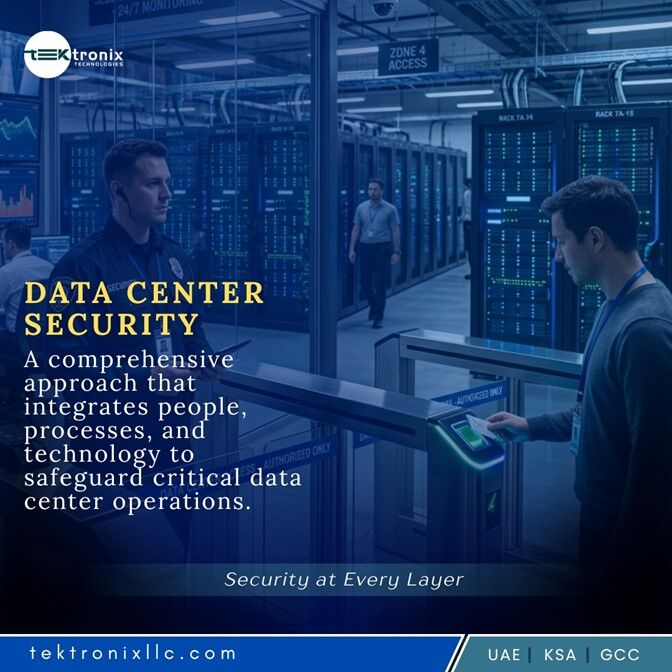
Why GCC Universities Are Prime Targets for Data Centre Attacks
The higher education sector has become one of the most targeted industries globally for cyberattacks — ranked third behind government and healthcare in annual incident frequency by the IBM X-Force Threat Intelligence Index. GCC universities combine the three characteristics that make any organisation an attractive target: they hold high-value data (research IP, student financial records, medical research datasets), they operate large open network environments (guest Wi-Fi, BYOD policies, international research network connections), and they have historically underinvested in security infrastructure relative to the value of the assets they protect.
The specific threat vectors facing Saudi and GCC university data centres:
• Ransomware campaigns specifically targeting educational institution data centres — King Abdulaziz University, King Saud University, and several GCC university IT departments have faced ransomware incidents in the past three years, with average recovery costs exceeding SAR 2 million per incident
• Nation-state sponsored research espionage — Saudi Arabia's Vision 2030 research investment in artificial intelligence, biotechnology, and clean energy makes its university research data centres targets for state-sponsored intelligence collection
• Student and insider threat — large student populations with varying levels of cybersecurity awareness, combined with high staff turnover in academic IT departments, create persistent insider threat exposure that is statistically higher than in controlled corporate environments
• Supply chain attacks — the open academic supplier ecosystem, including shared research software tools, collaborative datasets, and open-source library dependencies, creates supply chain attack surface that is difficult to monitor without dedicated threat intelligence capabilities
• NCA (National Cybersecurity Authority) compliance obligations — Saudi universities classified as national critical information infrastructure operators face specific NCA ECC-1:2018 and NCA CSCC-1:2019 (Cloud Cybersecurity Controls) compliance requirements for their data centre operations
Cybersecurity for Data Center: The University-Specific Security Architecture
Cybersecurity for Data Center in a GCC university context must address a threat surface that is fundamentally different from a corporate data centre — wider, more open, and more complex. A bank restricts its network to known employee devices and controlled application traffic. A university data centre must simultaneously serve: thousands of student devices with unpredictable security postures; faculty research systems connecting to international academic networks (GÉANT, Internet2, KACST National Research Network); clinical systems at affiliated medical schools connecting to Ministry of Health infrastructure; and administrative platforms processing financial aid, student records, and HR data for thousands of employees.
Tektronix LLC's university-specific data centre cybersecurity architecture addresses this complexity through:
• Zero-trust network architecture (ZTNA) — replacing the legacy 'trust everything inside the campus network perimeter' model with continuous verification of every device, user, and application attempting to access data centre resources, regardless of network location
• Network segmentation and micro-segmentation — dividing the university data centre network into isolated security domains: student-facing services, research computing, administrative systems, clinical data, and management plane — with explicit policy-defined traffic permissions between zones rather than implicit trust
• Privileged access management (PAM) — controlling and auditing the elevated-privilege accounts that data centre administrators, IT support staff, and external vendors use to manage university server infrastructure, with just-in-time (JIT) access provisioning and session recording
• Security information and event management (SIEM) — centralised log aggregation from all data centre network devices, servers, and security platforms with AI-powered anomaly detection calibrated for university traffic patterns rather than generic corporate baselines
• Vulnerability management — continuous automated scanning of the university data centre's full asset inventory with risk-ranked remediation scheduling aligned to NCA ECC-1:2018 and ISO/IEC 27001:2022 patch management requirements
Why Tektronix LLC Is the GCC's Trusted University Data Centre Security Partner
• Experience: Over 15 years delivering integrated physical and cyber security solutions for universities, government entities, and critical infrastructure across Saudi Arabia, UAE, Qatar, Kuwait, Bahrain, and Oman — with active data centre security deployments at GCC higher education institutions spanning public research universities, private universities, and international branch campuses
• Expertise: CISSP and CISM-certified security architects, NCA-qualified cybersecurity engineers, ISO 27001 lead auditors, EDUCAUSE-affiliated academic IT security specialists, and SOC analysts holding GIAC GCIA and GCIH certifications — providing the multi-disciplinary expertise that university data centre security demands
• Authoritativeness: Solutions compliant with NCA ECC-1:2018, NCA CSCC-1:2019, Saudi PDPL, UAE PDPL, Qatar PDPL, Oman DPL, CITRA framework, ISO/IEC 27001:2022, NIST CSF, MITRE ATT&CK for Enterprise, and Uptime Institute Tier III/IV physical security standards — with country-specific compliance documentation for every GCC regulatory framework
• Trustworthiness: ISO 9001:2015-certified project delivery; 24/7/365 SOC monitoring with Arabic and English analyst coverage; 4-hour emergency on-site response SLA; published data processing policies aligned with GCC PDPL frameworks; transparent managed security service pricing with financial SLA performance guarantees
Conclusion
Tektronix LLC's six-layer Data Center Security framework — encompassing university-tailored Cybersecurity for Data Center architecture, AES-256 Data Center Encryption protecti