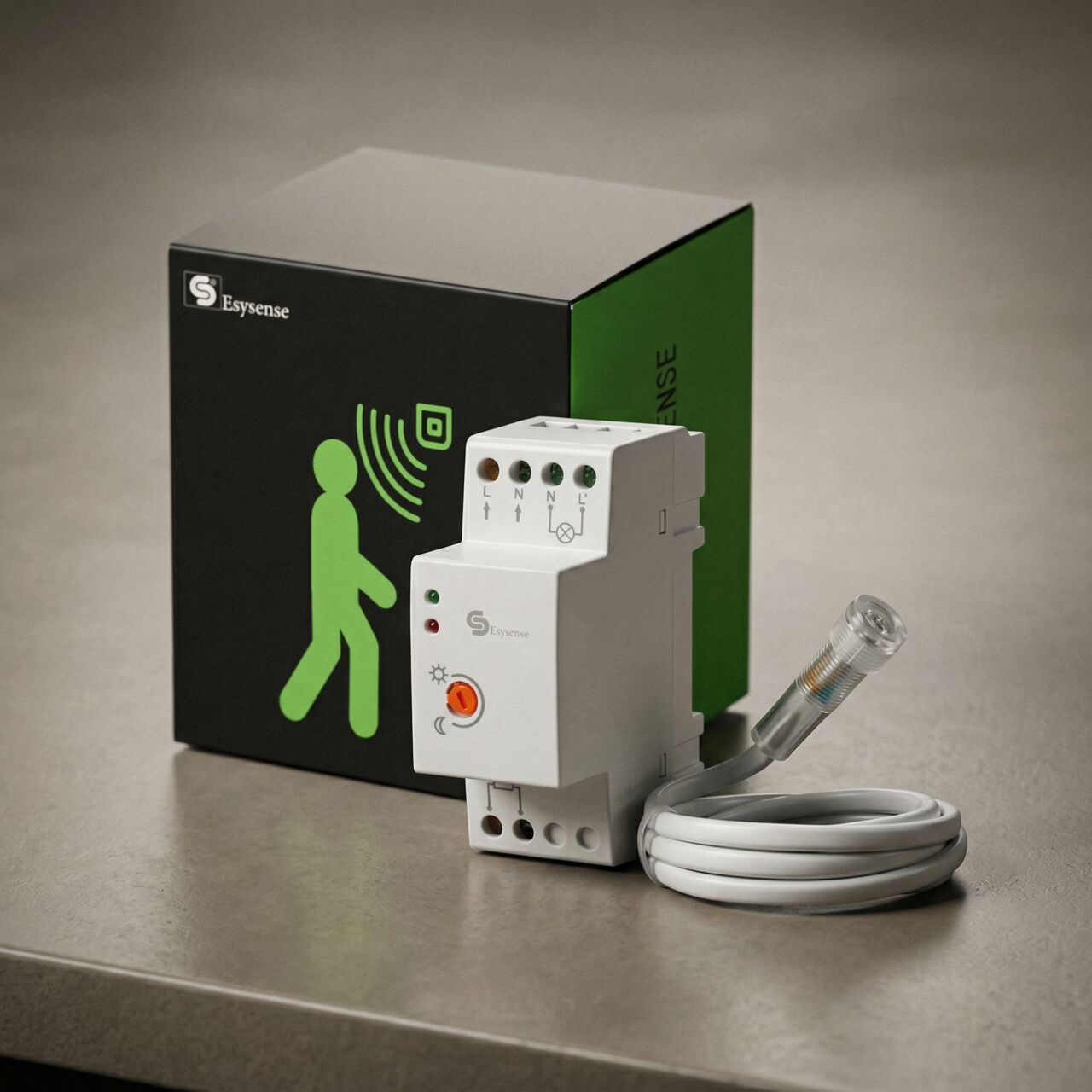
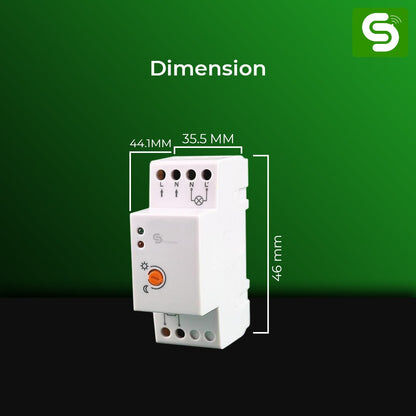
An LDR Sensor (Light Dependent Resistor Sensor) is an automatic lighting controller that detects ambient light levels and switches connected lights ON at dusk and OFF at dawn without manual intervention. It is commonly used for street lights, garden lights, parking areas, security lighting and commercial outdoor installations.
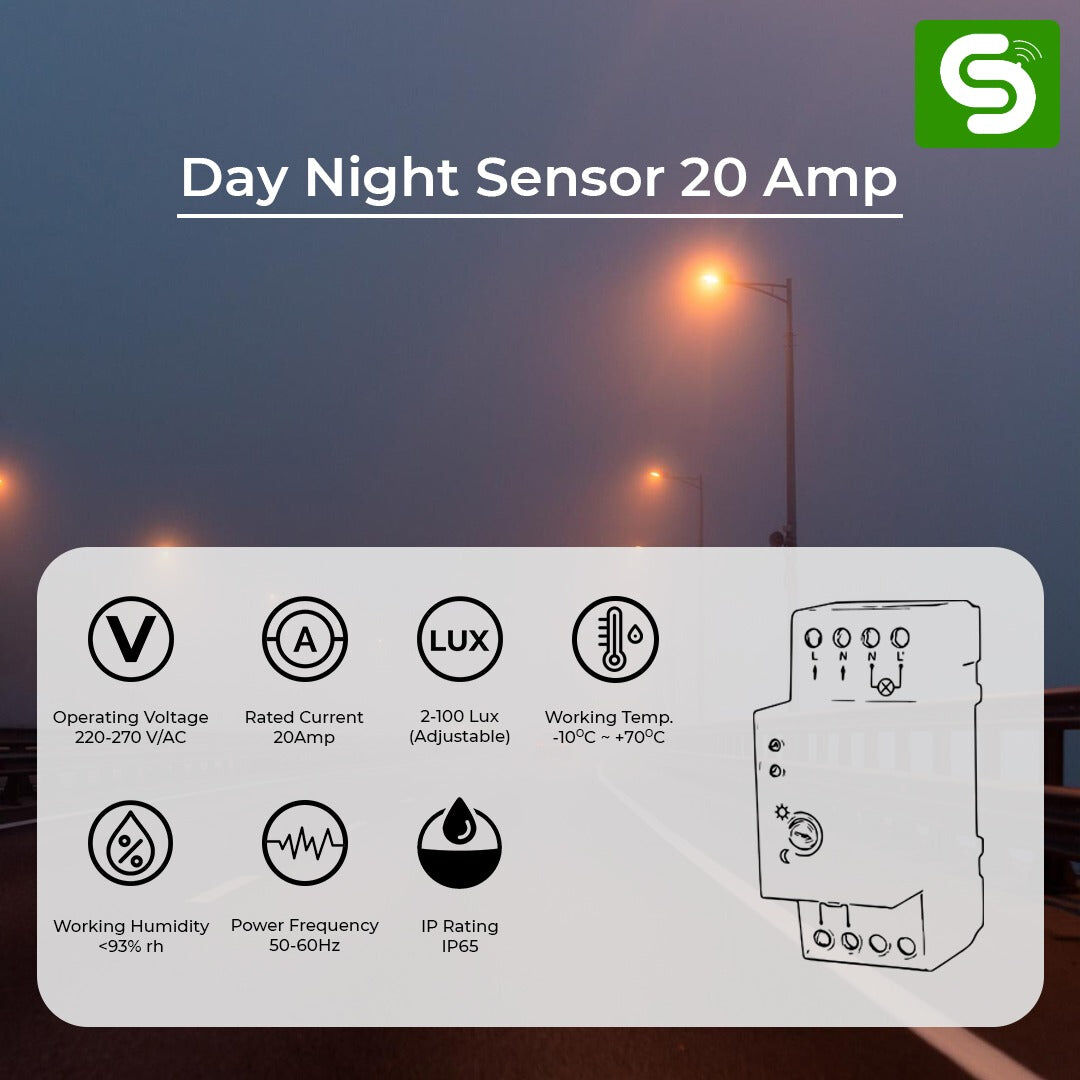
The Esysense ESY-LD27 Day Night Photocell Sensor operates on 220–270V AC, supports 20A loads, features an adjustable 2–100 Lux switching range, IP65 weatherproof protection, and is designed for reliable automatic outdoor lighting control.
Product Overview:
ESY-LD27 Day Night Photocell Sensor
1. Operating Voltage: 220–270V AC
2. Frequency: 50–60Hz
3. Rated Current: 20A
4. Sensor Type: LDR (Light Dependent Resistor)
5. Ambient Light Setting: Adjustable (2–100 Lux)
6. Protection Rating: IP65
7. Mounting: Pole Mount
8. Best Applications: Street lights, Garden lighting, Parking areas & Outdoor security lighting
What is an LDR Sensor?
An LDR Sensor uses a Light Dependent Resistor (LDR) to measure the surrounding light intensity. As daylight decreases in the evening, the resistance of the LDR changes and the controller automatically switches connected lighting ON. When sunlight returns in the morning, the sensor turns the lights OFF. Unlike timers, an LDR sensor responds to actual environmental lighting conditions, making it more reliable throughout the year as sunrise and sunset times change.
Bottom Line:
An LDR sensor provides fully automatic dusk-to-dawn lighting while reducing unnecessary electricity consumption.
Key Features of the Esysense ESY-LD27:
The ESY-LD27 offers:
(i) Automatic dusk-to-dawn operation
(ii) Light Dependent Resistor (LDR) technology
(iii) 20A switching capacity
(iv) Adjustable 2–100 Lux sensitivity
(v) 220–270V AC operation
(vi) IP65 weatherproof housing
(vii) Pole-mounted installation
(viii) Reliable outdoor performance
(ix) Suitable for harsh weather conditions
These features make it ideal for residential, commercial and municipal outdoor lighting.
Best Applications:
Street Lights: Automatically switches street lighting according to natural daylight.
Garden Lighting: Provides hands-free control for landscape and pathway lighting.
Parking Areas: Ensures lights operate only when required during low-light conditions.
Security Lighting: Automatically illuminates building exteriors during the night.
Industrial Premises: Suitable for warehouses, factories and perimeter lighting.
Bottom Line:
The ESY-LD27 is designed for outdoor installations requiring reliable automatic lighting control.
LDR Sensor vs PIR Motion Sensor:
LDR Sensor
1. Detects Ambient Light: Yes
2. Detects Human Motion: No
3. Best For: Outdoor day/night lighting automation
4. Street Light Control: Excellent
5. Automatic Dusk-to-Dawn Operation: Yes
PIR Motion Sensor
1. Detects Ambient Light: No
2. Detects Human Motion: Yes
3. Best For: Occupancy-based lighting
4. Street Light Control: Limited
5. Automatic Dusk-to-Dawn Operation: No
Bottom Line:
Choose an LDR sensor for automatic dusk-to-dawn operation, while PIR sensors are ideal for lighting activated by human movement.
Benefits of Installing the ESY-LD27:
Installing the ESY-LD27 provides:
1. Automatic day/night operation
2. Reduced electricity costs
3. No manual switching
4. Improved outdoor safety
5. Reliable weatherproof performance
6. Longer lighting life
7. Low maintenance
These benefits make it an excellent solution for outdoor lighting automation.
Installation Tips
For the best performance:
1. Mount the sensor where it receives natural daylight.
2. Avoid positioning it directly under the controlled light source.
3. Set the required Lux sensitivity according to the application.
4. Install on a stable outdoor pole or suitable surface.
5. Ensure correct wiring and weatherproof connections.
Frequently Asked Questions
Q: What is an LDR Sensor?
A: An LDR Sensor automatically controls outdoor lighting by sensing ambient daylight and switching connected lights ON at dusk and OFF at dawn.
Q: What is the current rating of the ESY-LD27?
A: The ESY-LD27 supports lighting loads up to 20A, making it suitable for higher-capacity outdoor lighting circuits.
Q: Is the Lux setting adjustable?
A: Yes. The sensor features an adjustable 2–100 Lux ambient light setting to customize switching according to local conditions.
Q: Can the ESY-LD27 be used outdoors?
A: Yes. It features an IP65 weatherproof enclosure, making it suitable for outdoor environments exposed to rain and dust.
People Also Ask
Q: What is the difference between an LDR sensor and a photocell sensor?
A: There is virtually no functional difference. Both detect ambient light and automatically control lighting based on day and night conditions. The terms are often used interchangeably.
Q: Can an LDR sensor save electricity?
A: Yes. By operating lights only during low-light conditions, an LDR sensor helps reduce unnecessary energy consumption.
Q: Where can the ESY-LD27 be installed?
A: It is ideal for street lights, gardens, parking areas, security lighting, industrial premises and commercial outdoor installations.
Q: Does the ESY-LD27 work in rainy weather?
A: Yes. Its IP65-rated enclosure protects it against dust and water, making it suitable for year-round outdoor use.
Conclusion
An LDR Sensor is a dependable solution for automating outdoor lighting based on natural daylight. It improves convenience, reduces electricity consumption and eliminates the need for manual switching.
The Esysense ESY-LD27 Day Night Photocell Sensor combines 220–270V AC operation, 20A load capacity, adjustable 2–100 Lux sensitivity, IP65 weatherproof protection, and automatic dusk-to-dawn control, making it an ideal choice for street lights, gardens, parking areas, security lighting and commercial outdoor installations.
Written from direct product testing and manufacturer specifications by Esysense Tech Innovations Pvt. Ltd., Ghaziabad, India. All prices, specs and model references are verified against live product listings at esysense.com. Last updated: July 2026