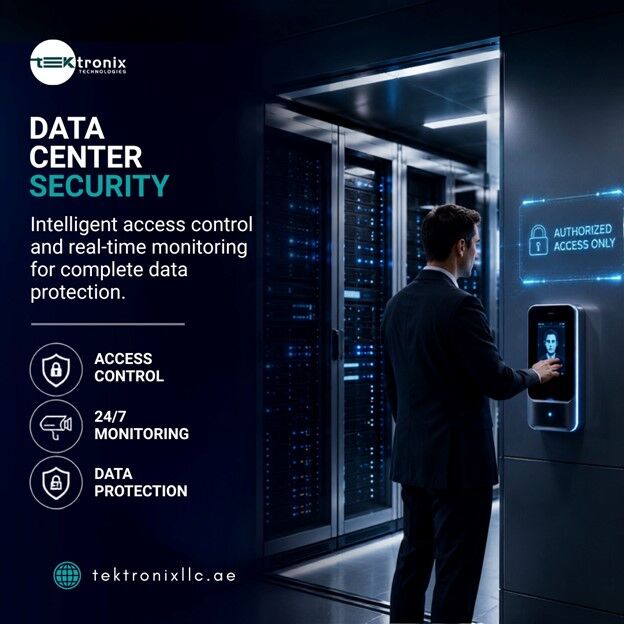
Higher education institutions across the UAE increasingly rely on centralised data infrastructure supporting everything from student information systems and learning management platforms to specialised research computing environments, often across multiple faculties with distinct and sometimes competing access requirements. That complexity, combined with the sector's growing attractiveness as a cyberattack target globally, makes university data center security a genuinely distinct discipline rather than a smaller-scale copy of corporate practice.
Why University Data Centers Face a Distinct Risk Profile
Universities globally have become an increasingly attractive target for cyberattacks, holding valuable research data, large volumes of personal information across student and staff populations, and often less mature security postures than the commercial sector, historically driven by budget constraints and academic cultures that traditionally prioritised open collaboration over restrictive access control.
At the same time, university data centers typically serve an unusually diverse set of internal stakeholders — administrative staff needing access to student records, faculty running research computing workloads, and IT teams managing everything from email infrastructure to specialised laboratory equipment — each with different risk profiles and access requirements that a single, undifferentiated security policy struggles to serve well.
Physical Security for Campus Data Centers
Data Center Access Control for Multi-Department IT Environments
University Data Center Access Control needs to accommodate multiple distinct user groups — central IT staff, departmental technical administrators, and occasionally faculty researchers needing physical access to specialised equipment — each requiring different permission tiers rather than a single blanket access policy suited to a typical corporate environment.
Data Center Surveillance Across Academic and Research Facilities
Comprehensive Data Center Surveillance covering both central data center facilities and any distributed departmental server rooms gives university IT security teams complete visibility across what is often a more physically dispersed infrastructure footprint than a typical single-site corporate deployment.
Data Center Intrusion Detection for Distributed Campus Infrastructure
Because university IT infrastructure frequently spans multiple buildings across a large campus, Data Center Intrusion Detection needs to cover not just a single central facility but any satellite server rooms supporting individual faculties or research centres, each representing a potential access point into the broader institutional network.
Conclusion
University IT infrastructure carries a genuinely distinct risk profile, balancing open academic collaboration against an elevated threat landscape targeting higher education specifically, and comprehensive Data Center Security designed around that reality matters more than a generic corporate approach. Multi-tier Data Center Access Control, campus-wide Data Center Surveillance, and distributed Data Center Intrusion Detection address the physical security complexity of a dispersed academic environment. On the network side, Cybersecurity for Data Center practices suited to open academic networks, properly segmented Data Center Encryption and Data Center Firewalls, and correlated Data Center Threat Detection protect both student records and valuable research data. As Data Center Security UAE expectations rise for higher education — including Data Center Security Dubai KHDA-aligned institutions and Data Center Security Abu Dhabi CAA-accredited universities — institutions that invest thoughtfully, even within real budget constraints, protect both their academic mission and their institutional reputation.
For more information contact us on:
Tektronix Technology Systems Dubai-Head Office
[email protected]
+971 50 814 4086
+971 55 232 2390
Office No.1E1 Hamarain Center 132 Abu Baker Al Siddique Rd – Deira – Dubai P.O. Box 85955