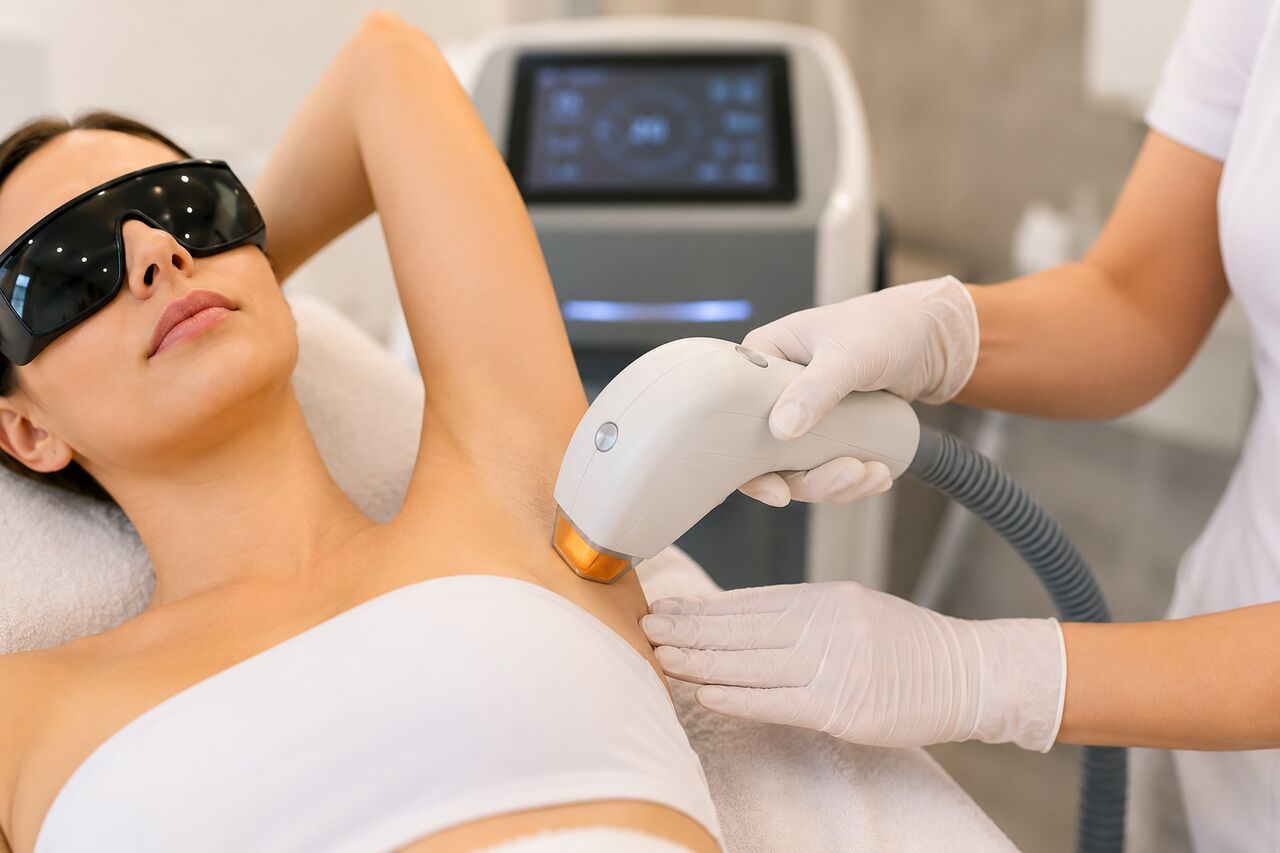
In Dubai, where warm weather and outdoor activities are part of everyday life, many people view hair removal not merely as an aesthetic choice but as a regular part of their grooming routine. Since its introduction, laser hair removal in Dubai has become one of the city's most sought-after aesthetic treatments. However, there is still a significant gap between public expectations and the realities patients experience during treatment. This article offers an unbiased, evidence-based perspective on laser hair removal in Dubai. It explores who can benefit most from the procedure, outlines realistic expectations for results, discusses how Dubai’s unique climate and lifestyle impact treatment, and details the key steps to take before undergoing laser hair removal.
What realistic outcomes look like
It is important to view laser hair removal as a long-term hair reduction technique rather than a treatment that delivers permanent results after a single session. Some individuals experience noticeable thinning of hair regrowth after laser hair removal, while others—often due to hormonal factors—require ongoing maintenance treatments. For successful outcomes, it is essential to consider three biological factors: hair color and thickness, the proportion of hair follicles in the anagen (growth) phase, and hormonal influences. Most people experience noticeable hair reduction only after undergoing multiple treatment sessions.
Why local context matters in Dubai
The environmental conditions and diverse population of Dubai significantly influence both the treatment process and aftercare for patients. Due to Dubai's year-round high UV exposure, protecting the skin before and after treatment is essential to minimize the risk of pigmentation changes. Furthermore, the diverse range of skin tones and hair types within Dubai’s multicultural population makes it essential to tailor treatment settings to each individual.
Choosing a technology and tailoring settings
Modern hair removal methods differ in wavelength, pulse duration, and cooling techniques, making each approach better suited to particular skin and hair types. Wavelengths that penetrate deeper into the skin are safer for individuals with darker skin tones, as they reduce unnecessary exposure to melanin. In contrast, shorter wavelengths can deliver faster results for those with light skin and dark hair. The effectiveness of treatment depends less on the brand of the laser device and more on the practitioner's ability to customize the settings according to an individual's skin and hair characteristics.
Common technologies used for laser hair removal include Alexandrite, Diode, and Nd:YAG lasers. Each technology offers unique advantages depending on the patient's skin tone, hair colour, and treatment goals.
Practical session expectations
This may include a patch test to evaluate how the skin responds to the treatment. This may include a patch test to evaluate how the skin responds to the treatment. Patients are instructed to shave the treatment area before the procedure. This allows the laser energy to target the hair follicles directly while minimizing unnecessary heat exposure to the surrounding skin. Cooling techniques such as contact cooling, cold air, or cooling gels are applied during the procedure to minimize pain and protect the skin's top layer from damage.
How to Prepare for Laser Hair Removal in Dubai
Proper preparation can significantly improve treatment outcomes and reduce the risk of side effects. Prior to laser hair removal, patients are commonly instructed to:
Refrain from tanning and direct sun exposure for at least two weeks before treatment.
Avoid waxing, threading, or plucking for several weeks, as the laser needs an intact hair follicle to be effective.
Ensure the treatment area is shaved the day before the session.
Avoid self-tanning products.
Inform the practitioner about any medications, skin conditions, or hormonal concerns that may affect the treatment.
Managing side effects and complications
When performed correctly, side effects are usually mild, temporary, and uncommon. Less common complications include post-inflammatory hyperpigmentation, hypopigmentation, and superficial blistering. In regions with a high UV index, such as Dubai, adopting protective measures—including sunscreen and protective clothing—and scheduling treatments outside peak sun hours significantly reduces the risk of pigmentation issues.
Cost and time trade-offs
Laser hair removal requires an upfront investment of both time and money. However, completing the recommended treatment schedule is generally the most cost-effective approach and often delivers better long-term results. Costs vary based on the treatment area and the number of sessions required, but the most cost-effective approach is to complete the full treatment cycle at recommended intervals.
Special Situations and Contraindications
Some considerations for medical and lifestyle issues include the following:
Individuals with hormonal conditions such as PCOS may require additional sessions and long-term maintenance treatments.
Recently tanned or sunburned skin may increase the risk of complications and often requires postponing treatment.
Certain medications that increase photosensitivity, as well as active skin infections, may temporarily make treatment unsuitable.
Very light, fine, red, or grey hair may respond less effectively because these hair types contain less melanin.
Frequently asked questions
Q1. Can laser hair removal be safely performed during the summer in Dubai?
Yes, but strict sun protection before and after treatment is essential to reduce the risk of pigmentation changes.
Q2. Is laser hair removal suitable for men?
Yes. Many men choose laser hair removal for areas such as the chest, back, shoulders, and beard line.
Q3. Can I exercise after laser hair removal?
It is generally recommended to avoid intense exercise, saunas, and excessive sweating for at least 24 hours after treatment.
Q4. Can sun exposure affect the results?
Excessive sun exposure before or immediately after the procedure can increase the risk of complications such as hyperpigmentation, making sun protection essential.
Q5. How can discomfort be minimized?
These include cooling technologies, numbing creams for sensitive areas, and reducing pulse energy.
Conclusion
For many individuals, laser hair removal in Dubai can provide an effective long-term solution for managing unwanted hair when biological factors, appropriate technology, and environmental considerations are taken into account. Success depends less on publicity and more on realistic expectations, proper equipment and parameter selection, regular appointments, and diligent UV protection. With proper preparation and adherence to aftercare recommendations, laser hair removal can become an effective long-term maintenance strategy rather than a temporary cosmetic solution.