Why Hospitals Face a Distinct Access Control Challenge
A typical office building manages a relatively stable population moving between a modest number of zones. A hospital manages a constantly shifting mix of patients, visitors, clinical staff working rotating shifts, and contractors, all needing carefully differentiated access to dozens of distinct zones ranging from fully public waiting areas to highly restricted operating theatres and controlled substance storage.
That complexity is compounded by round-the-clock operation. Unlike an office that empties overnight, a hospital operates continuously, meaning access control can never simply shut down during off-hours - it has to maintain full functionality and security integrity at three in the morning just as reliably as during the busiest part of the day.
Facility scale adds a further layer, since a large hospital campus may span multiple connected buildings constructed at different times, each potentially running different legacy access systems that need consolidating into a single coherent platform rather than continuing to operate as disconnected islands of security infrastructure.
Biometric Verification for Clinical Environments
Biometric Access Control Dubai Facilities Trust for Sensitive Areas
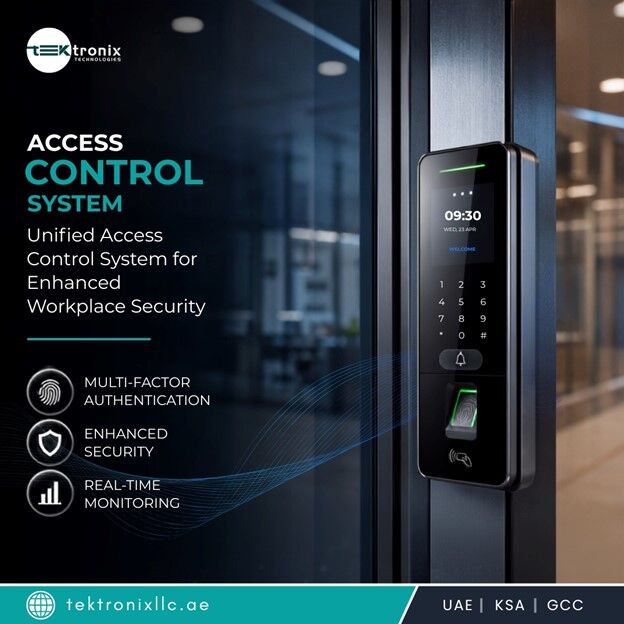
For pharmacies, controlled substance storage, and other genuinely sensitive areas, Biometric Access Control Dubai hospitals increasingly deploy ties access directly to a specific verified individual, closing the credential-sharing gap that remains a persistent vulnerability in card-only healthcare access systems.
Layered Security for Regulated Healthcare Operations
Security Access Control System Requirements for Licensed Facilities
Healthcare facilities operating under DHA licensing typically require a Security Access Control System with detailed audit logging and integration into the hospital's broader security operations, satisfying compliance expectations that extend well beyond what a simple door-lock replacement was ever designed to address.
Door Access Control for Every Clinical and Administrative Zone
At the most fundamental level, Door Access Control replaces mechanical locks throughout a hospital with credential-based readers, giving facility management centralised oversight across dozens of zones from a single administrative platform rather than a sprawling collection of physical keys.
Flexibility for a Mobile Clinical Workforce
Mobile Access Control for Staff Moving Between Facilities
Healthcare groups operating multiple facilities benefit from Mobile Access Control, letting clinical staff who rotate between different hospital sites use a single smartphone-based credential rather than managing a separate physical badge for every facility they work across.
Choosing the Right Hardware and Platform
Access Control Device Considerations for Clinical Settings
Selecting the right Access Control Device for a hospital means accounting for infection control requirements, since readers in clinical areas need surfaces that withstand frequent disinfection without degrading, a consideration standard commercial-grade hardware isn't always built to handle.
Access Control Solutions Scaled to Hospital Complexity
The right Access Control Solutions for a large multi-department hospital look considerably different from what a small specialised clinic needs - zone count, shift-based permission scheduling, and integration with hospital HR and credentialing systems should all shape the final specification.
Access Control System UAE: Healthcare Deployment Considerations
Healthcare facilities specifying an Access Control System UAE-wide need to navigate both general security standards and healthcare-specific regulatory oversight from DHA, MOHAP, or DOH depending on the emirate and facility type, each carrying distinct documentation and audit expectations.
Access Control System Dubai - DHA-Regulated Facility Requirements
An Access Control System Dubai deployment for a DHA-licensed hospital typically needs to demonstrate access governance as part of licensing review, with particular attention to controlled substance storage areas and patient data-adjacent administrative zones that carry heightened compliance scrutiny.
Conclusion
Healthcare access control carries stakes a typical commercial deployment never faces, and the best Access Control System for a Dubai hospital reflects that reality throughout its design. Biometric Access Control Dubai facilities increasingly deploy for sensitive areas closes credential-sharing risk, while a properly specified Security Access Control System satisfies DHA licensing expectations. Door Access Control across every clinical zone, Mobile Access Control for rotating multi-site clinical staff, and the right Access Control Device and Access Control Solutions scaled to hospital complexity together protect both patients and institutional standing. As Access Control System UAE expectations for healthcare continue rising - including Access Control System Dubai DHA-regulated deployments-hospitals that invest in genuinely clinical-grade access control now protect the people and trust their institution depends on.