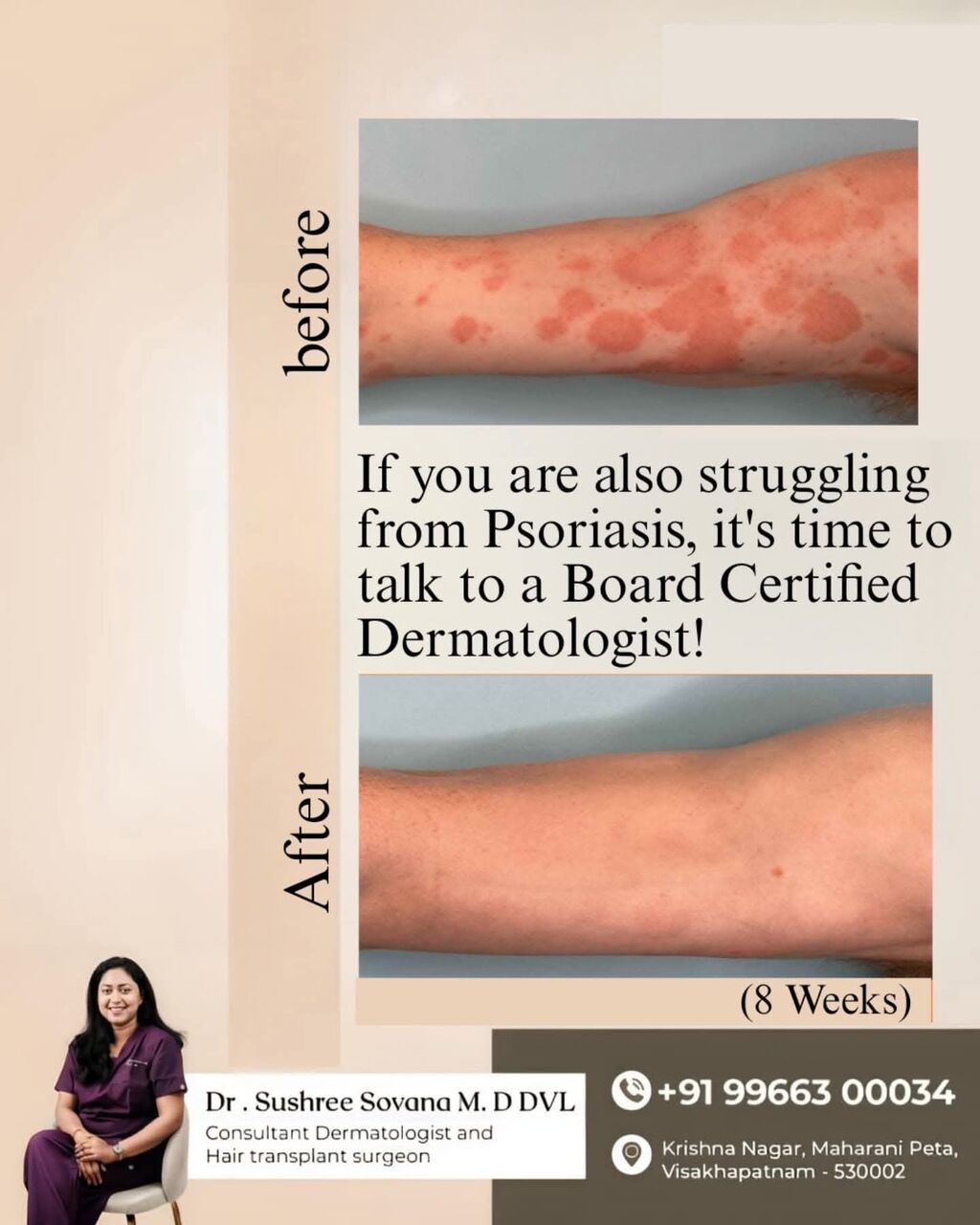
Signs of Foot Psoriasis:
Scaly, red, or discolored patches: These can be raised, thickened, and covered with silvery-white scales.
Dry, cracked skin: Especially on the heels and balls of the feet, these cracks can be painful and even bleed.
Itching and burning sensations: These can range from mild to severe and can be very uncomfortable.
Pitted or thickened nails: Psoriasis can also affect the toenails, causing them to become pitted, thickened, or even separate from the nail bed.
Blisters (in pustular psoriasis): Some individuals with palmoplantar psoriasis develop tiny, pus-filled blisters on the affected skin.
Location: Symptoms can occur on the soles, tops of the feet, between the toes, and even around the nails.
Treatment Options:
Corticosteroids: Creams or ointments that reduce inflammation and slow down skin cell growth.
Vitamin D analogues: Topical medications that help regulate skin cell growth.
Salicylic acid and coal tar: Help to soften and remove scales.
Moisturizers: Essential for keeping the skin hydrated and preventing cracks.
Light Therapy (Phototherapy):
Exposure to controlled amounts of ultraviolet (UV) light can help reduce inflammation and slow down skin cell growth.