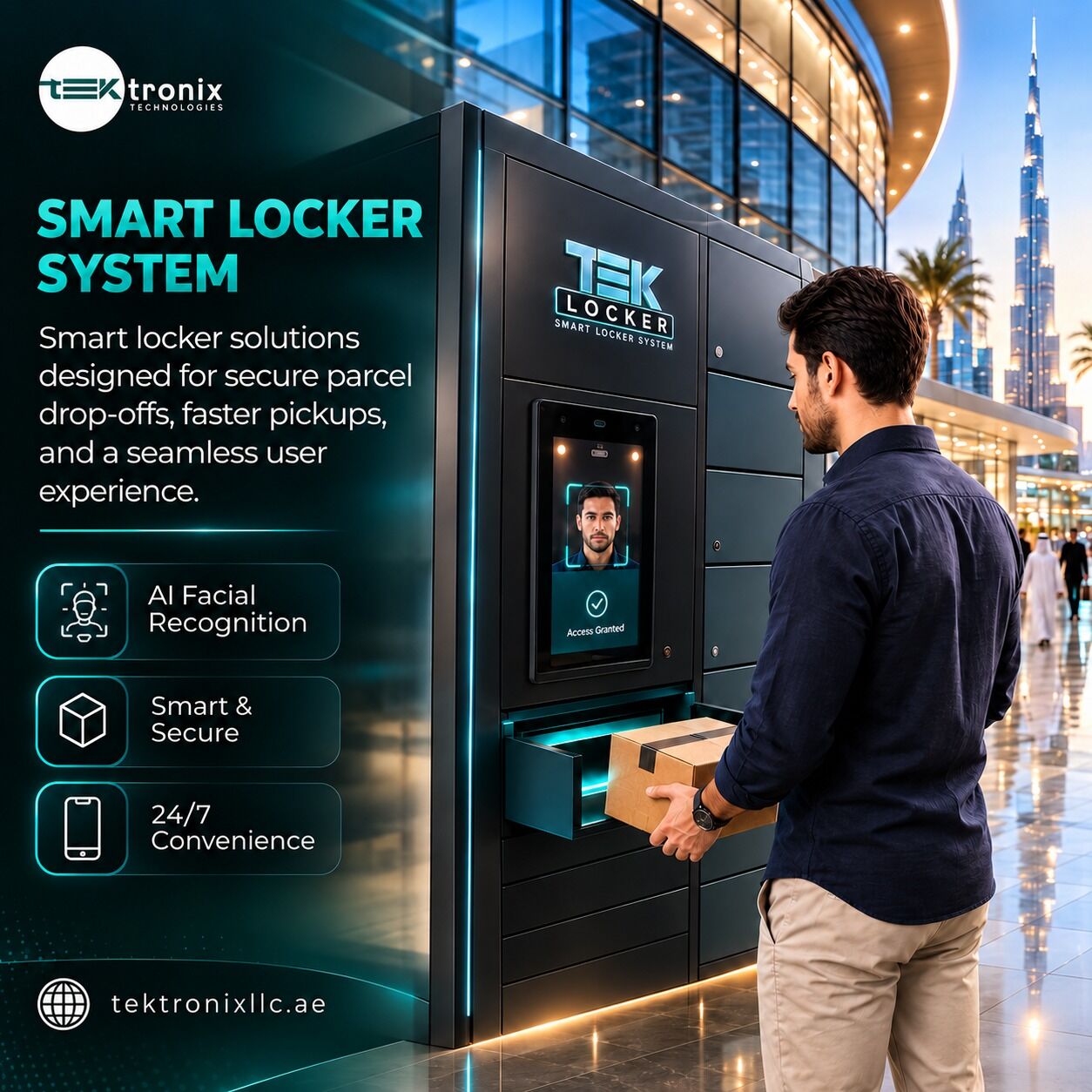
Mechanical locks and physical keys create a disproportionate amount of administrative work in a school setting. Keys get lost within days of being issued, combination codes get shared or forgotten, and facilities staff spend hours each term reissuing locks, cutting bolts on jammed lockers, or resolving disputes over who left a locker open.
There is also a safety dimension that matters more in a school than almost any other setting. When a locker cannot be tied to a specific, verified student, it becomes difficult for staff to quickly establish who has access to a particular space — a gap that matters during a lost-item investigation, a bullying complaint, or a broader security review of the campus.
Core Features of a Smart Locker for Schools
School environments bring their own set of requirements that differ from an office, gym, or hotel deployment. A Smart Locker for Schools needs to be simple enough for young students to use independently, durable enough to withstand daily heavy use, and secure enough to reassure parents and school leadership that student belongings are properly protected.
Electronic Locker System Hardware Built for High-Traffic Corridors
At the hardware level, an Electronic Locker System replaces mechanical key locks with motorized or solenoid locking mechanisms connected to a central control unit. This allows facilities staff to remotely release any locker in an emergency or forgotten-code situation, and removes the recurring cost and disruption of rekeying or replacing damaged padlocks across hundreds of units.
Because school corridors see intense, concentrated use during break periods and class changeovers, hardware needs to handle rapid, repeated cycling without failure — a requirement that consumer-grade locker hardware, designed for lighter use, typically cannot meet reliably over a full academic year.
Digital Locker System Options for Classrooms, Labs, and Sports Facilities
A Digital Locker System can be deployed across different zones of a campus with different rules for each — a general-use locker bank for daily bag and book storage, a lab locker area with stricter access logging for shared equipment, and sports-facility lockers that release automatically at the end of the school day rather than remaining assigned overnight.
This flexibility allows a single school to run several distinct locker policies from one unified platform, rather than managing separate systems for the main building, the sports complex, and after-school activity spaces.
Face Recognition Locker Access for Younger Students
For younger students who are more likely to forget a card or code, Face Recognition Locker Access offers a simple, foolproof way to open an assigned locker — the student simply looks at the reader, with nothing to carry, remember, or lose. This is particularly useful in primary and early-years settings where relying on a physical credential often leads to daily access issues.
QR Code Smart Locker Access for Visiting Students and Short-Term Use
For situations that don't warrant a permanent credential — a visiting student, a summer camp participant, or a locker assigned only for the duration of an exam period — QR Code Smart Locker Access provides a fast, temporary alternative. A code generated for a specific date range unlocks the assigned locker and expires automatically once that period ends, with no manual reset required from staff.
App-based Locker Access for Older Students and Staff
Secondary school students and staff, who are already comfortable managing school portals, timetables, and communication apps on their phones, are well suited to App-based Locker Access. A dedicated school app lets students unlock their assigned locker directly from their device, request a temporary locker for a specific activity, and receive automated reminders if an item is left inside after hours.
Locker Management Software: The Administrative Backbone
None of this function without the platform tying it together. Locker Management Software gives school administrators a single dashboard to assign lockers by class or year group, monitor real-time occupancy, generate reports for facilities planning, and instantly revoke access for a student who has left the school or lost a credential.
This is particularly valuable at the start and end of each academic year, when hundreds of locker assignments typically need to be reset at once. Rather than a facility team manually cutting old locks and reissuing new ones over several days, a digital platform can reassign an entire year group’s locker in minutes, directly from the administration office.
Student Safety and Safeguarding Benefits
Beyond convenience, digital locker systems support broader school safeguarding goals. Every locker interaction is logged with a timestamp and verified identity, giving school leadership a clear, auditable trail if an incident needs to be investigated — whether that involves a missing item, an unauthorized locker opening, or a dispute between students.
This visibility also supports parents' growing expectation that schools maintain modern, accountable systems around their children's belongings and daily movement through the building, alongside existing measures like access-controlled gates and campus CCTV.
School counsellors and pastoral care teams also benefit from this data in less obvious ways. A pattern of repeated locker access outside normal hours, or a sudden change in a student's usual routine, can sometimes surface early signs of a wellbeing concern worth a quiet conversation — information that was simply unavailable under a manual key system.
Reducing the Facilities and Financial Burden on School Operations
Facilities teams in larger schools often underestimate how much recurring cost sits inside mechanical locker maintenance until they measure it directly. Cutting a single forgotten padlock typically requires a maintenance technician, a bolt cutter, and a replacement lock — a small task individually, but one that repeats dozens of times per term across a mid-sized secondary school.
Digital systems convert this recurring, unpredictable maintenance cost into a largely fixed, one-time investment. Once installed, most locker-access issues — a forgotten code, a lost card, a student needing temporary access — can be resolved remotely by administration staff in seconds, without a facilities call-out at all.
Key Benefits of a Smart Locker System UAE Schools Are Reporting
Schools deploying a Smart Locker System UAE-wide are seeing gains that extend across facilities management, student experience, and school safety. Commonly reported benefits include:
● Fewer facilities hours spent on lost keys and broken combination locks
● Instant, bulk locker reassignment at the start of each academic year
● A clear audit trail supporting safeguarding and incident investigations
● Reduced disputes between students over locker access and shared space
● Lower long-term maintenance costs compared to mechanical locking hardware
● A modern, well-equipped impression for prospective parents during campus tours
Smart Locker System Dubai: Meeting the