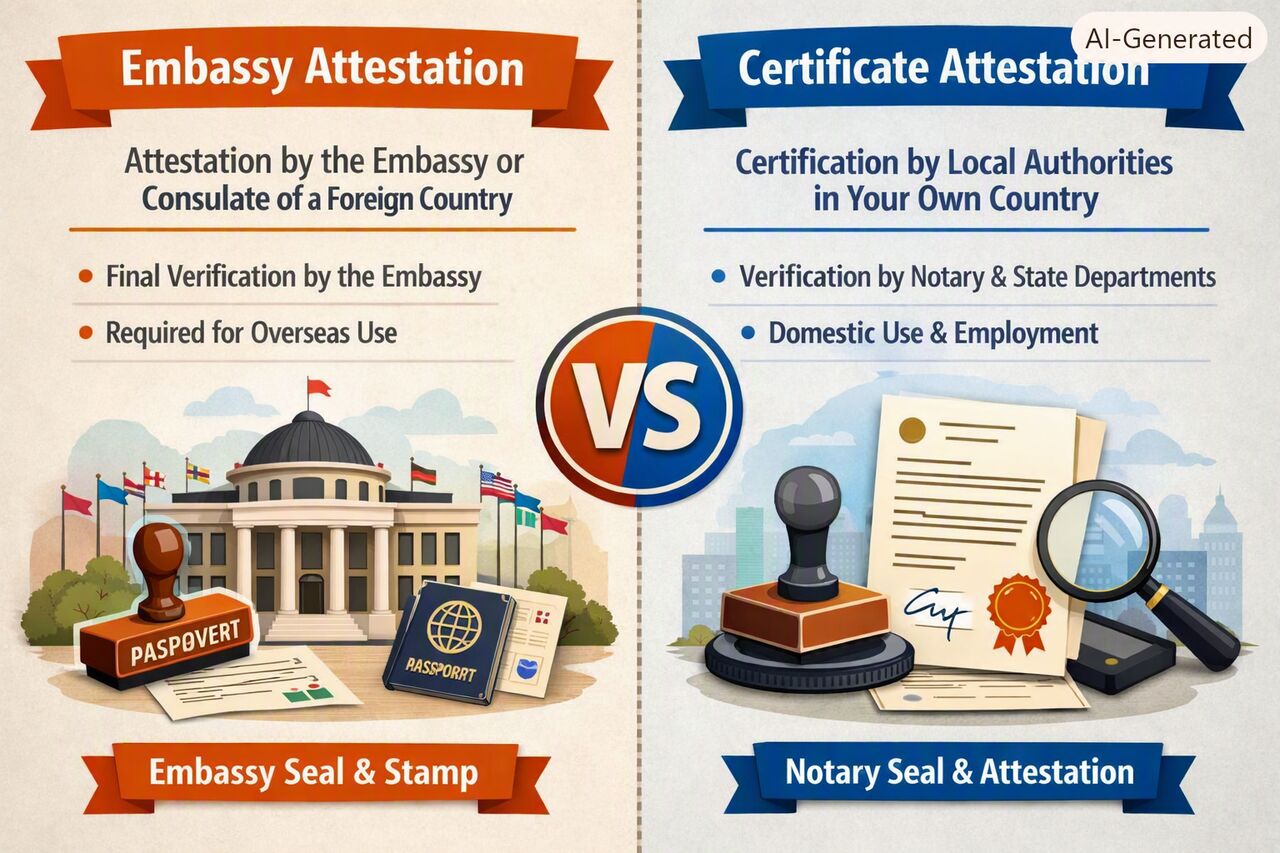
They Are Performed at Different Stages
One of the biggest differences is where each process fits in the document legalization journey. Certificate attestation usually takes place before documents are presented to the embassy. Various authorized government departments verify the authenticity of the certificate before it reaches the embassy for the next level of authentication.
The Authorities Involved Are Different
Another important difference lies in the authorities responsible for verification. Certificate attestation involves multiple domestic government departments that authenticate the document based on its type and issuing authority.
Embassy attestation, however, is performed by the embassy or consulate of the destination country after the required government authentications have already been completed. Since different authorities handle these stages, one cannot replace the other.
The Purpose of Verification Is Different
Although both processes authenticate documents, their objectives are different.
- Certificate attestation focuses on confirming that the document issued within the home country is genuine and legally valid.
- Embassy attestation confirms that the destination country's diplomatic authority accepts the authenticated document for use within its jurisdiction.
- Because of these different objectives, applicants usually need both stages when applying for countries that require embassy legalization.
The Documents May Vary Depending on the Requirement
The documents involved often depend on the purpose of travel.
- For employment, educational certificates are commonly processed.
- For higher education, universities generally require academic certificates and transcripts.
- For family visas, marriage and birth certificates become more important.
Embassy Attestation Is Not Required for Every Country
Another major difference is that embassy attestation is country-specific.
Some countries require embassy legalization before accepting foreign documents, while others follow different international authentication systems. Certificate attestation alone may not always be sufficient, but embassy attestation is also not universally required.
Processing Time Can Be Different
Certificate attestation and embassy attestation often have different processing timelines. Certificate verification depends on the issuing authorities and government departments involved.
Embassy attestation depends on the embassy's procedures, working days, public holidays, and country-specific documentation policies.
As a result, the total processing time varies depending on both stages rather than a single verification process.
One Process Cannot Replace the Other
Many applicants believe that completing certificate attestation automatically means embassy attestation is unnecessary. In reality, these are two separate stages.
If embassy legalization is mandatory for your destination country, skipping that step may result in your documents not being accepted for visa processing, employment, or admission.
Requirements Depend on the Purpose of Travel
The need for embassy attestation also depends on why you are travelling abroad.
For example:
- Employment applications often require complete legalization of educational certificates.
- Student applications may require academic documents along with additional institutional requirements.
- Family sponsorship usually involves personal documents such as marriage or birth certificates.
Each category follows its own documentation requirements, making it important to understand the complete process before submitting documents.
Conclusion
Certificate attestation and embassy attestation are closely connected but they are not the same. Each serves a different purpose, involves different authorities, and forms a separate stage in the international document legalization process. Knowing when each process is required helps applicants avoid unnecessary delays, comply with country-specific regulations, and ensure their documents are accepted for overseas use.
For More Information Visit Here:- https://www.embassyattestat ...