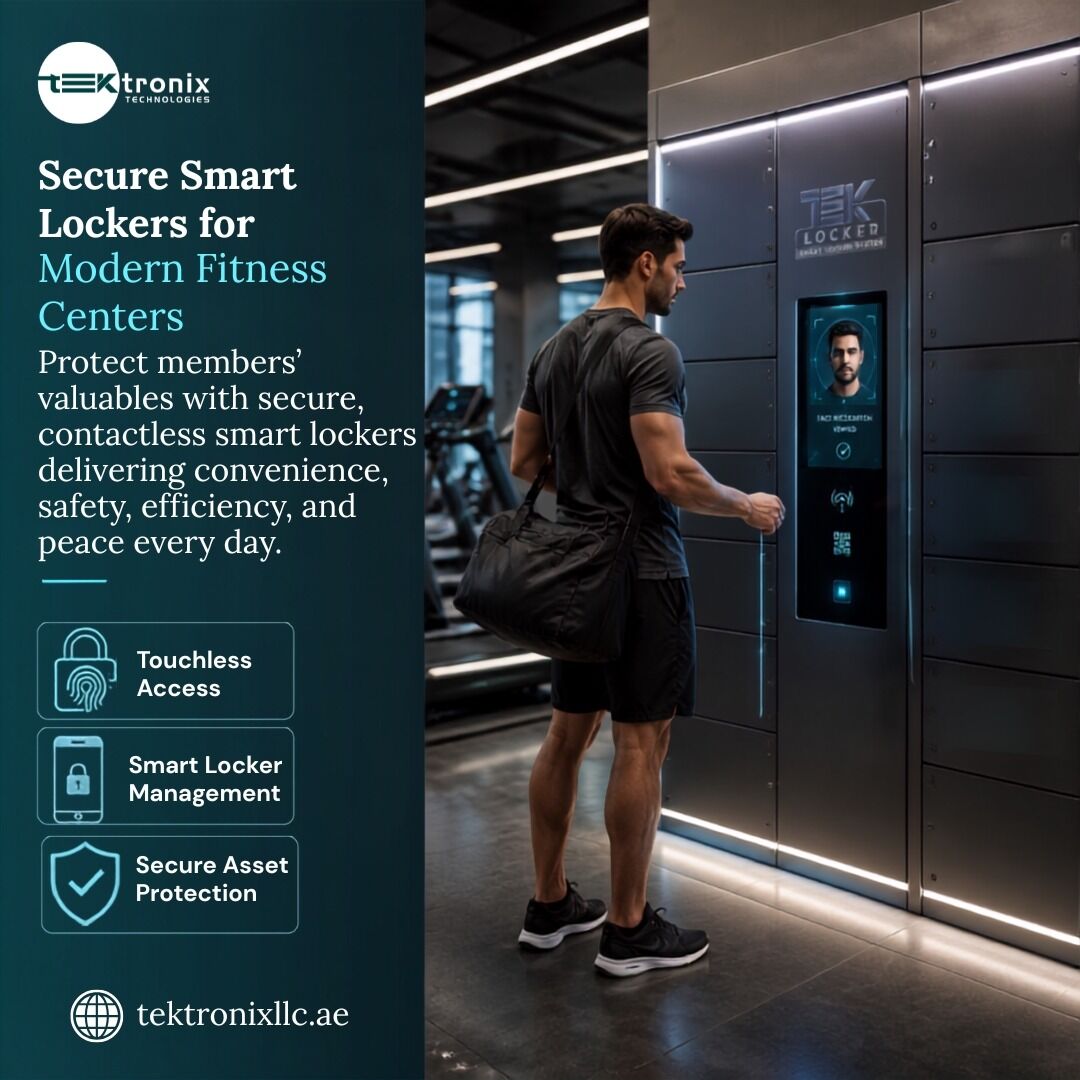
It's easy to underestimate how much a traditional padlock-and-key system actually costs a gym operator once every cost is accounted for. Beyond the obvious expense of replacing lost keys, staff time spent resetting combination locks, cutting bolts on jammed lockers, and managing disputes over who left a locker occupied adds up to a meaningful, recurring operational drag — one that rarely shows up as a single line item but quietly consumes front-desk hours every single day.
There is also a member-experience cost that is harder to quantify but just as real. A member arriving for a 6 a.m. session before work does not want to wait behind someone fumbling with a jammed combination lock, and a member rushing to catch a class start time does not want to search for an available locker manually. These friction points accumulate into a subtly worse member experience, even when every other part of the facility is excellent.
What a Smart Locker for Gym Environments Actually Needs to Handle
Locker technology designed for an office or a logistics warehouse does not automatically translate well to a fitness setting. A Smart Locker for Gym deployment needs to survive humidity, chlorine exposure near pool areas, sweat, and the kind of rapid, concentrated usage spikes that happen every time a popular class lets out and dozens of members hit the changing room within minutes of each other.
This operating environment is meaningfully harsher than a typical commercial locker application, which is why gym-specific deployments tend to specify corrosion-resistant hardware, sealed electronics, and lock mechanisms rated for significantly higher daily cycle counts than a standard office locker bank would ever see.
Digital Gym Lockers Dubai Clubs Are Rolling Out at Scale
Across the city, Digital Gym Lockers Dubai fitness brands are installing tie directly into the same mobile app members already use to book classes, track workouts, and manage their membership. Rather than adding another credential to remember, locker access becomes one more feature inside an app member open multiple times a week anyway — reducing onboarding friction to essentially zero for anyone who has already downloaded the club's app.
For boutique studios in particular, this app-first approach also supports a premium brand feel — the locker experience matches the same polished, tech-forward positioning the studio uses in its marketing, rather than feeling like a mismatched legacy system bolted onto an otherwise modern facility.
Electronic Locker System Hardware: What's Actually Inside the Cabinet
Underneath the touchscreen or app interface, an Electronic Locker System relies on motorized or solenoid locking mechanisms wired to a central control board rather than a mechanical tumbler. This architecture is what allows staff to remotely release any locker from a management dashboard — useful both for genuine emergencies and for the more mundane situation of a member who has simply forgotten which locker number they were assigned.
Because this hardware sits behind the scenes, gym operators evaluating vendors should pay close attention to build quality specifics that aren't always visible on a showroom demo — battery backup duration during a power outage, warranty terms on the lock mechanism itself, and how straightforward individual locker repairs are without needing to replace an entire bank.
Face Recognition Locker Access for a Zero-Friction Changing Room
For clubs chasing the fastest possible member turnaround, Face Recognition Locker Access removes the credential entirely from the equation — no card, phone, or code, just a glance at the reader. This matters more in a gym than almost any other setting, since members are frequently moving between a sweaty workout, a locker, and a shower with nothing in hand but a towel.
Facial recognition also solves a specific and common gym frustration: the member who has left their phone in the car or their access card at home. With biometric access, there is nothing to forget, which removes one of the most frequent sources of front-desk interruptions in clubs still relying on physical credentials.
Locker Management Software: Where the Real Operational Value Lives
The visible hardware is only part of the system — the software running behind it is what actually changes day-to-day operations. Locker Management Software gives gym managers a live dashboard of occupancy across every bank, automatic release rules tied to membership status or time limits, and usage reporting that can inform decisions about whether a location needs more locker capacity or could reduce it.
This data layer is often underappreciated during initial evaluation but becomes one of the most valuable parts of the system after a few months of use — operators frequently discover usage patterns they hadn't anticipated, such as a particular time slot consistently running near full locker capacity, informing everything from class scheduling to future locker bank expansion planning.
Data Privacy Considerations for Biometric Locker Access
Any system capturing facial data needs to be handled with appropriate care, both for regulatory compliance and member trust. Reputable locker platforms encrypt biometric templates, limit data retention to what's operationally necessary, and give gym operators clear control over how long a member's facial data is stored after they cancel their membership.
Gyms evaluating vendors should ask directly how facial recognition data is stored, whether processing happens locally on the device or in the cloud, and what the deletion process looks like when a membership ends — questions that matter both for UAE data protection compliance and for reassuring privacy-conscious members considering whether to opt into biometric access.
The Business Case: What Smart Lockers Actually Save a Fitness Operator
Beyond the member experience argument, smart lockers carry a straightforward operational cost case. Clubs typically calculate return across three areas: staff hours no longer spent managing keys and combination resets, eliminated locksmith and hardware replacement costs, and reduced liability exposure from disputes over missing belongings, since every locker interaction is time-stamped and logged rather than relying on staff memory.
For multi-location gym chains, these savings compound significantly. A locker bank that once required staff supervision during peak hours can typically run fully unattended once digital access is in place, freeing that staff member for higher-value member-facing roles like class coaching or sales conversations instead.
Key Benefits of a Smart Locker System UAE Fitness Clubs Are Reporting
Operators rolling out a Smart Locker System UAE-wide are seeing returns that go well beyond convenience. Commonly reported benefits include:
● Faster member turnover between back-to-back class sessions
● Elimination of recurring lost-key and locksmith call-out costs
● Improved changing room hygiene through fully contactless, touch-free access
● Real-time locker occupancy visibility supporting capacity planning
● Reduced theft disputes through auditable, time-stamped access logs