A forgotten combination or lost key doesn't just inconvenience one student — it typically pulls a staff member away from other duties to locate a master key or reset a lock, a small but genuinely recurring drain on administrative time across a school year. Multiply that across a student body of several hundred or more, and the cumulative disruption becomes a meaningful, if often overlooked, operational cost.
Traditional lockers also offer schools essentially no oversight capability. If an item goes missing or a dispute arises over who accessed a specific locker, administration has no reliable record to reference, leaving these situations to unresolved he-said-she-said accounts rather than objective evidence.
Capacity planning presents a further limitation, since a traditional locker bank is physically fixed once installed, making it difficult to accommodate a growing student population without a genuinely disruptive construction project, whereas a properly designed digital system can often be reconfigured or expanded more flexibly as enrolment changes year over year.
Core Technology Behind Smart School Lockers
Electronic Locker System Replacing Keys and Combination Locks
An Electronic Locker System eliminates the physical key and mechanical combination entirely, replacing both with credential-based access that can't be lost the way a physical key can, and can't be forgotten the way a combination sequence often is by a distracted student.
Digital Locker System for Real-Time Locker Assignment
A Digital Locker System tracks locker availability and assignment in real time, letting administration allocate lockers efficiently at the start of each term and immediately reassign a unit once a student graduates or transfers, rather than relying on a static, manually maintained spreadsheet that quickly falls out of date.
Access Methods Built for Student Use
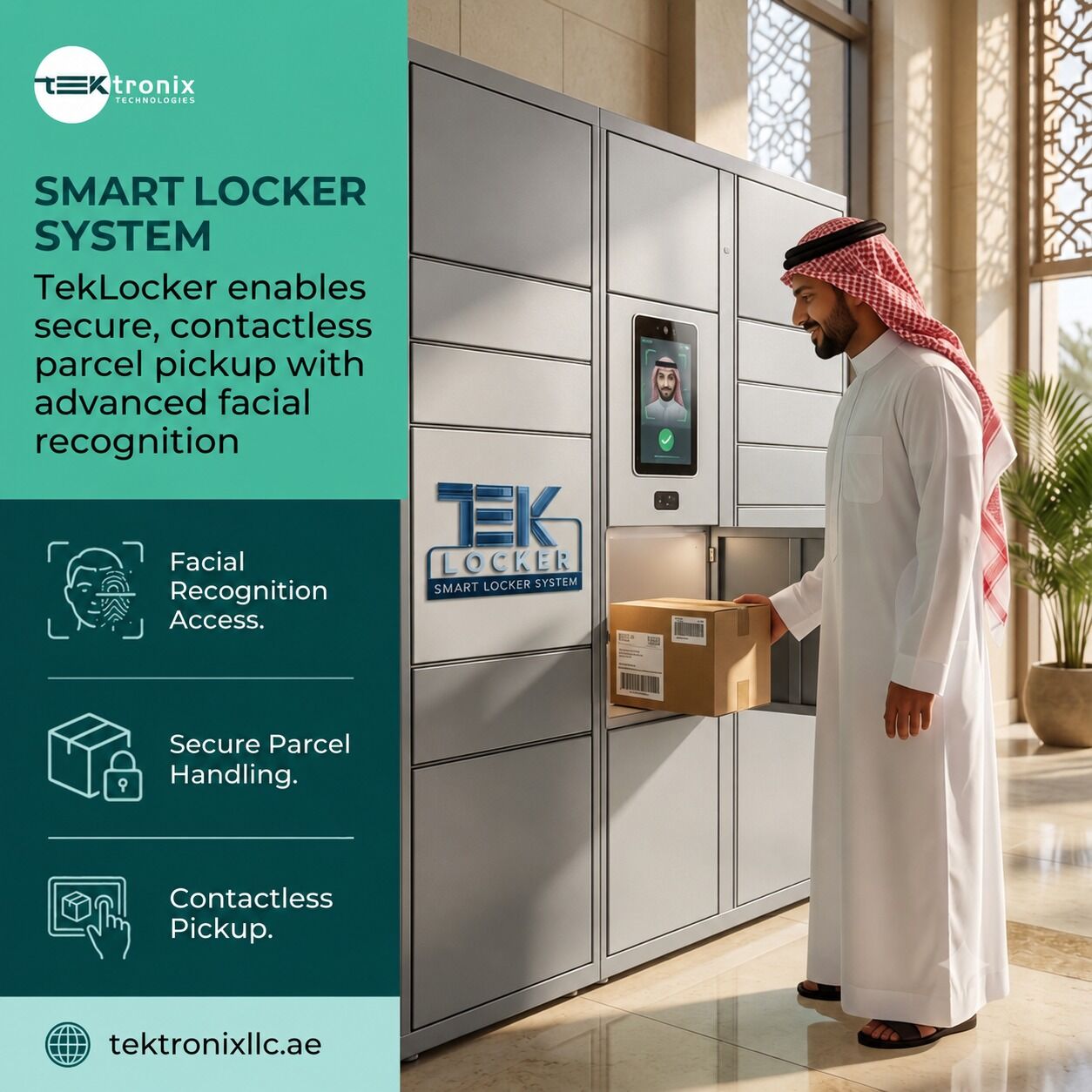
Face Recognition Locker Access for Fast, Secure Verification
For schools prioritising speed and security, Face Recognition Locker Access lets students open their assigned locker instantly without carrying any additional card or remembering a code, though schools should ensure appropriate parental consent and data governance accompany any biometric enrolment involving students.
QR Code Smart Locker Access for Simple, Shareable Entry
For younger students or situations requiring temporary access, QR Code Smart Locker Access provides a simple, non-biometric alternative that a student can use via a printed card or basic device, without requiring biometric enrolment for every user.
App-based Locker Access for Parent and Student Convenience
For older students with school-issued devices, App-based Locker Access turns a phone or tablet into a locker credential, while also giving parents visibility into their child's locker assignment through the same connected app where appropriate for the school's communication policies.
Managing Lockers Across an Entire Campus
Locker Management Software for School Administration Oversight
Behind the individual locker hardware, Locker Management Software gives school administration a single dashboard to assign, reassign, and monitor lockers across the entire campus, replacing scattered manual records with centralised, accurate oversight that stays current throughout the academic year.
Smart Lockers for Schools: Beyond Basic Storage
Modern Smart Lockers for Schools increasingly support more than simple book and bag storage, with some UAE institutions using dedicated units for device charging, PE kit storage, or even temporary storage of personal electronics during examinations, extending the core storage concept into several practical campus workflows beyond the traditional locker's original purpose.
Smart Locker System UAE: School Deployment Across the Emirates
Adoption of a Smart Locker System UAE-wide among schools spans international curriculum institutions and national curriculum schools alike, each finding that modernised locker infrastructure delivers similar operational and student-experience benefits regardless of curriculum type or campus size.
Durability Considerations for a Student Environment
Lockers used by school-age students face considerably heavier daily wear than an equivalent unit in an office setting, given the enthusiasm with which students tend to close doors and the sheer frequency of use across a busy school day. Hardware selected for a school deployment should reflect this reality, with reinforced hinges and latching mechanisms rated for genuinely heavy-duty daily cycling rather than lighter commercial-grade components better suited to a calmer office environment.
Younger students in particular benefit from locker hardware designed with straightforward, intuitive operation in mind, since a system requiring complex interaction risks frustrating the very students it's meant to serve, undermining the efficiency gain the technology is supposed to deliver in the first place.
Supporting Multiple Age Groups Across One Campus
Schools spanning early years through secondary education need locker access methods appropriate to each age group's genuine capability, since a verification method well-suited to a sixteen-year-old with a personal smartphone may be entirely impractical for a seven-year-old who has neither the device nor the independence to manage app-based credentials reliably.
A flexible deployment allows younger students to use simpler QR code or card-based access while older students transition to app-based or facial recognition options, giving each age cohort a genuinely appropriate experience rather than forcing a single access method uniformly across a campus serving a wide developmental age range.
Integrating Locker Access with Broader Campus Systems
Smart locker deployments deliver additional value when integrated with a school's existing student information and access control systems, allowing locker assignment to sync automatically with enrolment and class placement records rather than requiring administration to manage locker allocation as an entirely separate, disconnected process.
This integration also simplifies the start and end of each academic year specifically, when large batches of students typically need new locker assignments simultaneously, a process considerably faster through automated, system-driven allocation than the manual key and combination distribution traditional lockers have always required.
Reducing Theft, Loss, and Bullying-Related Incidents
A documented access record gives school administration genuine evidence to reference when a theft or bullying-related locker incident occurs, replacing the ambiguity of a traditional locker — where anyone who learns a combination or duplicates a key could access it — with a system that ties every access event to a specific, verified credential.
This accountability also serves a quieter, preventive function, since students generally understand that a monitored locker system creates a reliable record, which itself tends to discourage the kind of casual tampering or unauthorised access that anonymous, unmonitored traditional lockers have always been vulnerable to.
Regulatory and Privacy Considerations
Because