Why Muscat's High-Value Retail Sector Needs Modern Security
Oman's retail landscape has grown rapidly alongside tourism and duty-free trade, with destinations such as City Centre Muscat, Al Araimi Boulevard, and the Mutrah gold souq drawing daily footfall from residents, GCC visitors, and international travellers. High foot traffic in stores carrying watches, precious metals, mobile devices, and designer goods creates exactly the conditions organized retail crime networks look for: predictable staff rotations, multiple entry points, and stockrooms that are easier to breach than the shop floor itself.
The seasonal spikes around Ramadan, Eid, and the Salalah Khareef tourist season only sharpen this exposure. Stores that see a surge in footfall and part-time staffing during these periods often see a parallel rise in stockroom shrinkage, simply because temporary hires and unfamiliar routines create gaps that a permanent, well-drilled team would normally close on its own.
Retail Crime Patterns Across Muscat's Shopping Destinations
Organized retail theft rarely looks like a smash-and-grab. More often it involves a staff member's credential being used outside their rostered shift, a delivery door propped open longer than necessary, or a "customer" who spends repeated visits mapping staff routines before acting. None of these patterns are visible on a paper sign-in sheet, and by the time a stock take reveals the loss, the trail has usually gone cold.
The Limits of Traditional Lock-and-Key Security
Traditional lock-and-key security cannot keep pace with these risks. Keys get duplicated, lost, or shared between shift staff without any record of who accessed a safe room or storage cage and when. Replacing a single misplaced master key across a multi-door store can cost more, in both time and money, than the door hardware upgrade it was meant to avoid - and it still leaves no record of who used the key while it was missing.
A properly engineered access control strategy replaces that uncertainty with verifiable, time-stamped entry records, tiered permissions by role, and instant lockdown capability the moment a threat is detected - whether that is a suspicious individual lingering near a stockroom or a staff credential being used outside approved hours.
Understanding the Building Blocks of a Retail Security Access Control system
A retail-grade setup like this is not a single product but a coordinated set of hardware and software components working together. At the core sit door controllers that make the accept-or-deny decision, credential readers mounted at each protected entry, electric strikes or magnetic locks that physically secure the opening, and a management platform where security managers assign permissions, review logs, and configure alerts.
Core Hardware Components
For jewellery counters, electronics stockrooms, and cash offices, the credential layer typically combines proximity or RFID cards for general staff access with fingerprint or facial-recognition sensors for higher-risk zones. Door controllers, electric strikes, and request-to-exit devices then translate a valid credential read into a physical unlock event, while backup battery power keeps critical doors operating through a brief mains outage.
Software and Management Platform
Integration with the store's video management platform means every access event can be paired automatically with recorded footage, while integration with point-of-sale and inventory systems helps loss-prevention teams correlate stock discrepancies with exactly who entered a restricted area and when. A well-configured platform also lets a store manager generate a full audit trail in minutes rather than reconstructing one manually from paper logs.
Door Access Control system: Securing Every Entry Point in a Muscat Store
Door Access Control system Retail outlets rarely have just one door worth protecting. A comprehensive door-level security setup covers the customer-facing entrance, staff and delivery entrances, stockroom and safe-room doors, and any interconnecting doors between adjoining tenancies in a mall unit. Each of these openings carries a different risk profile and therefore needs different scheduling logic.
Mapping Risk by Door Type
A customer entrance that unlocks automatically during trading hours looks very different, from a security standpoint, than a safe room that should only ever open for two or three named employees. Mapping each door by risk level - customer-facing, staff-only, high-value storage, and emergency egress - is the first step any competent integrator takes before specifying hardware, rather than applying the same reader and lock to every opening in the store.
Scheduling, Lockdown, and Alarm Integration
Scheduling by time of day, automatic lockdown outside business hours, and instant revocation of a lost or terminated employee's credential are standard expectations for any retailer handling high-value stock. Layering these entry points with forced-door and door-held-open alarms further ensures that a propped-open delivery door or a bypassed stockroom lock triggers an immediate notification rather than going unnoticed until closing time.
Biometric Access Control: Verifying Identity, Not Just Credentials
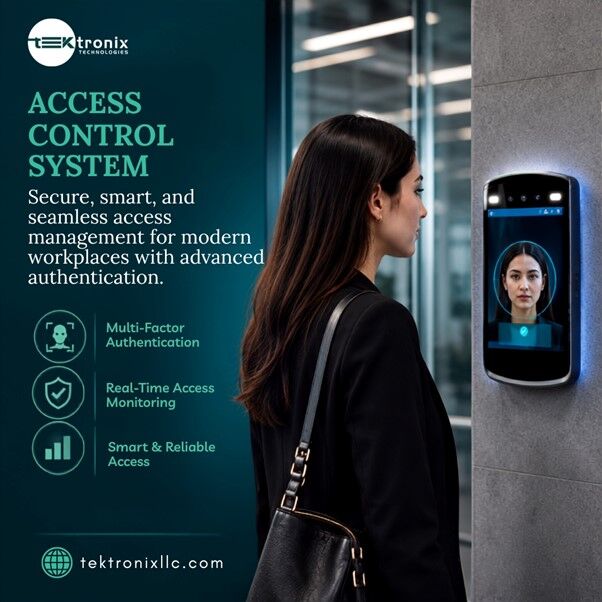
Biometric Access Control Cards and PIN codes can be shared, cloned, or lost, which is precisely why more Muscat retailers handling jewellery, watches, and consumer electronics are moving toward fingerprint and facial-recognition verification for their most sensitive zones. Biometric readers confirm that the person entering a stockroom or safe area is the specific employee authorized to be there, closing the gap that shared credentials leave open and producing an audit trail that cannot be transferred to a colleague.
Beyond stockrooms, some retailers extend biometric verification to point-of-sale terminals and cash-handling stations, ensuring that till access and cash-drawer openings are tied to a specific, non-transferable identity rather than a shared PIN that any team member could use.
Biometric Access Control Oman: Compliance and Deployment Considerations
Biometric Access Control Oman must account for the Sultanate's Personal Data Protection Law, which treats biometric identifiers as sensitive personal data requiring lawful basis, secure storage, and defined retention limits. A responsible deployment encrypts biometric templates rather than storing raw images, limits access to enrollment records, and documents consent as part of employee onboarding. Retailers working with an experienced regional integrator benefit from a rollout that is compliant from day one rather than retrofitted after an audit finding.
Conclusion
Access Co