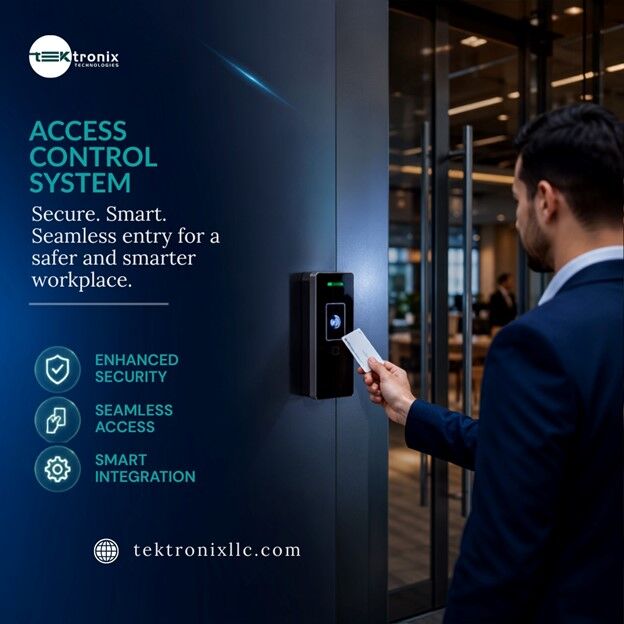
What an Access Control System Delivers for Public Institutions
At its foundation, an Access Control System ties together card or biometric readers, door controllers, and a central management platform so every door in a facility can be governed from one dashboard rather than a scattered collection of standalone locks. Administrators can grant, restrict, or revoke access to any door instantly, review a time-stamped log of every entry attempt, and tie permissions to shift patterns so a contractor's credential works only during an assigned window rather than remaining active indefinitely.
Engineering a Security Access Control System for High-Risk Government Sites
Ministries and judicial buildings typically need more than a single-factor badge tap at the door. A Security Access Control System designed for these sites layers risk-tiered zones - public lobby, staff floors, archives, server rooms - each requiring progressively stronger verification. Anti-passback logic prevents one credential from letting in a second person immediately behind it, and integration with CCTV and intrusion alarms means a forced door or a string of failed access attempts triggers an alert rather than going unnoticed until the next patrol.
Biometric Access Control System: Verifying Identity, Not Just Credentials
Cards can be lent out, and PINs can be shared over a phone call - neither confirms that the person standing at the door is the person the credential actually belongs to. A Biometric Access Control System closes that gap using fingerprint or facial verification at courts, police buildings, and other high-security government sites across Kuwait and the GCC, tying access to a physical identity rather than an object that can change hands without anyone noticing.
Door Access Control for Restricted Zones and Sensitive Wings
Not every door in a public sector building should open to the same group of people. Door Access Control configured at the individual door level lets administrators set separate permissions for server rooms, evidence storage, archive wings, and executive floors instead of relying on a single building-wide access level. This granularity matters most during an internal investigation, when knowing exactly who could - and did - open a specific door makes the difference between a quick resolution and an open-ended one.
Mobile Access Control for a Modern, Mobile-First GCC Workforce
Physical badges are easy to forget, lose, or leave behind on a desk overnight, and Gulf public sector workforces increasingly expect mobile-first tools for routine tasks. Mobile Access Control issues credentials directly to an employee's or inspector's phone, letting facilities managers grant a contractor or visiting auditor a time-boxed digital pass that expires automatically, without printing and later collecting a physical card. For departments with rotating shifts or field inspectors moving between sites, this removes a recurring administrative task from the security desk.
Choosing the Right Access Control Device for Every Checkpoint
Software governs the rules, but a physical Access Control Device is what actually reads a credential at the door. Government sites typically mix card readers, biometric scanners, and keypad terminals depending on the checkpoint - a glass-fronted lobby entrance has different mounting and durability requirements than a fire exit or an underground parking gate. Matching the right device to each door type, rather than deploying one hardware model everywhere, avoids readers that are either overkill for a low-risk door or too weak for a high-risk one.
Access Control Solutions Built Around Ministry and Municipal Workflows
Individual readers and controllers only deliver real value when they're assembled into a coherent, department-specific rollout. Comprehensive Access Control Solutions bundle credential issuance, zone configuration, staff and visitor permission tiers, and integration with existing CCTV or visitor management platforms into one project, configured around how a specific ministry, municipality, or judicial authority actually operates day to day rather than a generic template applied regardless of layout.
Regulatory Alignment Across Kuwait and the Wider GCC
Access logs and biometric data are sensitive records in their own right, since they reveal exactly who moved through a government facility and when. A properly configured deployment encrypts credential and biometric data at rest, restricts log visibility to designated security officers, and applies retention periods aligned with each country's data protection expectations rather than keeping records indefinitely. Requirements differ slightly between Kuwait, Saudi Arabia, Qatar, Oman, and Bahrain, so a GCC-wide rollout needs a compliance framework flexible enough to accommodate each jurisdiction's specific rules rather than a single fixed policy applied uniformly across borders.
Conclusion
Securing a public sector building across Kuwait and the GCC today means moving well past a single locked door and a shared key. An Access Control System combined with a Security Access Control System for high-risk zones, a Biometric Access Control System for identity-verified entry, precise Door Access Control at sensitive rooms, Mobile Access Control for a modern workforce, and the right Access Control Device at every checkpoint together form Access Control Solutions that give ministries, municipalities, and judicial authorities a defensible answer to who can enter their buildings and why. Facilities evaluating an Access Control System Kuwait or an Access Control System GCC rollout can review Tektronix LLC's access control system for the hardware, compliance framework, and support model behind completed government deployments across the region.