1.The Early Stage: A Single Location with Fundamental Requirements
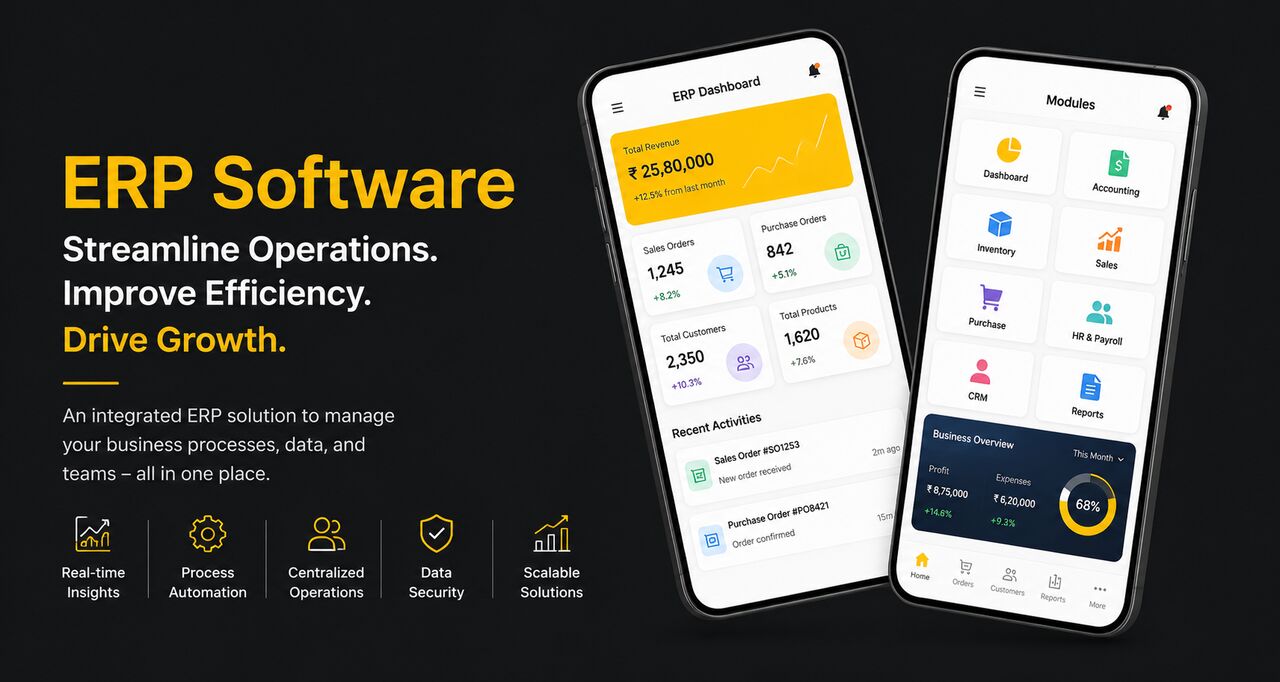
In the early stages, a single retail store or restaurant mostly needs the basics covered well — accurate inventory, straightforward billing, and simple financial records that don't require a dedicated accountant to interpret. ERP software at this stage doesn't need to be complex; it needs to replace scattered spreadsheets and disconnected apps with one reliable system covering sales, stock, and accounting without unnecessary overhead or features the business isn't ready to use. Overbuying at this stage — paying for modules a small operation doesn't yet need — is almost as common a mistake as underbuying.
2.The Growth Stage: Expanding Staff and Operational Complexity
As a business adds staff, ERP software needs to extend into HR functions — attendance, payroll, and role-based access — rather than tracking these separately from day-to-day operations in a different tool entirely. This is often the point where businesses first notice the real cost of disconnected systems, since staffing costs and sales performance need to be viewed together to make sensible decisions about scheduling, hiring, and labor budgets. A business that outgrows its original simple setup here often ends up patching together a second tool just to manage payroll, which reintroduces the exact fragmentation ERP software was meant to solve in the first place.
3.The Scaling Stage: Expansion to a Second Location
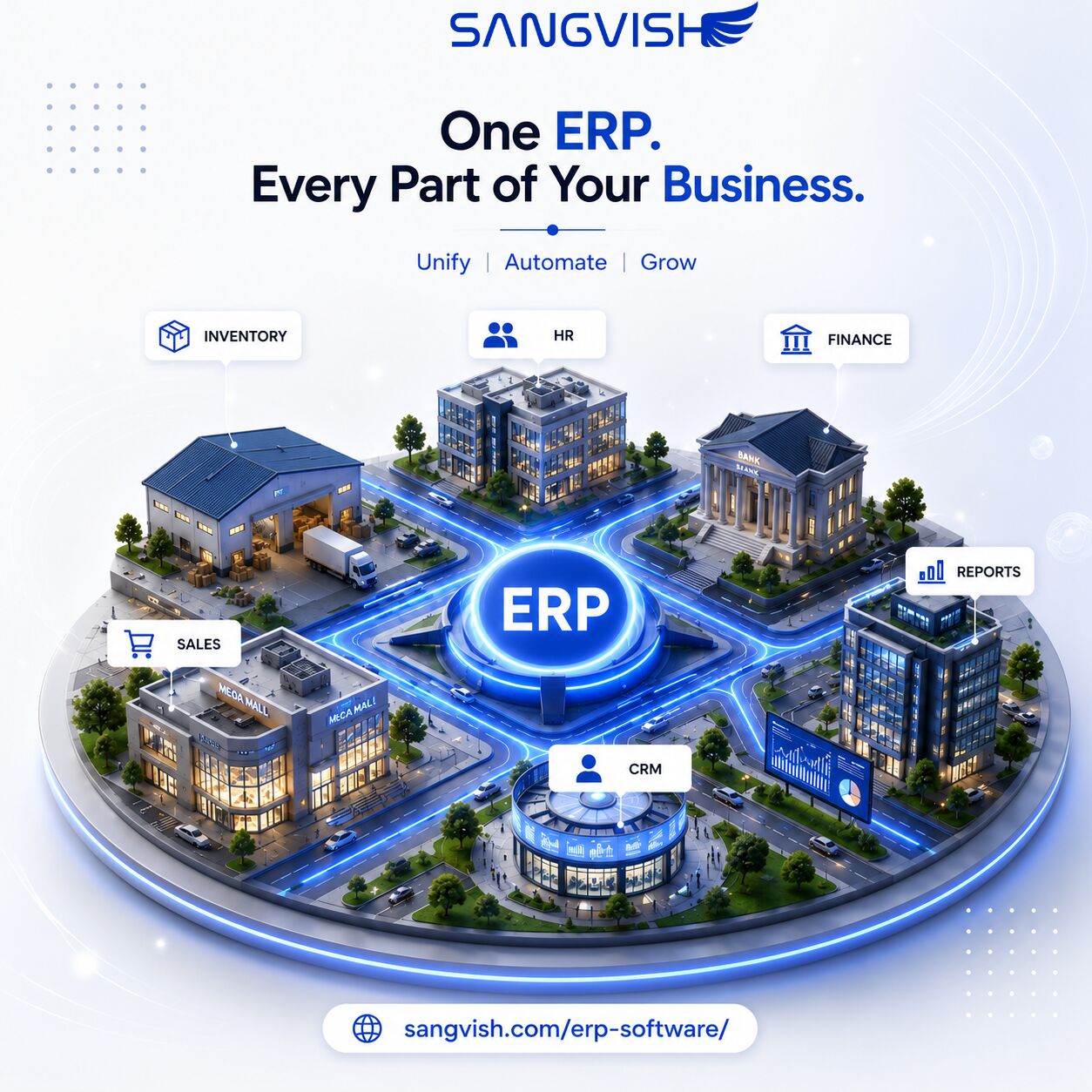
Opening a second store changes the requirements again, sometimes more than businesses anticipate. ERP software now needs multi-store management — centralized reporting across locations, consistent pricing unless deliberately overridden at a specific branch, and the ability to transfer stock between locations rather than treating each one as a fully separate operation with its own disconnected records. Businesses that delay planning for this often find themselves manually reconciling two separate setups instead of running one connected system, effectively recreating the original problem across two locations instead of solving it.
4.The Established Stage: The Growing Importance of Reporting
Once a business is running multiple locations or has built up a longer transaction history, ERP software reporting and analytics functions become more important than the basic operational features that mattered most at the very start. Real-time dashboards showing performance across locations, product categories, and time periods support decisions — where to focus marketing, which locations are underperforming, which products to discontinue — that a single-location startup rarely needed to make in its early days.
5.The Importance of Early Selection
A common mistake is choosing ERP software that fits only the current stage of the business, without checking whether it can grow alongside future needs down the line. Switching systems later, once a business has outgrown its original setup, is considerably more disruptive — involving data migration, staff retraining, and a period of reduced efficiency — than choosing a system upfront that scales with growth rather than requiring a full replacement partway through.
6.A System Designed to Scale
Sangvish's ERP software is designed to cover this entire range — from a single-location retail store just starting out to a multi-branch operation with a longer operating history — without requiring a system change at each stage of growth. The same platform that handles day-one basics also supports the reporting and multi-store demands of a more established business.
7.Evaluating Scalability Directly
The best way to judge whether a system can actually grow with your business is to see its multi-store and reporting features directly in a working environment, rather than assume based on a features list or a sales conversation.
Explore Sangvish's ERP software and try the live demo on their official website.