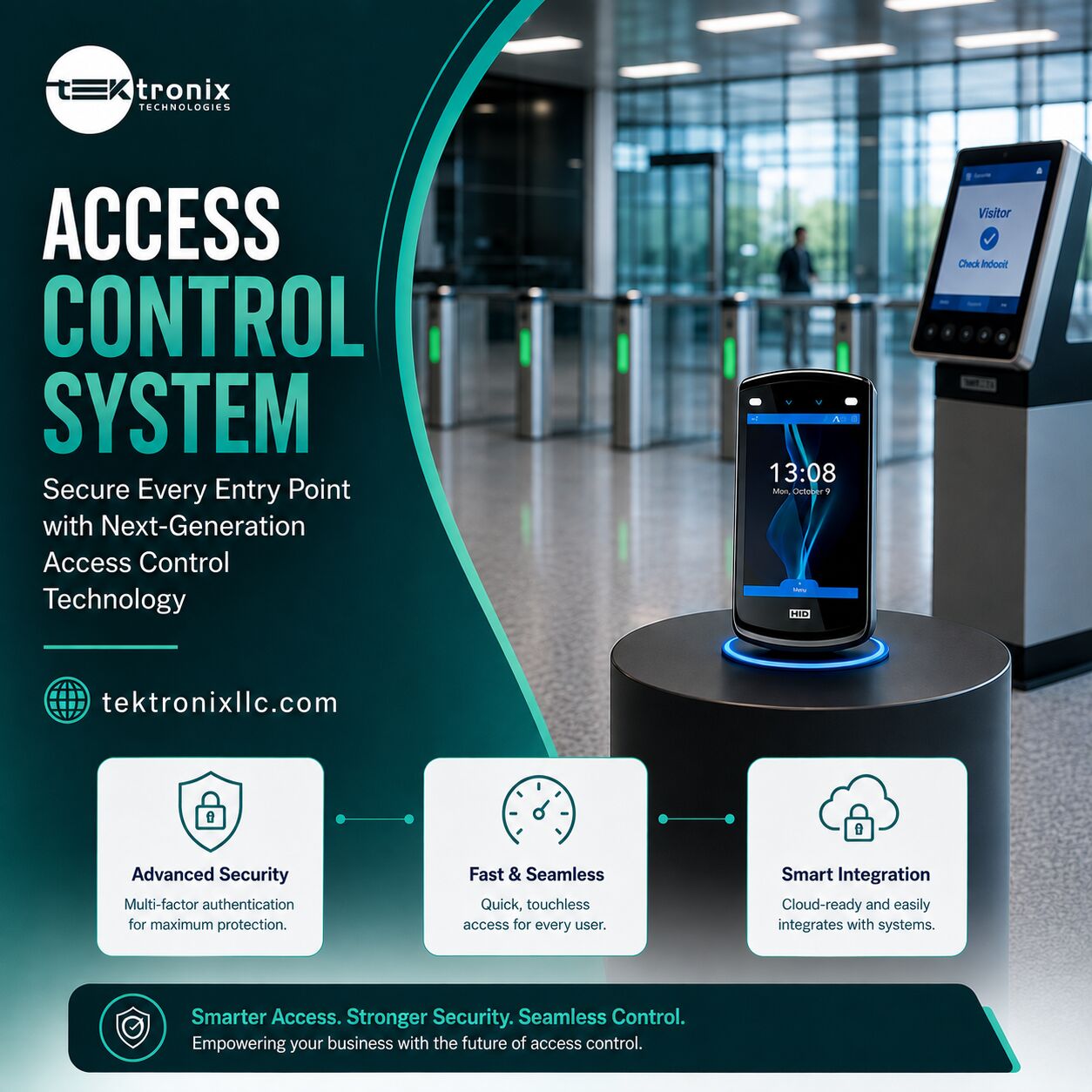
A lost or duplicated mechanical key remains a security liability until every affected lock is physically replaced, a disruptive and costly process most facilities only address once forced to. Electronic access control removes that weakness immediately, allowing a lost credential to be deactivated within seconds without disrupting any other authorised user.
Industrial facilities carry additional stakes beyond typical commercial security concerns, since unauthorised access to a production area, hazardous materials storage, or critical operational equipment can create genuine safety risk alongside the standard security and financial exposure a commercial office would face from the same type of breach.
Layered Access Control for Different Facility Types
Biometric Access Control System for High-Security Industrial Zones
For control rooms, hazardous materials storage, and other genuinely sensitive industrial areas, a Biometric Access Control System ties access directly to a specific verified individual, closing the credential-sharing gap that remains a persistent vulnerability in card-only systems across busy industrial sites with rotating shift populations.
Security Access Control System Requirements for Regulated Facilities
Facilities operating under Kuwaiti regulatory oversight, particularly those in the oil, gas, and petrochemical sector, typically require a Security Access Control System with detailed audit logging and formal governance documentation, satisfying compliance expectations considerably beyond what a simple door-lock replacement was ever designed to address.
Securing Every Entry Point
Door Access Control for Offices, Warehouses, and Production Areas
At the most fundamental level, Door Access Control replaces mechanical locks throughout a facility with credential-based readers, giving management centralised oversight across office areas, warehouse zones, and production floors from a single platform rather than a sprawling, difficult-to-track collection of physical keys.
Flexibility for Industrial Workforces
Mobile Access Control for Shift-Based and Contractor Staff
Industrial facilities relying heavily on rotating shift workers and short-term contractors benefit from Mobile Access Control, letting facilities management issue and revoke smartphone-based credentials quickly without the administrative overhead of managing physical badges for a genuinely dynamic, frequently changing workforce.
Choosing the Right Hardware and Platform
Access Control Device Considerations for Harsh Industrial Environments
Selecting the right Access Control Device for an industrial facility means accounting for dust, extreme heat, and exposure to chemical or petroleum processing environments, conditions standard commercial-grade hardware isn't built to withstand reliably over time.
Access Control Solutions Scaled to Facility Complexity
The right Access Control Solutions for a small commercial office look considerably different from what a large petrochemical processing facility needs — zone count, hazard classification, and integration with existing safety systems should all shape the final specification.
Access Control System Kuwait: Commercial and Industrial Deployment
Demand for a properly specified Access Control System Kuwait-wide spans downtown Kuwait City commercial towers, industrial facilities around Shuwaikh and Ahmadi, and logistics operations across the country's major free zones, each requiring hardware and software matched to their specific operational risk profile.
Access Control System GCC: Regional Deployment Across the Gulf
Broader Access Control System GCC adoption spans commercial and industrial facilities across Saudi Arabia, the UAE, Qatar, Bahrain, and Oman alongside Kuwait, reflecting a region-wide trend toward modernised access infrastructure across both office and industrial sectors as GCC economies continue diversifying and expanding.
Warehousing and Logistics Access Control Considerations
Kuwait's growing logistics and warehousing sector faces its own distinct access control challenges, balancing high-volume vehicle and personnel traffic against the need to protect valuable stored goods from theft or unauthorised access. Segregating driver and delivery personnel access from staff-only warehouse zones helps facilities maintain security without slowing legitimate daily operations.
Integration between access control and inventory management systems increasingly allows facilities to correlate personnel access with specific inventory movements, adding an accountability layer that supports both security investigations and operational efficiency reviews when discrepancies arise.
Balancing Security Investment Against Facility Risk Level
Not every commercial or industrial facility needs the same tier of access control investment, and over-specifying security-critical equipment for a genuinely lower-risk site wastes budget that could be better allocated elsewhere. A proper risk assessment should determine which zones within a facility genuinely warrant biometric or high-security specification versus standard commercial-grade access control.
This assessment typically considers factors including the facility's proximity to hazardous processes, the value of equipment or materials stored on-site, and applicable regulatory requirements specific to the sector, rather than defaulting to either the cheapest available option or the most expensive specification without genuine justification.
Oil, Gas, and Petrochemical Facility Considerations
Kuwait's substantial oil, gas, and petrochemical sector presents access control requirements considerably beyond typical commercial specification, given the combination of hazardous materials, critical national infrastructure status, and strict safety protocols these facilities operate under. Access control in these environments typically integrates closely with broader process safety and emergency response systems rather than functioning as an isolated security layer.
Explosion-rated hardware becomes a genuine specification requirement in certain zones of these facilities, where standard electronic access control devices could themselves introduce an ignition risk in an environment containing flammable vapours or gases, making equipment certification a critical procurement consideration rather than a secondary detail.
Integration with Safety and Emergency Response Systems
Industrial access control increasingly integrates with broader safety infrastructure, supporting automatic lockdown or evacuation-mode access changes during a genuine emergency, and providing accurate, real-time personnel location data that safety teams can reference during an incident response rather than relying on manual headcounts alone.
This integration matters particularly for facilities with hazardous processes, where knowing exactly who is present in a specific zone during an emergency can meaningfully affect both the speed and accuracy of an emergency response team's actions.
Standards and Regulatory Alignment
Access control deployments across Kuwait must satisfy Ministry of Interior security licensing requirements alongside Kuwait Fire Force fire-egress regulations, with industrial facilities in the oil and gas sector typically