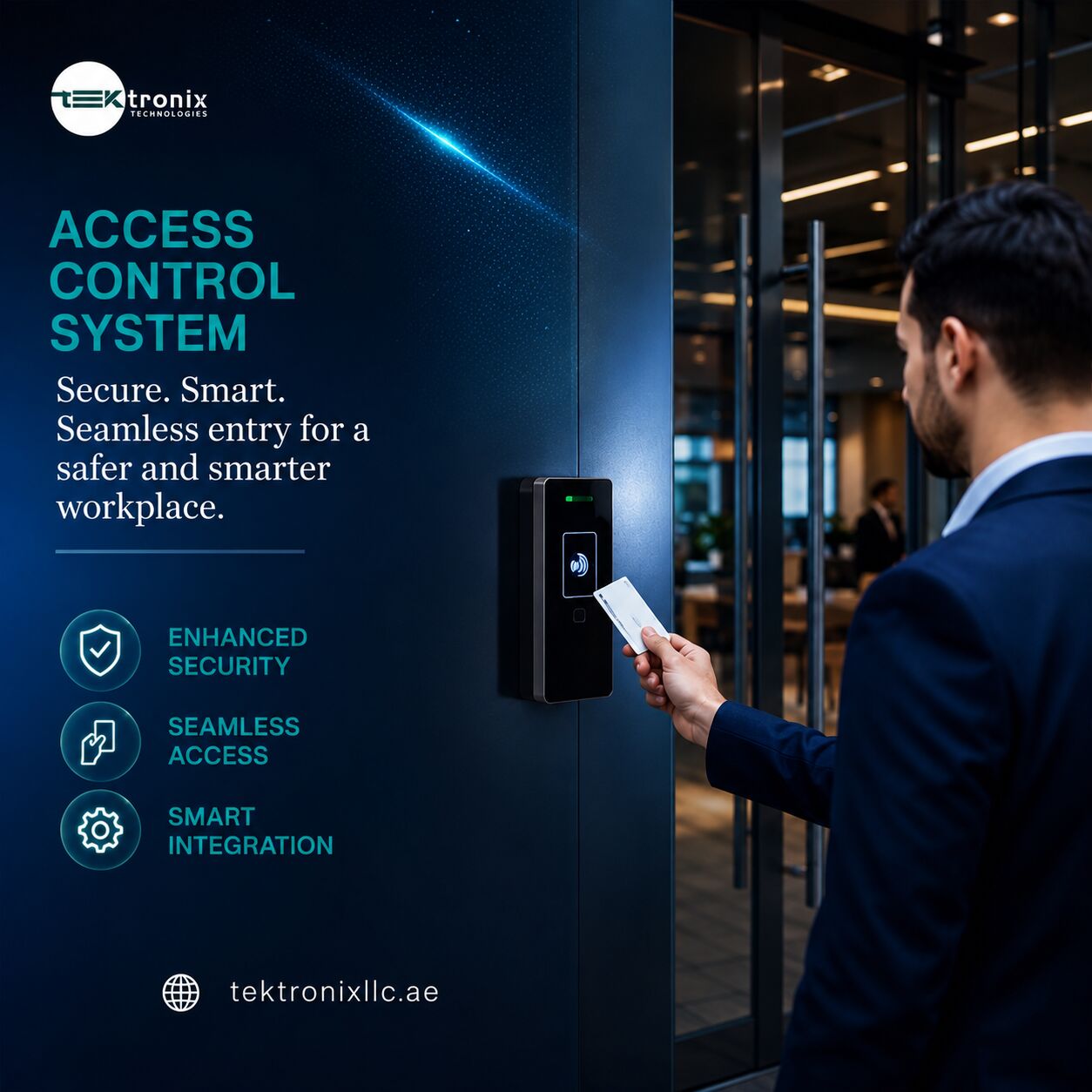
Security managers who treat access control purely as a hardware procurement decision — which reader, which lock, which card — often end up with a system that technically works but fails to support the broader security management function it should serve. The hardware is simply the enforcement mechanism; the actual discipline lies in the policy design, the ongoing governance of who has access to what, and the ability to answer detailed questions about the organization's security posture on demand.
This reframing matter practically. A security manager evaluating access control should be thinking as much about reporting capability, policy governance workflows, and incident investigation support as about the physical readers and locks themselves — since the value delivered to the organization comes primarily from the management layer, not the door hardware in isolation.
Building a Corporate Access Policy That the System Can Actually Enforce
Before any hardware decision, effective corporate security management starts with a clearly defined access policy — which roles need access to which zones, under what time restrictions, and with what approval workflow for exceptions. A system deployed without this groundwork tends to accumulate ad-hoc access grants over time, gradually eroding the very security posture the deployment was meant to establish.
Security managers should treat the access control platform as the enforcement layer for a policy they've already designed, rather than letting default system configuration dictate the policy by omission. This distinction between policy-first and hardware-first thinking is often what separates a genuinely effective corporate security program from one that merely has expensive access control equipment installed.
Core Technologies a Security Manager Should Understand
While the underlying policy work matters most, corporate security managers still need working knowledge of the core technologies available to implement that policy effectively.
Biometric Access Control Dubai Security Teams Deploy for the Highest-Risk Zones
For zones where the consequence of unauthorized access is genuinely severe — server rooms, executive offices, finance departments — Biometric Access Control Dubai security managers increasingly specify uses fingerprint, iris, or facial recognition, since these credentials cannot be shared or borrowed the way a card can. From a security management perspective, biometric verification also closes a specific policy enforcement gap: a card-sharing violation is difficult to detect after the fact, while biometric access inherently prevents it.
Security Access Control System Design as a Risk-Tiering Exercise
A well-designed Security Access Control System reflects a deliberate risk-tiering exercise carried out by the security management team — mapping every zone in the organization to an appropriate verification level based on genuine risk assessment, rather than applying uniform security everywhere or, worse, leaving zone-level decisions to whoever happened to configure the system during initial installation.
Door Access Control and the Audit Trail It Generates for Security Governance
At the individual door level, Door Access Control hardware does more than lock and unlock — every event it logs becomes raw material for security governance. A corporate security manager can use this data to verify policy compliance, investigate incidents, and identify unusual access patterns that might warrant closer review, turning routine door hardware into an ongoing source of security intelligence.
Mobile Access Control and the Administrative Burden It Removes from Security Teams
From a security management workload perspective, Mobile Access Control meaningfully reduces the administrative burden of credential lifecycle management — issuing, replacing, and revoking physical cards consumes real security team time that mobile credentials largely eliminate, freeing the team to focus on policy design, incident investigation, and other higher-value security management work instead.
Choosing an Access Control Device Based on Risk, Not Just Convenience
Security managers selecting an Access Control Device for a specific zone should weigh the decision against the organization's own risk assessment rather than defaulting to whatever hardware feels most convenient to deploy. A high-traffic general office entrance genuinely prioritizes speed and reliability, while a data center or records room should prioritize verification assurance even at some cost to throughput speed.
This device-selection discipline is a recurring theme across effective corporate security programs — the technology choice should follow from the risk assessment, not precede it, since defaulting to convenience-driven hardware selection across every zone often means under-securing the areas that actually warrant stronger protection.
Reporting Access Control Metrics to Leadership
A mature corporate security management function doesn't just operate access control — it reports on it. Regular metrics worth tracking and presenting to leadership include the number of active credentials versus current headcount, the average time to revoke access after an employee's departure, the frequency of after-hours access attempts, and any unresolved access anomalies flagged during the reporting period.
These metrics give leadership a concrete, evidence-based view of the organization's physical security posture, rather than a purely qualitative assurance that "security is handled." For security managers seeking greater organizational investment in their program, demonstrable metrics reported consistently over time are often more persuasive than any individual incident or anecdote.
Key Benefits of Access Control Solutions for Corporate Security Programs
Organizations implementing comprehensive Access Control Solutions as part of a formal corporate security management program typically report measurable improvements:
● Clear, auditable evidence of policy compliance across every secured zone
● Faster incident investigation through detailed, searchable access logs
● Reduced administrative burden through centralized credential lifecycle management
● Stronger reporting capability supporting leadership and board-level security discussions
● Consistent policy enforcement independent of individual guard shift coverage
● A defensible security posture supporting insurance and regulatory requirements
Incident Response: Where Access Control Data Becomes Genuinely Valuable
The true test of a well-managed access control system often comes during incident response, when a security manager needs to answer specific, time-sensitive questions — who accessed a particular area during a given window, whether a specific credential was used at an unexpected time, or whether an anomaly preceded a reported incident. A system generating comprehensive, searchable logs turns this from a difficult forensic exercise into a straightforward data query.
This incident response value is one of the strongest arguments for investing properly in access control governance rather than treating the system as a passive ba