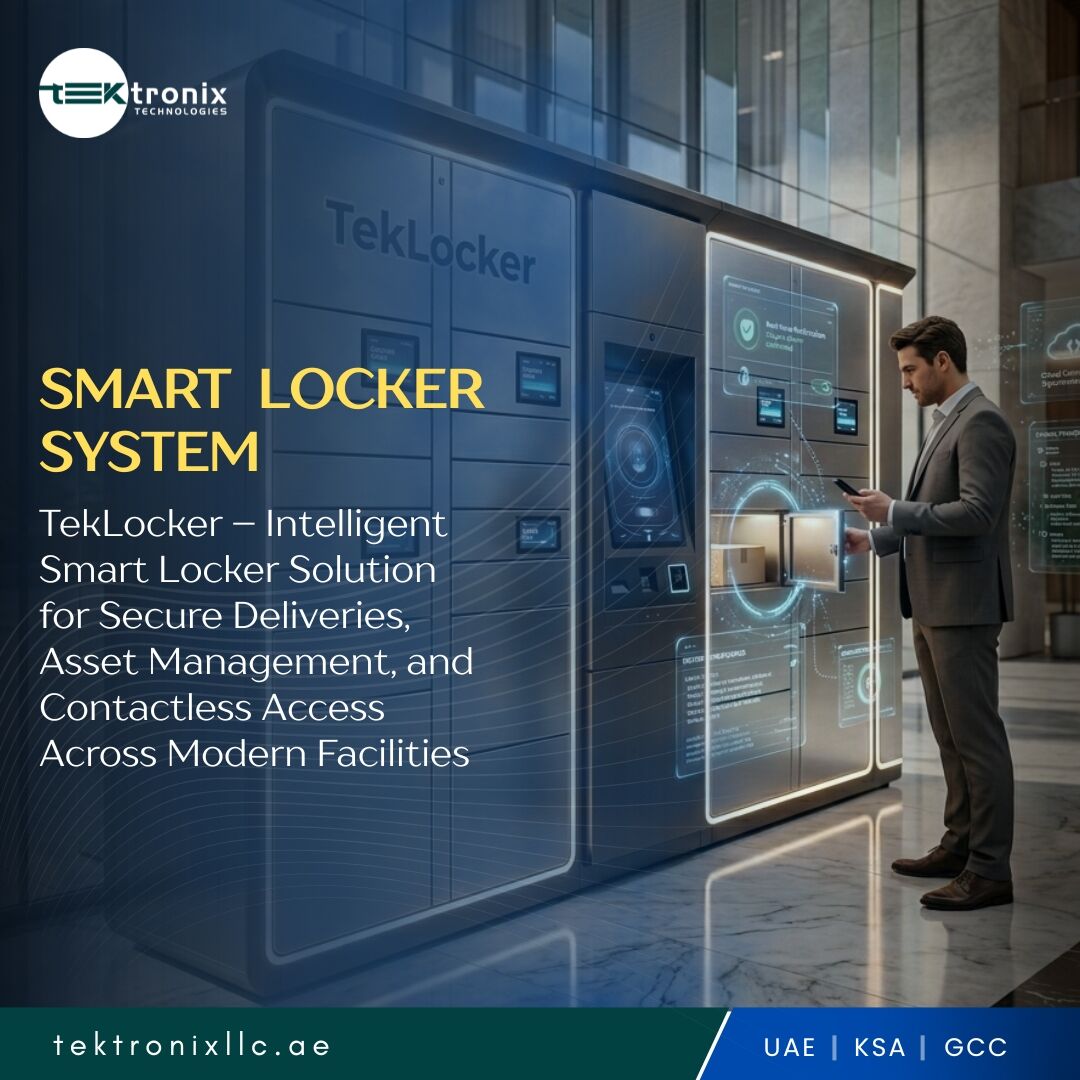
Why UAE Schools Are Investing in Smart Locker Technology
Student locker rooms face a specific set of everyday pressures: hundreds of students need quick access to their belongings between periods, lost keys and forgotten combinations generate a steady stream of facilities tickets, and school administrators want a documented record of who accessed which compartment and when, particularly for shared sports or science equipment. A well-specified locker bank answers all three at once, provided it is built for the pace and durability a school corridor actually demands rather than the lighter-duty hardware designed for offices or gyms.
Tektronix LLC has supplied and commissioned self-service technology for developments linked to G42, DIFC, RTA Dubai, and EXPO 2020, giving the company practical experience with high-footfall public environments long before education became a dedicated focus. That background carries over directly into school deployments, where durability, safeguarding-conscious data handling, and integration with existing student information systems matter as much as the physical locker cabinet itself.
Digital Locker System Design for Student-Facing Environments
A well-designed Digital Locker System has to work for students across a wide age range, from younger children who may struggle with a multi-step process to older students who expect a fast, app-like interaction similar to the technology they already use daily.
Age-Appropriate Interface Design
Larger touch targets, simple icon-based prompts, and short confirmation steps reduce hesitation and errors for younger students, while the same underlying platform can present a faster, more streamlined flow for older students who need less on-screen guidance.
Multi-Language Support for Diverse Student Populations
Given the international student mix typical of UAE schools, interfaces commonly support English, Arabic, and other languages spoken across the student body, helping younger or newly arrived students navigate the system confidently from their first day.
Face Recognition Locker Access for Frictionless Retrieval
For students who forget cards or codes easily, Face Recognition Locker Access removes the need for any physical token at all. A student simply approaches their assigned compartment, and the system authenticates them against a profile created with parental consent at enrollment, releasing the correct door without a card, code, or fob.
Consent-Based Enrollment and Safeguarding
Because this involves minors, schools typically require explicit parental or guardian consent before enrolling a student's facial template, alongside a clearly communicated policy on how the data is stored, who can access it, and when it is deleted, usually at the end of the academic year or upon the student leaving the school.
Anti-Spoofing Safeguards
Liveness detection prevents a photograph from triggering a false match, while templates are stored as encrypted data rather than raw images, reducing the exposure if a school's broader IT systems were ever compromised.
Frequently Overlooked Operational Details
Beyond hardware selection, a handful of operational details determine whether a school locker rollout actually reduces administrative workload or simply adds a second system for staff to manage. Substitute teachers and visiting instructors, for instance, often need temporary locker access for shared equipment, which a well-designed platform should handle through a short-term credential rather than a full student enrollment process.
Cleaning schedules and end-of-term clearance also deserve early planning, particularly for lockers storing sports kits or musical instruments where lingering odours or forgotten items are common at the end of a school year. Finally, seasonal capacity planning matters for schools with significant swings in extracurricular participation, since a bank sized comfortably for a typical week can still create bottlenecks during exam season or a major school event unless peak-day demand has been considered.
Regional Adoption: Smart Locker System UAE and Dubai School Deployments
Demand for a properly integrated Smart Locker System UAE wide has grown alongside the country's expanding network of international and private schools, with newer campuses increasingly specifying self-service storage as a standard facility feature rather than an optional upgrade. A Smart Locker System Dubai schools adopt frequently pairs QR-based access with multilingual interfaces to suit the emirate's especially international student mix, while integration with widely used student information platforms remains a deciding factor for larger school groups choosing between competing locker vendors.
Conclusion
For UAE schools looking to modernize student storage, a well-specified Smart Locker System built as a proper Smart Locker for Schools configuration combines a durable Electronic Locker System with an age-appropriate Digital Locker System interface. Whether students authenticate through consent-based Face Recognition Locker Access or a simpler QR Code Smart Locker Access flow, the experience is only as strong as the Locker Management Software coordinating it behind the scenes. Schools evaluating a Smart Locker System Dubai or wider Smart Locker System UAE rollout can review the full locker lineup on Tektronix LLC's smart locker product page.
Smart Locker System
Digital Locker System
Locker Management Software