1.Aligning System Capabilities with Operational Workflows
Feature checklists may list what ERP software can do, but this doesn't tell you much about the specific ways in which features are applied to the real business's daily tasks. Two systems may share the same modules, but one ERP may execute a multi-site inventory transfer, the other build the multi-location report completely differently in practice, for instance. Better instead is to first clearly demonstrate the business's business process and find an ERP system that enables the existing workflow, rather than forcing the business to bend to the system's constraints.
2.Evaluating Performance Through Live Demonstration
Understand the difference between a sales presentation and a live demonstration. Sales presentations aim to put a business's strengths forward. However, business's can only discover how the solution behaves under true conditions during live demonstrations. Those businesses considering an ERP software should always ask for the test-drive capabilities that allow the business to input their own scenarios for their business and perform actions such as running reports across more than one branch or posting a return as a part of the test drive.
3.Assessing the Total Cost of Ownership
The advertised subscription or licensing fee rarely represents the full cost of ERP software. Implementation fees, data migration costs, staff training time, and charges for additional users or modules often accumulate separately. Businesses should request an itemized breakdown of these costs in advance, since a system that appears less expensive at first glance can become more costly once these additional charges are included.
4.Evaluating Scalability for Future Growth
A business might select an ERP software that matches its current size perfectly, yet it won't necessarily match its size in two to three years. Considerations to ask when reviewing are: does the ERP support many more locations without forcing a new license tier; how many times more transactions can be processed before performance begins to drop; is it possible to add new modules without having to re-migrate the whole system; businesses who do not review the step are forced to start over again, and relatively quickly.
5.Reviewing Support Infrastructure and Service Levels
Nearly every provider of ERP software states that support is available. The more useful question is what that support actually covers — whether it includes phone or live chat access, what response times are guaranteed, and whether support remains available after the initial implementation period rather than tapering off once the contract is signed. Speaking with existing customers, where possible, tends to reveal more accurate information on this point than the provider's own marketing materials.
6.Data Ownership and Portability
Before committing to any ERP software, businesses should confirm how their data can be exported if they choose to switch providers in the future. A system that makes data extraction difficult or costly effectively increases the cost of leaving later, regardless of how reasonably priced it appears at the outset. This is a detail that is easy to overlook during evaluation and difficult to resolve after the fact.
7.An Overview of Sangvish
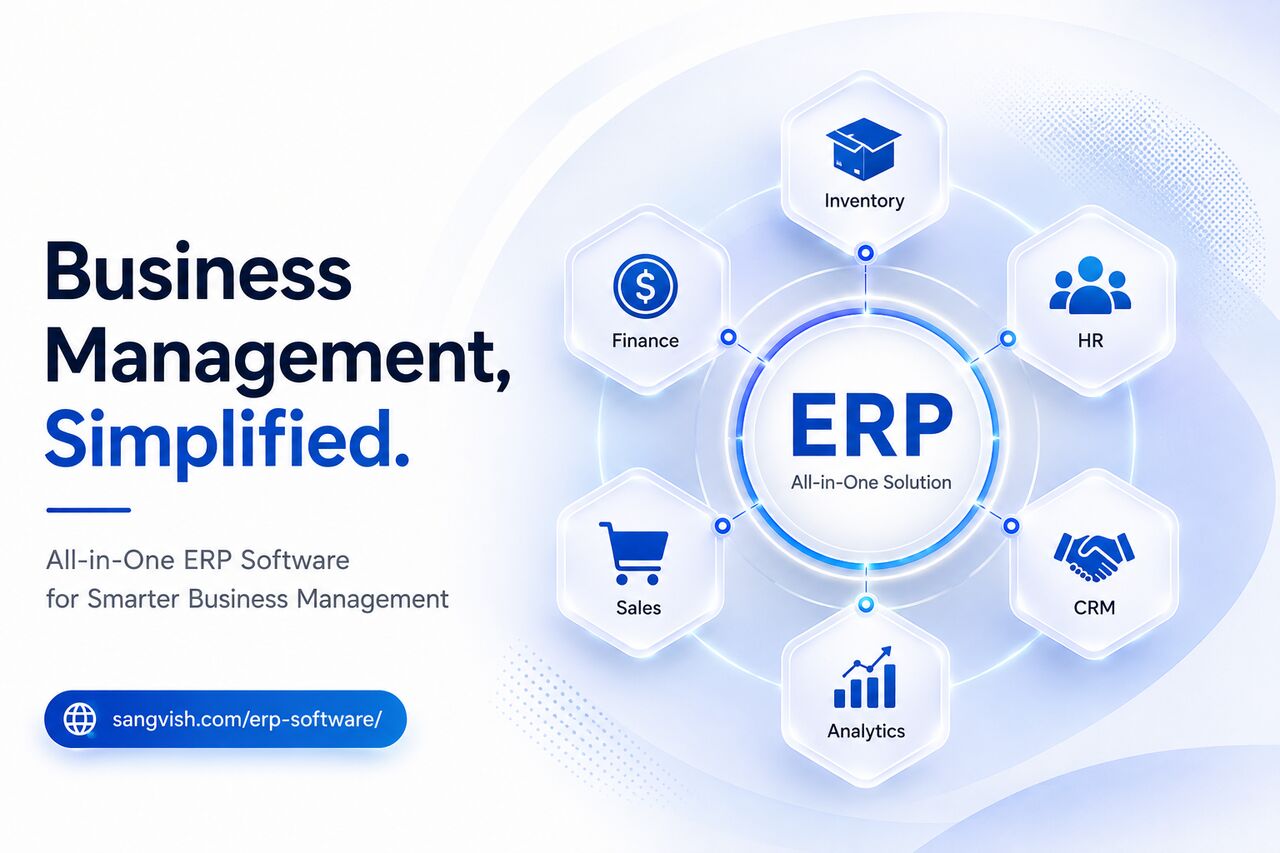
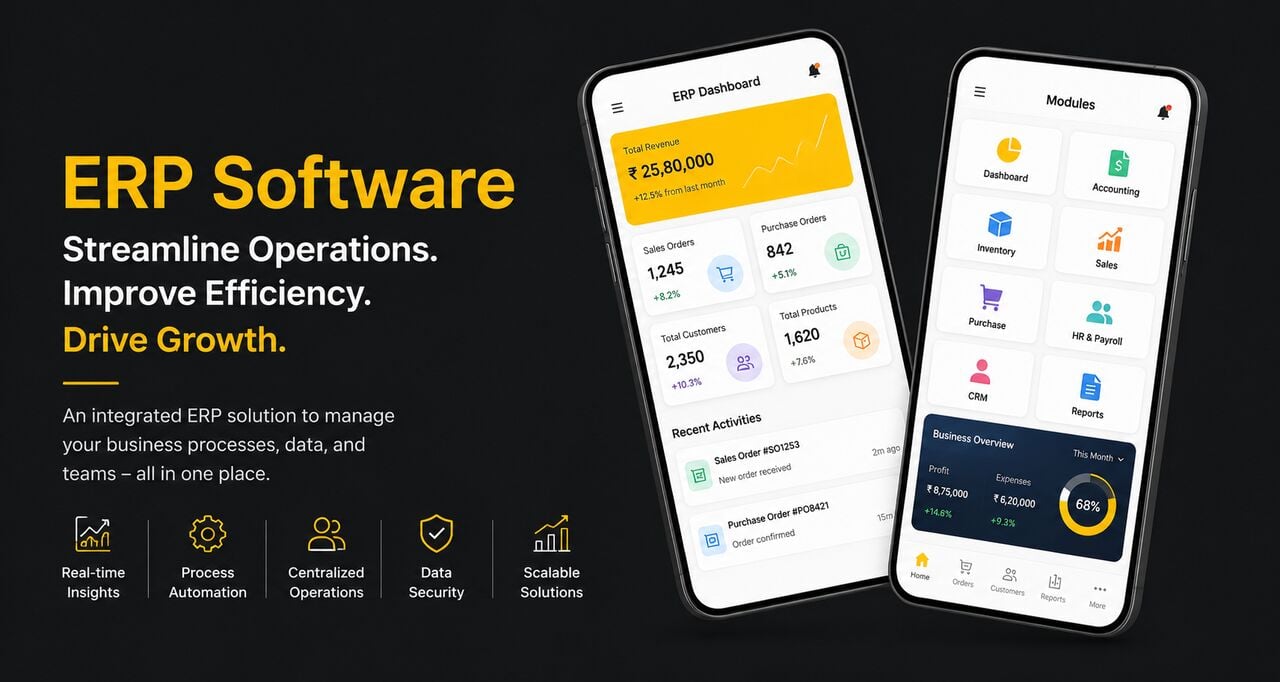
Sangvish is one provider of ERP software serving retail and restaurant businesses, with modules covering inventory, accounting, HR, and point-of-sale operations. Reviewing its published feature set alongside the criteria above is a reasonable way to apply this evaluation process in practice, whether or not Sangvish ultimately proves to be the right fit for a given business.
8.Next Steps in the Evaluation Process
A live demo is a useful way to see how these evaluation criteria hold up in practice, rather than relying on a features list to imagine how the system would actually perform.Explore Sangvish's ERP software and try the live demo on their official website.