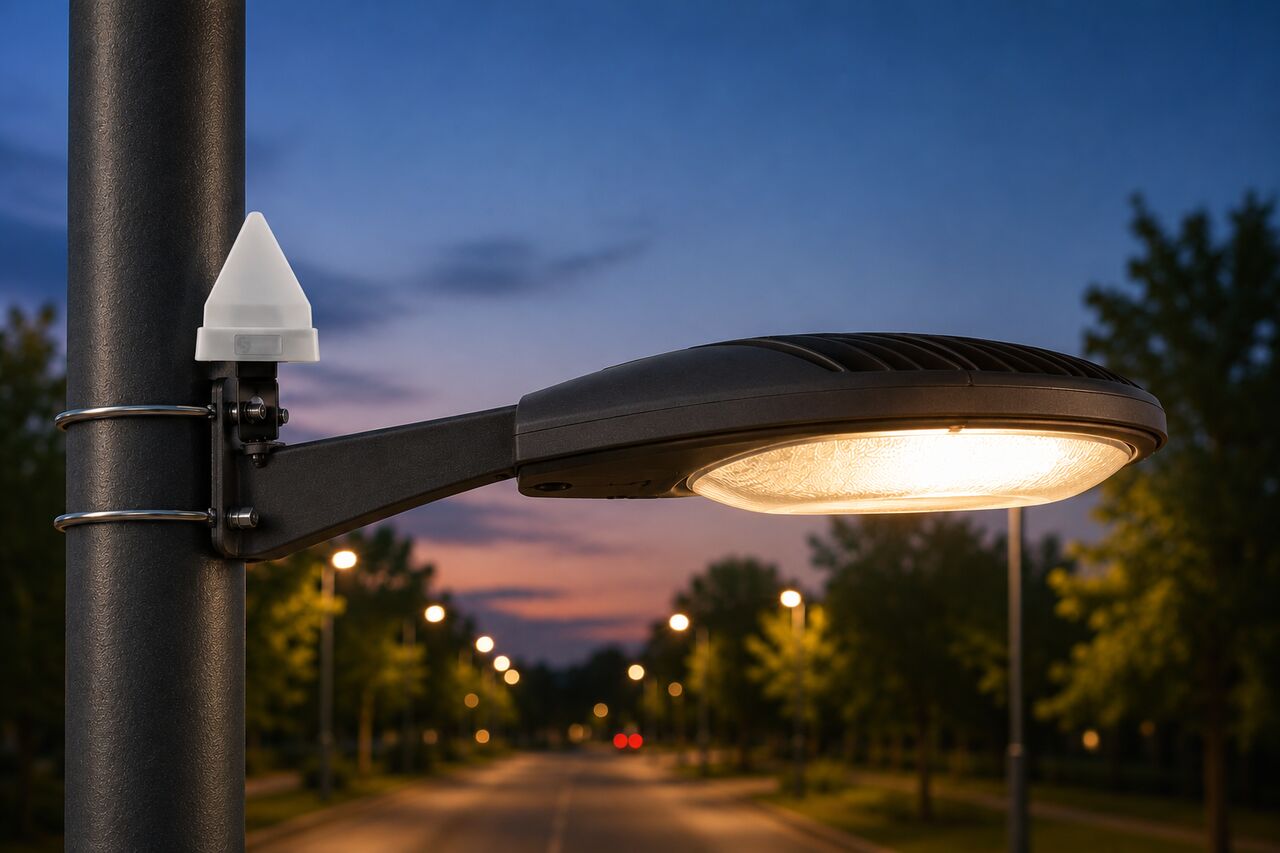
Understanding the Core Technology
Photocell Sensor
At its core, a Photocell Sensor constantly monitors the sun. Instead of relying on rigid, pre-programmed timers that fail when seasons change, this device dynamically adjusts to the actual sunlight in your area, triggering your electrical circuit only when the environment genuinely requires artificial illumination.
LDR Sensor
Inside the unit is a Light-Dependent Resistor, or LDR Sensor. This small component changes its electrical resistance based on the light hitting it. During the day, the resistance is low, keeping the switch off. When it gets dark, the resistance spikes, triggering your lights to turn on automatically.
Photocell LDR Sensor
By combining these terms, a Photocell LDR Sensor represents the complete, housed unit—a smart switch containing the LDR circuitry safely protected inside a weatherproof (IP44 or IP65) casing. This complete product gives you adjustable control over when the lights activate, usually ranging from 5 to 50 Lux.
Space-by-Space Guide: Where to Install
(i) Residential Gardens & Pathways: Buy the standard IP44 pole mount versions for your home exterior to ensure you never walk up to a dark house again.
(ii) Street Lights & Secure Parking: Invest in the heavy-duty 16A IP65 models. These can handle massive lighting arrays and endure harsh rain and dust without failing.
(iii) Industrial Perimeters: Deploying automatic LDR sensors along factory walls guarantees consistent nighttime security lighting without paying a security guard to manually flip switches.
Buying Guide: Key Features to Look For Before You Purchase
(i) IP Rating (Ingress Protection): If installing in a partially covered porch, an IP44 rating is sufficient. For fully exposed streetlights facing heavy rain and dust, you must buy a sensor with an IP65 rating.
(ii) Amperage/Load Capacity: Check your light wattage before buying. A 6A sensor is great for a few LED bulbs, while a 16A sensor is required for large banks of halogen or high-wattage street lights.
(iii) Lux Adjustment: Ensure the unit you purchase features adjustable sensitivity (5–50 Lux) so you can fine-tune exactly how dark it needs to be before the lights activate.
FAQ
Q: Do I need a manual switch anymore?
A: No. Once wired to your mains power, the sensor operates completely autonomously every single day, turning lights on at dusk and off at dawn.
Q: Can the sensor get confused by car headlights?
A: Standard photocell switches have a built-in delay (often a few seconds) to ensure that brief flashes of light (like passing cars or lightning) do not accidentally turn off your outdoor lights.
Q: Where is the best place to mount this?
A: Position the sensor outdoors, pointing toward natural sky light but away from the artificial light it is controlling to prevent a flickering feedback loop.
People Also Ask
Q: Will it save me money on electricity?
A: Absolutely. By ensuring lights are strictly off during daylight hours, you drastically reduce energy waste and extend the lifespan of your expensive LED fixtures.
Q: Are they difficult to wire?
A: They feature straightforward connections. However, because they deal with 220-270V AC mains power, consulting a licensed electrician for safe installation is highly recommended.
Conclusion
Automating your exterior lighting is a practical, cost-saving investment that pays for itself quickly through lowered utility bills and increased bulb lifespan. By evaluating your load requirements (6A, 10A, or 16A) and weather exposure (IP44 vs. IP65), you can confidently purchase the perfect Esysense Photocell LDR Sensor for your property.
Written from direct product testing and manufacturer specifications by Esysense Tech Innovations Pvt. Ltd., Noida, India. All prices, specs and model references are verified against live product listings at esysense.com. Last updated: August 2026.