A second pattern is appearing at the company level. The Census Bureau recorded 578,926 business applications in July 2026, an 8.1% increase from June after seasonal adjustment. New applications aren't the same as operating companies, yet the volume shows that business reference data continues to change as new entities enter the market. Marketing teams working with old firmographic or contact records can therefore face gaps even when their databases were carefully built in the past.
Employment movement keeps contact records from staying fixed
Job movement directly affects several fields commonly used in business marketing. When someone changes employers, the person's work email, title, company affiliation, direct telephone number, or department may also change. BLS reported that quits represented 60.6% of total job separations during 2025, which shows how much employment movement came from workers leaving jobs rather than from layoffs alone. The number doesn't tell a company how many records in its own CRM are wrong, but it gives marketing teams a reason to measure record age instead of assuming contact details remain current.
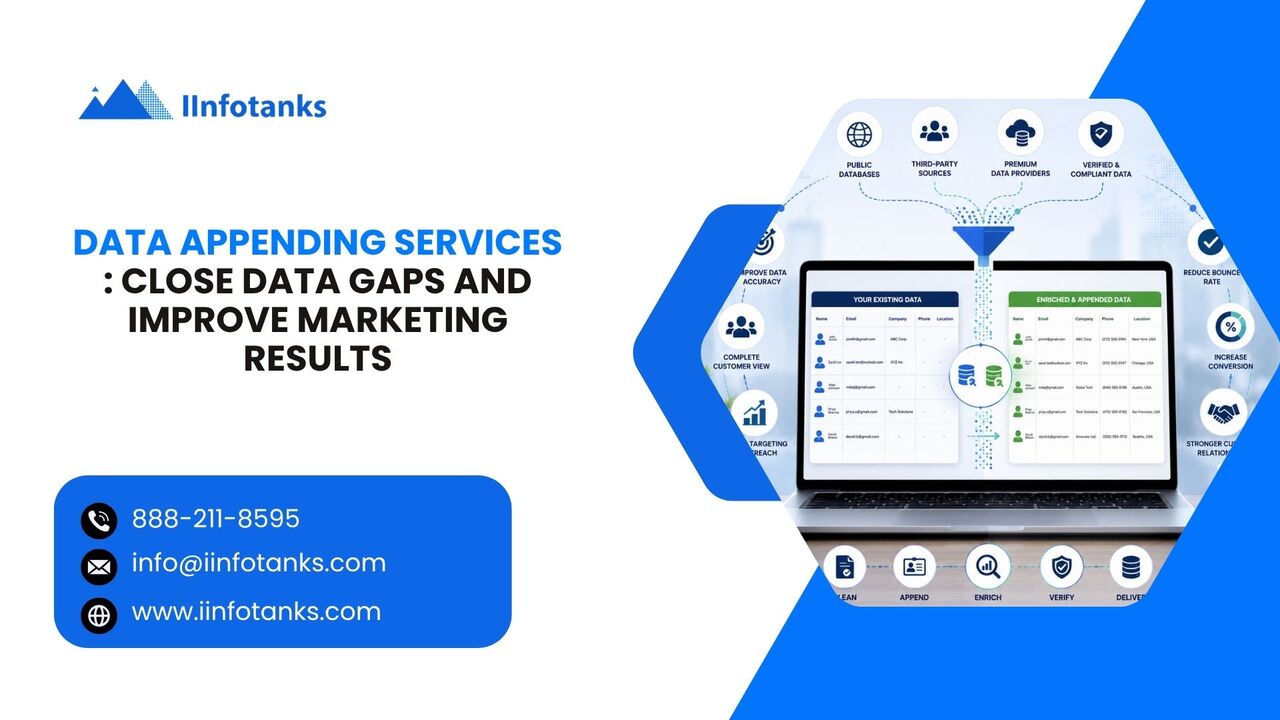
This is where Data Appending Services can address a defined database gap. IInfotanks lists email, postal address, phone, business URL, social profile, demographic, SIC code, NPI, and reverse appending options on its service page. The useful starting point is identifying which missing field is preventing a marketing task from working properly. Filling every possible field without first checking its purpose can add volume without adding much value.
Address movement shows that different fields age at different rates
Residential information presents another maintenance problem. Census Bureau figures show that 11.8% of people moved to a different residence in 2024, compared with 12.1% in 2023. The same source reports that 2.1% moved to another state during 2024. The national moving rate fell, yet a meaningful share of records still experienced an address change within a single year. Census geographic mobility figures
The marketing implication is that database quality should be assessed by field. An email address can become outdated while a postal address remains valid, or an employer can change while a telephone number remains usable. Data Append Services are more useful when teams identify those individual gaps before sending records for matching. That approach also makes it easier to measure how many supplied values were genuinely missing, outdated, or already correct.
Business formation adds another source of database change
Company databases have their own source of movement. Census Business Formation Statistics reported 578,926 business applications in July 2026, while projected business formations within 4 quarters stood at 29,959. The projected formation measure rose 0.7% from June. The Census Bureau warns that projected formations don't represent the total number of businesses actually created in July, so the figures need to be interpreted within the agency's stated methodology. Census Business Formation Statistics
For marketers, that distinction matters because new company activity can alter account lists and industry coverage. A database built around established companies may miss newer entities, while older company records may contain websites or classifications that need checking. A planned Data Append project can focus on those known gaps rather than treating every record as equally incomplete. The result can give segmentation teams a clearer base for deciding which records are suitable for a campaign.
Closing a field doesn't automatically improve a campaign
A completed field has to be correct and useful before it can affect marketing performance. Adding an email address may make a previously unreachable contact available for outreach, but the address still needs to belong to the intended person and organization. Adding a job title may support audience selection, but title accuracy doesn't prove that the person has purchasing responsibility. Marketing results therefore depend on the quality of the appended value and how the campaign uses it.
This distinction prevents match rate from being confused with business impact. A provider might find a value for a large share of submitted records, while the buyer still needs to check validity against known records. Teams can test a sample before changing the full database, record which values were replaced, and compare campaign outcomes for refreshed records against an appropriate baseline. That makes the effect of better records easier to assess without claiming that appending alone caused an increase in response or revenue.
Privacy rules make source handling part of the data question
California's data broker rules show why data sourcing now deserves the same attention as record completion. Under the Delete Act, data brokers must access the state's Delete Request and Opt-Out Platform beginning August 1, 2026, at least once every 45 days to process applicable consumer deletion requests. California also set the 2026 annual data broker registration fee at $6,000 plus the relevant electronic payment processing fee. These requirements apply within a defined legal framework, so they shouldn't be treated as universal rules for every company using business contact data. California Privacy Protection Agency data broker guidance
The change still gives buyers a useful test when selecting a Data Append Company. They should understand where appended fields come from, how recently they were checked, and what happens when a record needs to be removed or corrected. The required handling will vary by data type and jurisdiction. Source discipline matters because a recently supplied field can still create problems if its origin or permitted use isn't clear.
Better marketing starts with measuring the gaps that matter
The strongest pattern across the evidence is continued record change rather than a single universal rate of database decay. Employment movement can alter professional details, while relocation affects address information. Business formation introduces new entities and account information. These forces operate separately, which is why companies should measure their own records instead of applying a generic assumption about how quickly data becomes old.
A useful review starts by calculating missing and outdated rates for the fields that affect campaign execution. Teams can then sample records against known information and decide which gaps deserve external matching. After appending, they can compare returned values with the original file and track invalid contact points over time. This creates a repeatable basis for deciding when another database review is needed.
Watch the time between record change and database correction
The next useful signal is the delay b