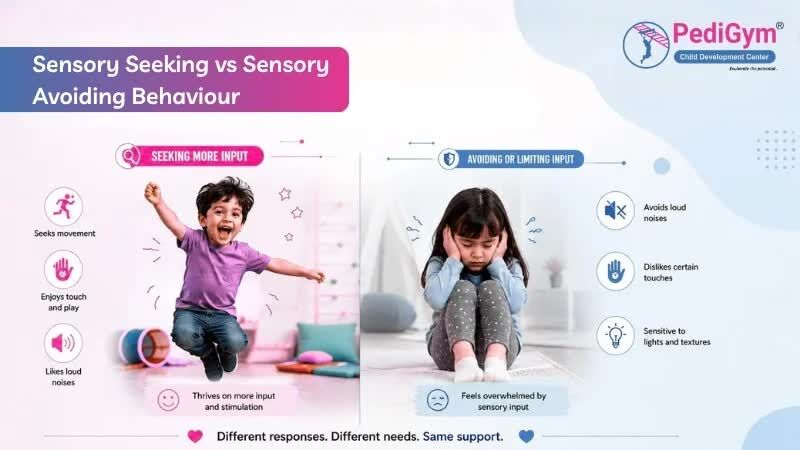
Sensory seeking and sensory avoiding describe different ways children may respond to everyday sensory experiences, and understanding these patterns can help parents respond with greater patience and support. A sensory-seeking child may look for extra movement, touch, pressure, or other sensory input by constantly climbing, jumping, spinning, crashing into cushions, chewing objects, or appearing to be constantly on the go, while a sensory-avoiding child may become overwhelmed by sounds, bright lights, crowded places, unexpected touch, certain clothing textures, haircuts, messy play, or particular food textures and may try to move away from these experiences. The blog explains that these behaviors are related to how a child’s nervous system processes sensory information and are not simply signs of poor behavior or parenting. It also highlights the eight sensory systems involved in sensory development, including the vestibular, proprioceptive, and interoceptive systems along with the five familiar senses. Importantly, children can have a mixed sensory profile, meaning they may seek some types of sensory input while avoiding others, so looking at the overall pattern is more helpful than focusing on one isolated behavior. Sensory differences can occur in children with conditions such as Sensory Processing Disorder, autism, ADHD, and developmental delays, but they can also be present in children without a formal diagnosis. Parents should consider professional assessment when sensory behaviors regularly interfere with dressing, eating, sleep, school participation, play, social activities, emotional regulation, or everyday routines. Pediatric occupational therapy can help identify a child’s individual sensory needs and develop personalized strategies to improve regulation, coordination, body awareness, attention, and participation. Depending on the child’s profile, support may include movement activities, climbing, jumping, pushing and pulling for sensory-seeking needs, or predictable routines, comfortable clothing, quieter spaces, and reduced sensory demands for children who become easily overwhelmed. The blog also explains the role of sensory integration therapy and sensory diet activities, emphasizing that these should be personalized according to the child’s needs rather than applied as a one-size-fits-all solution. Early support can help children become more comfortable and confident during daily activities at home, school, and in the community.
Visit Us For More Information:-
https://pedigym.com/sensory ...Address: 382, Sector 17, Faridabad, Haryana 121007
Phone: 9873971012
Email:
[email protected]Concerned about your child’s sensory behavior? Get a professional sensory assessment and personalized guidance.