Product Overview
(i) PIR Motion Sensor Bulb: Engineered with Passive Infrared body-heat detection, making it ideal for enclosed indoor areas like bathrooms, corridors, and stairways where line-of-sight tracking prevents false triggers.
(ii) Radar Motion Sensor Bulb: Uses high-frequency microwave signals to provide 360-degree coverage across wider, semi-open environments like covered parking spaces, garages, and wide outdoor entryways.
(iii) Day/Night Photocell Sensor Bulb: Integrates an ambient light sensor that keeps the motion trigger dormant during bright daylight hours, ensuring zero electricity waste when natural light is present.
(iv) Retrofit B22 & E27 Socket Bulbs: Universal drop-in smart bulbs designed to fit standard Indian light sockets directly without requiring special wiring or internet hubs.
7 Practical Places to Use Motion Sensor Bulbs at Home
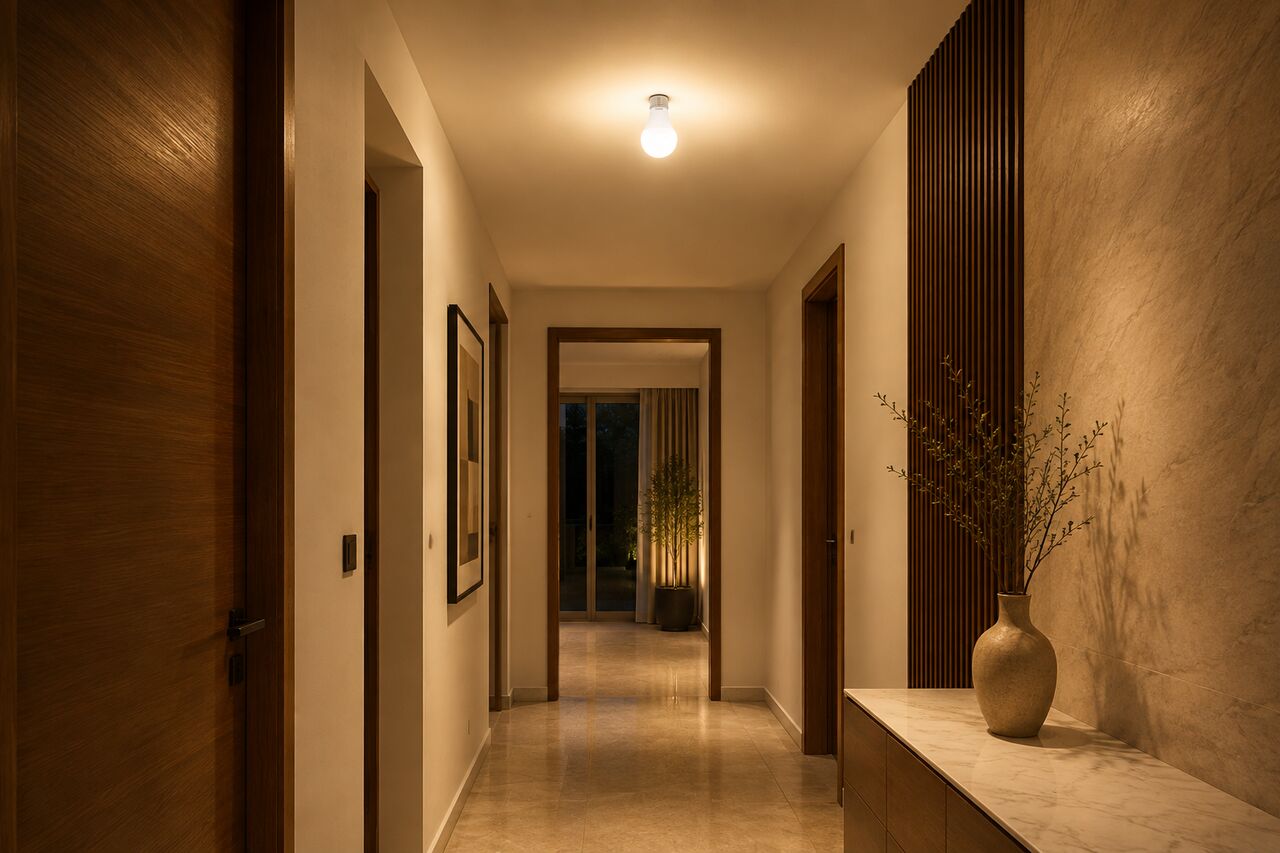
1. Building Corridors & Indoor Hallways
Why It Works: Hallways are transitional zones where people walk through for just a few seconds, yet lights are routinely left running 24/7.
The Benefit: A PIR motion sensor bulb detects movement as soon as someone enters the corridor, providing bright illumination along the path and switching off 60 seconds after the hallway is clear.
2. Staircases & Landings
Why It Works: Navigating stairs in low-light conditions while carrying items presents a constant safety hazard.
The Benefit: Automated bulbs light up steps instantly as you approach, offering hands-free safety that prevents dangerous stumbles without needing to hunt for wall switches.
3. Covered Balconies & Verandas
Why It Works: Leaving balcony lights burning continuously draws unwanted insects and wastes electricity overnight.
The Benefit: A Day/Night motion sensor bulb stays off during daylight hours and illuminates automatically only when you step onto the balcony at night, while also acting as an active deterrent against intruders.
4. Bathrooms & Powder Rooms
Why It Works: Bathrooms are one of the most common places where family members or guests forget to flip off light switches.
The Benefit: Installing a motion sensor bulb for home bathrooms provides total hands-free convenience—which is far more hygienic since nobody needs to touch wall switches with wet or unwashed hands.
5. Kitchen Utility & Pantry Areas
Why It Works: Entering a kitchen pantry or laundry nook with hands full of groceries or cooking trays makes manual light switches frustrating to operate.
The Benefit: The bulb lights up the space immediately upon entry, giving you complete visibility without forcing you to set down heavy containers.
6. Covered Parking Bays & Garages
Why It Works: Carports and parking spaces require maximum visibility when vehicles pull in or park, but require zero illumination when vacant.
The Benefit: Microwave radar sensor bulbs detect incoming vehicles or pedestrians from a wider distance, flooding the parking bay with light only while movement is present.
7. Main Entryways & Front Porches
Why It Works: Returning home in total darkness makes finding keys and unlocking the front door difficult.
The Benefit: Installing motion sensor lights for home entry points ensures a bright, welcoming light greets you the second you step near the door, keeping exterior entry points safe and secure.
Key Advantages of Room-by-Room Automation
(i) Drastic Energy Reductions: Stops continuous background electricity waste in rooms that remain empty for hours at a time.
(ii) Zero-Touch Hygiene & Comfort: Keeps high-contact surfaces like wall switches clean, while providing effort-free illumination when carrying groceries, laundry, or children.
(iii) Automated Intruder Deterrence: Bright lights that activate instantly upon movement startle unexpected visitors near balconies, ground-floor windows, and porches.
(iv) Extended Product Lifespan: Because sensor bulbs operate only when a space is occupied, the LED chips endure far fewer operational hours per day than traditional bulbs.
How to Select the Right Bulb for Each Location
(i) Match Sensor Type to Room Layout: Choose PIR sensor bulbs for enclosed spaces like hallways and bathrooms to avoid false triggers through walls. Use microwave radar bulbs for wide open spaces like carports.
(ii) Check the Fitting Socket: Confirm whether your ceiling fixture takes a B22 pin socket or an E27 screw base before ordering.
(iii) Verify Ambient Light Sensing: Ensure outdoor and window-adjacent fixtures use bulbs with built-in daylight sensors to prevent unnecessary daytime activation.
Recommended Resources & Next Steps
To explore complete room-by-room layout guides, read our full article on 7 Practical Places to Use Motion Sensor Bulbs at Home. Ready to automate your living space and eliminate wasted utility costs? Browse the complete line of smart lighting solutions at the Esysense Motion Sensor Bulb Collection.
Written from direct product testing and manufacturer specifications by Esysense Tech Innovations Pvt. Ltd., Noida, India. All prices, specs and model references are verified against live product listings at esysense.com. Last updated: August 2026.