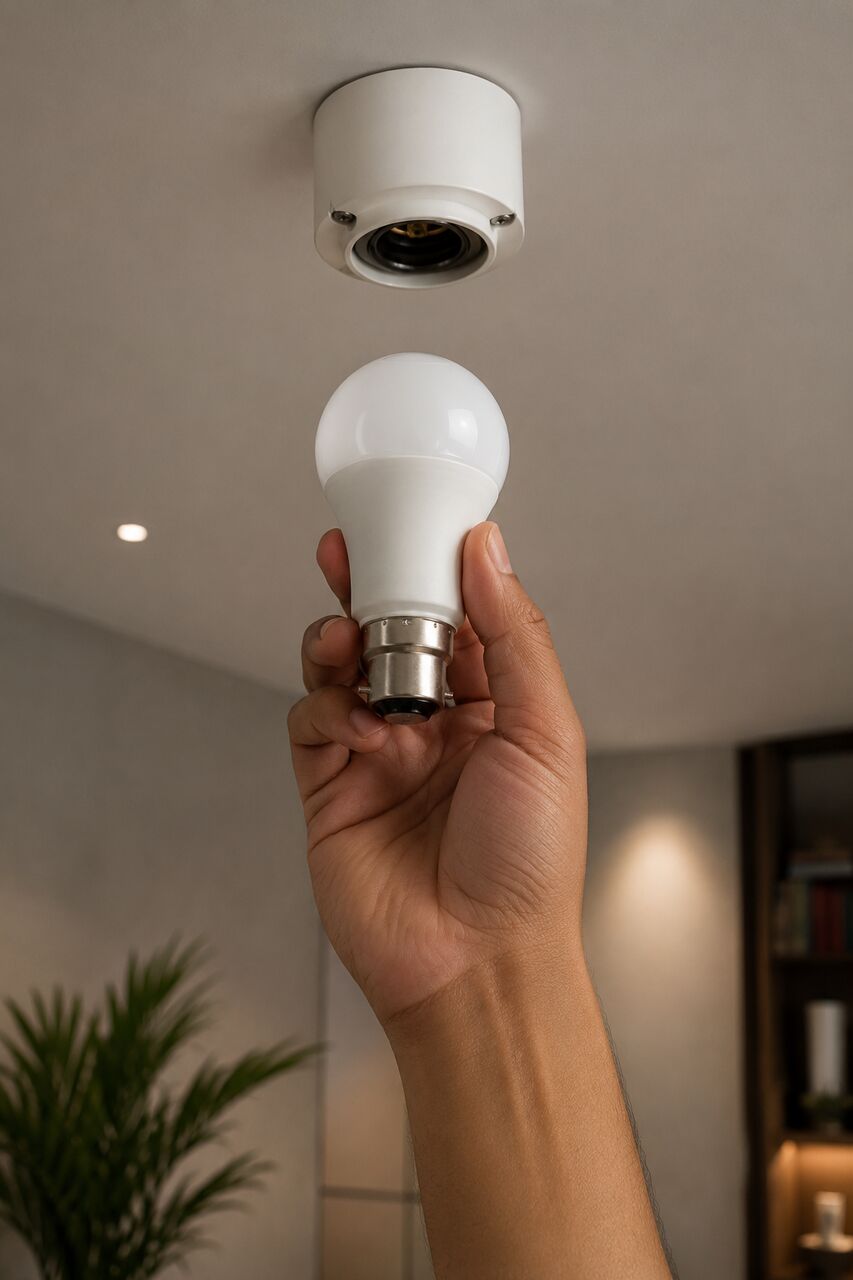
Product Overview
(i) Standard PIR Motion Sensor Bulb: Uses Passive Infrared technology to read thermal body heat, making it the top choice for enclosed indoor spaces like hallways, staircases, and bathrooms.
(ii) Radar Motion Detector Bulb: Features high-frequency microwave sensors for 360-degree detection across broader outdoor spaces, covered carports, and parking bays.
(iii) Photocell Day/Night Sensor Bulb: Combines ambient light sensing with motion detection to ensure the light activates exclusively in dark or nighttime environments.
(iv) Retrofit B22 & E27 Base Bulbs: Standard plug-and-play smart fixtures designed to screw or twist directly into standard light holders without requiring special wiring or smart home hubs.
Key Factors to Consider Before Buying a Motion Sensor Bulb
1. Sensor Technology: PIR vs. Microwave Radar
(i) PIR (Passive Infrared) Bulbs: Detect changes in infrared heat signatures emitted by human bodies or pets. Because thermal heat does not pass through solid walls, PIR bulbs are ideal for small, enclosed indoor rooms where you want to prevent false triggers from adjacent hallways.
(ii) Microwave Radar Bulbs: Emit continuous low-power electromagnetic waves to track movement. They offer wider detection angles and can detect motion through thin glass, foliage, or light rain, making them superior for open balconies and expansive parking areas.
2. Built-in Photocell (Day/Night Light Sensor)
(i) Avoid Constant Daytime Activation: Without an integrated photocell (LUX sensor), a motion detector bulb will turn on every single time someone passes by—even in broad daylight.
(ii) Dual-Condition Logic: Ensure the model you select features dual-condition intelligence, meaning the bulb activates only when motion is detected and ambient natural light falls below a dark threshold.
3. Socket Type and Physical Fixture Compatibility
(i) Base Socket Fit: Check your existing lamp holder before ordering. Ensure you select the correct fitting base, such as B22 (standard Indian bayonet pin) or E27 (Edison screw base).
(ii) Line-of-Sight Visibility: PIR sensors require an unobstructed view of the room. Avoid installing PIR bulbs inside heavy, dark, or fully enclosed glass globes that block heat signals.
4. Wattage and Light Output
(i) Small Spaces (7W to 9W): Lower wattage bulbs provide ideal illumination for compact areas such as bathrooms, pantries, stair landings, and walk-in wardrobes.
(ii) Large Spaces (10W to 12W+): Higher wattage models yield higher lumen output, making them essential for lighting up expansive carports, long corridors, and outdoor balconies.
5. Off-Delay Hold Time
(i) Preset Delays: The off-delay timer dictates how long the light remains illuminated after motion stops.
(ii) Finding the Balance: Standard timers range between 30 seconds and 2 minutes. A 30-second delay maximizes energy efficiency, while a 1-to-2 minute hold time is better for stairways and corridors to prevent unexpected shutoffs while walking.
Matching the Right Bulb to Your Room
(i) Corridors & Hallways: Opt for PIR bulbs to prevent motion outside adjacent bedroom walls from triggering the light.
(ii) Covered Garages & Parking Bays: Choose Radar bulbs to ensure incoming vehicles or pedestrians are detected from a distance.
(iii) Balconies & Porches: Select PIR or Radar bulbs with built-in Day/Night photocells to prevent daytime activation and deter nighttime intruders.
(iv) Bathrooms & Utility Rooms: Use PIR bulbs with built-in photocells for hands-free, hygienic lighting.
Key Benefits of Choosing the Right Sensor Bulb
(i) Eliminates Power Drain: Prevents lights from running 24/7 in shared or transitional spaces.
(ii) Hands-Free Safety: Eliminates fumbling for wall switches in total darkness when your hands are full.
(iii) Zero Rewiring Required: Installs effortlessly into your current light fittings within seconds.
(iv) Enhanced Intruder Deterrence: Instantly illuminates dark entry points when unexpected motion occurs near exterior doors.
Recommended Resources & Next Steps
To dive deeper into technical installation guidelines and placement tips, read our full article on What to Consider Before Buying a Motion Sensor Bulb. Ready to upgrade your home fixtures with reliable smart lighting? Explore the full range of options at the Esysense Motion Sensor Bulb Collection.
Written from direct product testing and manufacturer specifications by Esysense Tech Innovations Pvt. Ltd., Noida, India. All prices, specs and model references are verified against live product listings at esysense.com. Last updated: August 2026.