Corporate offices face pressures that residential or retail sites rarely encounter: high staff turnover, a rotating mix of employees and contractors, shared floors inside multi-tenant towers, and regulatory expectations around protecting data rooms and server closets. A mechanical key cannot be revoked remotely, cannot log who opened a door, and cannot be time-boxed for a three-month consultant. This guide walks through what a modern corporate deployment looks like, the hardware and software decisions involved, and the compliance outcomes a well-designed system delivers.
Why Corporate Offices in the UAE Are Replacing Mechanical Locks
The Limitations of Shared Keys and Card Duplication
Shared metal keys create a security gap the moment an employee resigns: unless every key is physically collected, the risk of an unreturned copy lingers indefinitely. Credential-based platforms close that gap instantly — a departing employee's card or mobile pass is deactivated the same day, with no dependency on a physical handover.
Compliance and Audit Pressure Driving Adoption
Enterprise tenants and regulators auditing UAE offices increasingly expect a documented trail of who accessed sensitive areas such as server rooms and finance departments. A Security Access Control System produces an exportable digital log that satisfies ISO 27001 or SOC 2 evidence requests, replacing manual sign-in sheets that are easy to falsify and tedious to reconcile.
Planning an Access Control Deployment for Multi-Tenant Towers
An Access Control System Dubai office fit-out differs from a standalone building because it must coexist with base-building systems already managed by the landlord. In towers across DIFC, Business Bay, and Sheikh Zayed Road, tenant-level door hardware typically integrates with — but remains independent of — the lobby turnstiles and lift-call security the landlord already operates.
Door-by-Door Security Tiering
•Public-facing entrances versus staff-only zones versus restricted server or archive rooms
•Fail-safe or fail-secure lock configuration matched to local civil defense code
•Integration with the building's visitor and vendor management workflow
•A single consolidated platform for tenants leasing multiple floors, instead of duplicate credential databases per level
Free Zone Compliance in DIFC, DMCC, and DAFZA
Tenants operating inside free zones often need their internal access policy to align with the zone authority's own facility regulations, particularly for licensed financial or logistics operations. A platform that exports clean, per-door logs saves compliance teams from manually reconstructing records whenever a zone inspection is requested.
Biometric Access Control Dubai: Cards, Fingerprints, and Facial Recognition
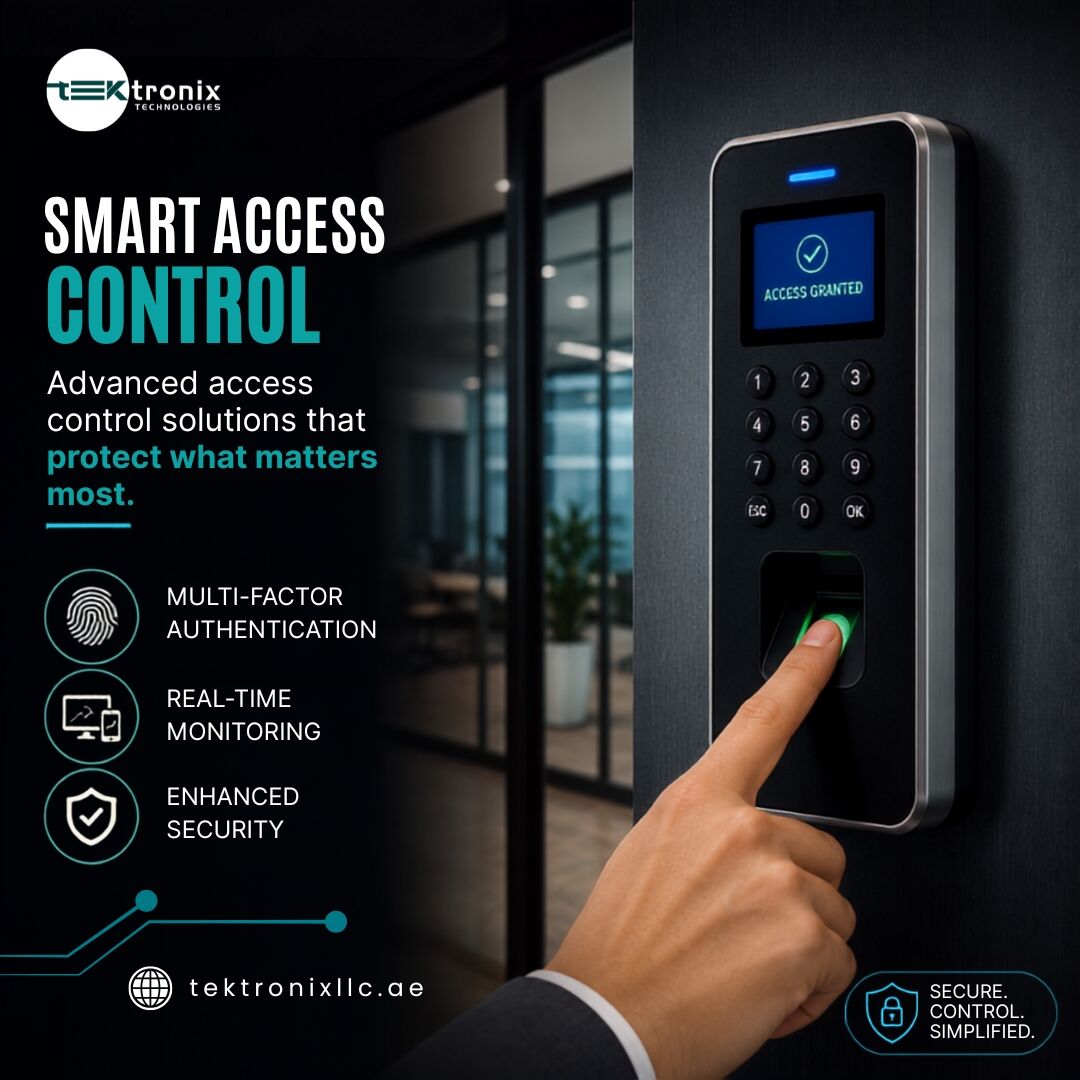
Biometric Access Control Dubai deployments have grown quickly among tenants who want to eliminate card-sharing and buddy-punching at the door. Tying access to an individual rather than a card matters most for server rooms, trading floors, and executive suites, where accountability for every entry is non-negotiable.
Core Door Access Control Hardware Explained
Door Access Control hardware at each opening includes the reader, electric lock or strike, request-to-exit sensor, and a door-position contact that reports whether a door is closed, open, or held ajar past an acceptable duration.
Electric Strikes vs. Magnetic Locks
Electric strikes suit standard office doors and integrate cleanly with existing frames, while magnetic locks are usually reserved for higher-security or glass doors needing greater holding force. The choice also affects fire-code compliance: fail-safe locks release automatically on power loss, while fail-secure locks stay locked, and the correct configuration depends on the door's role in the evacuation plan.
Choosing the Right Access Control Device for Each Door
Selecting the correct Access Control Device for a given door depends on traffic volume, security tier, and environmental exposure. A staff entrance handling hundreds of daily transits needs a fast, high-throughput reader, while a server room door prioritizes verification strength over speed.
Conclusion
A well-designed Access Control System gives UAE corporate offices credential-based security that mechanical locks cannot match. From biometric readers and reliable door hardware to convenient mobile credentials, every component works together as part of a coordinated security platform. Enterprise-grade access control solutions reduce administrative overhead while strengthening audit readiness. For offices seeking a proven access control system UAE deployment partner, Tektronix combines door-by-door security design with hands-on local deployment experience.
Access Control System
Door Access Control
Access Control Device