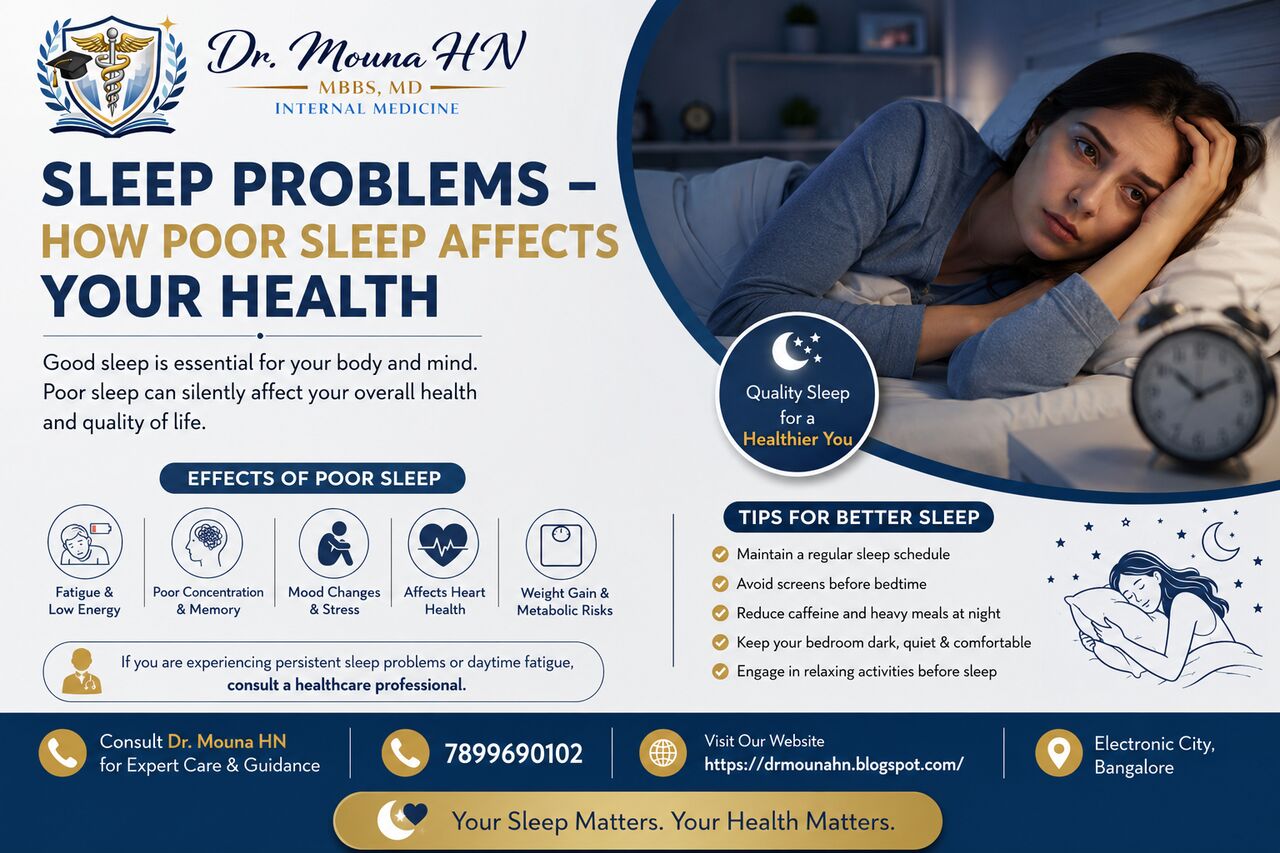
Good-quality sleep is an important part of a healthy lifestyle. Occasional sleep difficulties are common, but persistent poor sleep or inadequate sleep can affect your overall health and daily activities.
How Poor Sleep Can Affect Your Health
✔️ Daytime tiredness: Poor sleep may cause fatigue, low energy and excessive sleepiness during the day.
✔️ Concentration and memory: Inadequate sleep can affect attention, concentration, learning and memory.
✔️ Mood and emotional well-being: Poor sleep may contribute to irritability, stress and mood changes.
✔️ Physical health: Long-term sleep problems may be associated with concerns such as high blood pressure, weight gain and metabolic health problems.
✔️ Daily activities: Lack of restful sleep can affect productivity, work performance and overall quality of life.
Tips for Better Sleep
✔️ Maintain a consistent sleep and wake-up schedule every day.
✔️ Create a quiet, dark and comfortable sleeping environment.
✔️ Reduce mobile phone, television and other screen use before bedtime.
✔️ Limit caffeine, especially during the evening.
✔️ Stay physically active during the day.
✔️ Avoid heavy meals close to bedtime.
✔️ Practice relaxation activities such as deep breathing or meditation before sleep.
✔️ Get adequate exposure to natural daylight during the day.
When Should You Consult a Doctor?
✔️ If sleep difficulties continue for several weeks.
✔️ If poor sleep regularly affects your work or daily activities.
✔️ If you experience significant daytime sleepiness or persistent tiredness.
✔️ If your sleep problems are affecting your overall well-being.
Early medical evaluation can help identify possible causes of ongoing sleep problems and guide appropriate care.
Dr. Mouna HN
MBBS, MD – Internal Medicine
📍 Electronic City, Bangalore
📞 7899690102
🌐 drmounahn.blogspot.com
Better Sleep. Better Health. Better Life.