The risk grows when training records sit across spreadsheets, email threads, LMS reports, and manager notes. A company may be spending money on courses while still lacking a dependable answer to a basic question: who has completed the right training for the work they currently perform? Closing that gap requires better control over assignment, status, follow-up, and evidence of learning.
Poor training visibility turns a skills problem into a management problem
Training risk usually develops gradually. A new employee misses a course because a manager assumes HR assigned it. A certification expires without being noticed. Another employee finishes a course, but nobody checks whether the person can use the skill in practice. Each case looks small until the organization tries to compare capability across departments or prepare people for a change in responsibilities.
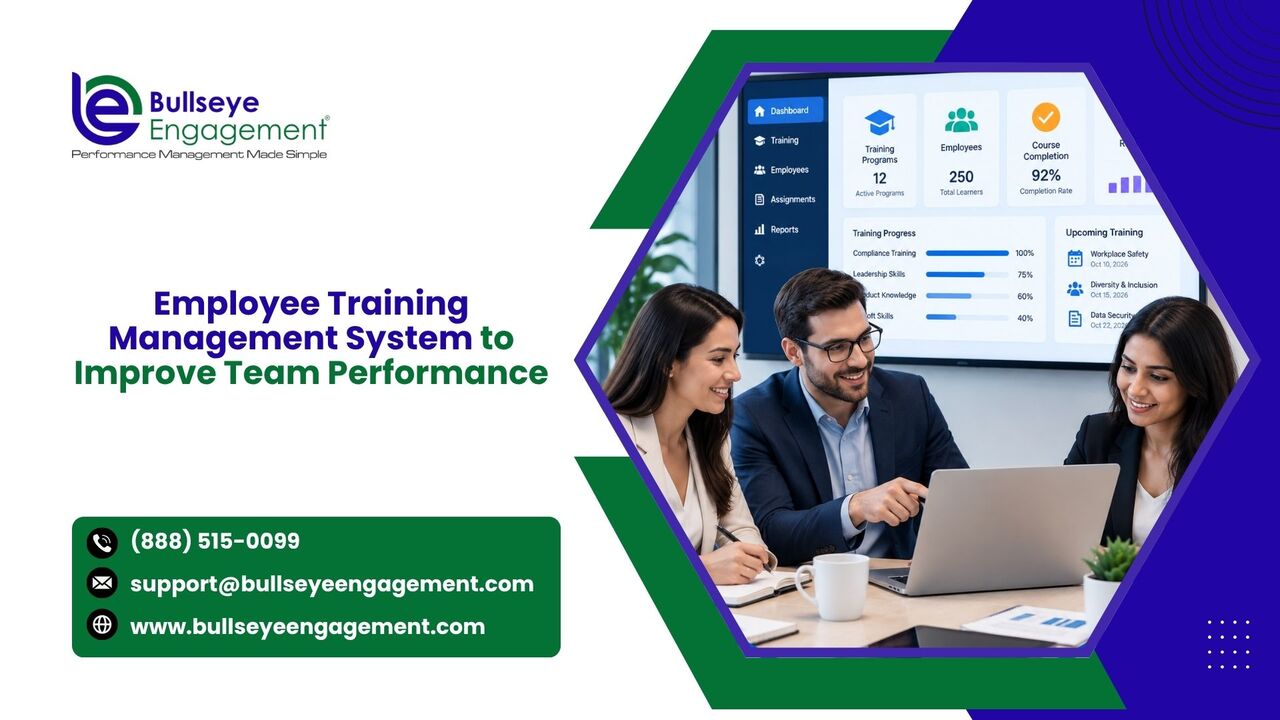
A central record reduces that uncertainty. Training Management Software can bring internal and third-party learning records into one place, giving managers a clearer view of assignment and progress. BullseyeEngagement states that its training management solution includes a central training library, progress dashboards, employee course requests, automatic assignments, and support for LMS connections.
Visibility matters because a completion record has operational value only when it can be connected to the employee, required course, due date, and current role. Without that connection, managers can see training activity without knowing whether important gaps remain.
Training exposure changes when roles, rules, or working conditions change
Training requirements aren't static. Employees move between jobs, equipment changes, policies are revised, and organizations introduce new systems. A training plan that was accurate 12 months ago may no longer match current responsibilities.
Safety requirements provide a clear example. OSHA states that many of its standards explicitly require employers to train employees on the safety and health aspects of their jobs. Its compliance guidance on training also states that required training must be presented in language and vocabulary employees can understand. Some OSHA standards expressly require retraining when workplace changes make previous instruction inadequate or when an employee no longer shows the necessary understanding or skill.
An Employee Training Management System gives HR and managers a place to connect changing requirements with current employee records. The system can help show where training has been assigned and where follow-up is still needed. That record doesn't replace managerial judgment, but it gives managers evidence they can act on.
Completion rates alone can hide the real training risk
A 100% completion rate can still leave a performance gap. Course completion confirms that an employee reached the end of an assigned activity. It doesn't automatically prove understanding, retention, or correct application at work.
This distinction also appears in workplace conduct guidance. The EEOC recommends regular training on harassment prevention and says effective training should be understandable, relevant to the workforce, repeated when appropriate, and evaluated so it can be revised. Its promising practices for preventing harassment show why employers should think beyond attendance records when deciding whether training is working.
Good Training Tracking Software therefore needs to support a wider management process. Managers should compare completion data with assessments, manager observations, certification status, and performance measures that relate to the skill being taught. A gap between completion and workplace results is a signal to inspect the course, assignment method, or follow-up process.
A practical response starts with matching courses to actual exposure
The first response should be a training inventory. HR should identify which courses are required by role, which are tied to policy or certification needs, and which support development rather than mandatory requirements. Existing records can then be checked against that inventory to find missing assignments and expired learning.
The next step is ownership. Every course category should have a person responsible for maintaining its audience rules and checking completion. Managers also need a clear process for reporting role changes that alter an employee's training needs.
Course Assignment Management can support this process by linking courses with individuals or employee groups instead of relying on one-off manual reminders. BullseyeEngagement says its system can assign training individually or in bulk and supports prerequisites and progress tracking. Those functions are useful when assignment rules are tied to job groups or development plans.
The final step is follow-up. Managers should review overdue training, repeated failures, expired certifications, and cases where performance remains weak after course completion. Those signals show where another course may be needed or where the problem lies elsewhere.
Measure whether training changes the performance signal
Training measurement should move from activity toward work outcomes where a reasonable connection exists. Useful measures can include completion within the required period, assessment results, certification status, manager-confirmed skill improvement, error rates, or role-specific performance indicators. The right measure depends on what the training was meant to change.
Gallup’s 2024 Q12 meta-analysis covered 183,806 business and work units involving 3,354,784 employees across 90 countries. It found that top-quartile engagement teams had median differences of 18% in sales productivity and 14% in productivity measured through production records and evaluations compared with bottom-quartile teams. The Gallup Q12 meta-analysis doesn't prove that training alone caused those results, but it shows why people-development measures should eventually be connected with broader team outcomes rather than judged only by course volume.
The first priority is therefore visibility. Organizations need to know what learning each role requires, who has received it, and where evidence shows that further action is needed. Once that record is dependable, training decisions can be reviewed against skills demand, workplace changes, employee performance, and current regulatory guidance.
Frequently asked questions
What does an employee training management system do?
An employee training management system keeps course assignments and employee progress in a shared record. Depending on the system, it may also support training libraries, certifications, group assignments, employee requests, and LMS connectio