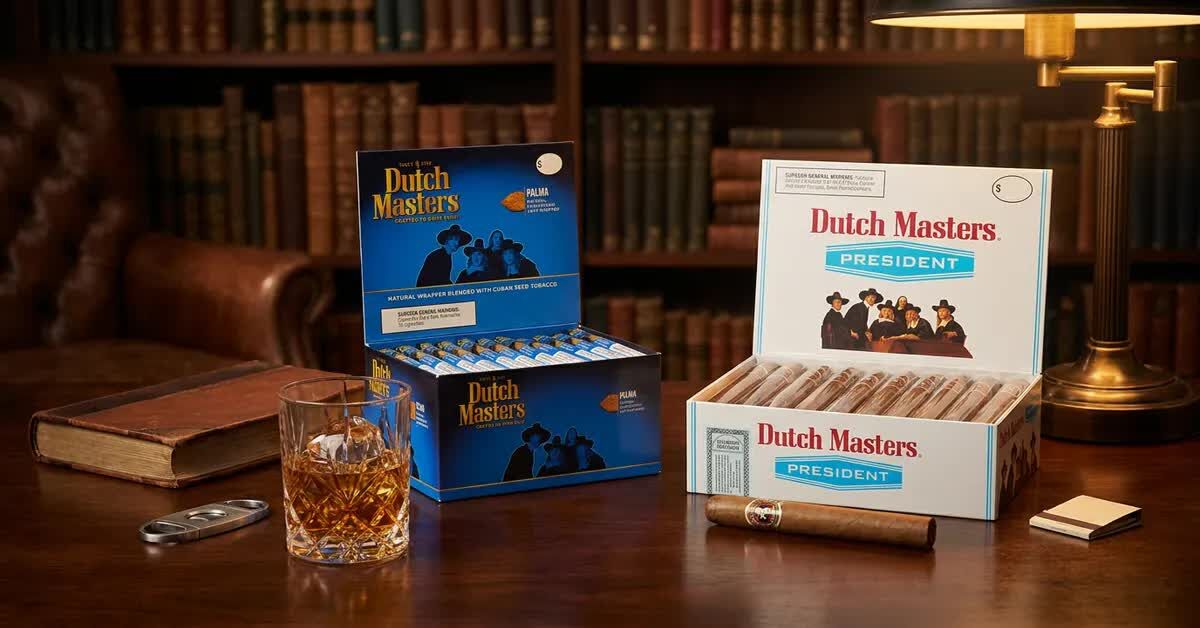
When people ask what are dutch masters cigars, they are often looking for the secret behind that specific, mild sweetness and the way the ash holds together. The answer lies in the wrapper. Unlike many high-volume brands that use Homogenized Tobacco Leaf (HTL)—essentially tobacco scraps turned into a paper-like sheet—the core of the Dutch Masters collection relies on a natural leaf wrapper. This is particularly true for their classic lines. When you hold a Palma or a Corona, you can see the delicate veins and the organic texture of the leaf. This isn't just for aesthetics; a natural leaf burns slower and tastes "cleaner" than HTL, which can sometimes carry a chemical aftertaste.
This commitment to materials is why many enthusiasts classify them as the gold standard of Machine Made Cigars. They offer a middle ground for the smoker who appreciates the craftsmanship of Natural Tobacco Leaf Cigarillos but wants the price point and reliability of a machine-rolled product. Even as the industry shifts toward modern infusions, the brand has kept its heritage alive by offering products like Dutch Leaf Pure Tobacco, which caters to those who want nothing but the taste of the plant itself. It’s this blend of Caribbean Basin Cuban-Seed tobacco and high-quality wrappers that has kept the "Dutches" relevant for over a century.
Dutch Masters Cigar Sizes Explained: Palma vs. Corona vs. President
Choosing the right size is about more than just how much time you have; it’s about the ratio of the wrapper to the filler. In the world of dutch masters cigars, the "ring gauge" (the diameter) stays relatively consistent across the larger formats, but the length varies wildly. This affects the temperature of the smoke. A longer cigar, like the President, allows the smoke more time to cool as it travels through the tobacco, whereas a shorter cigarillo provides a more immediate, concentrated punch of flavor. Understanding these dimensions helps you match the cigar to the occasion.