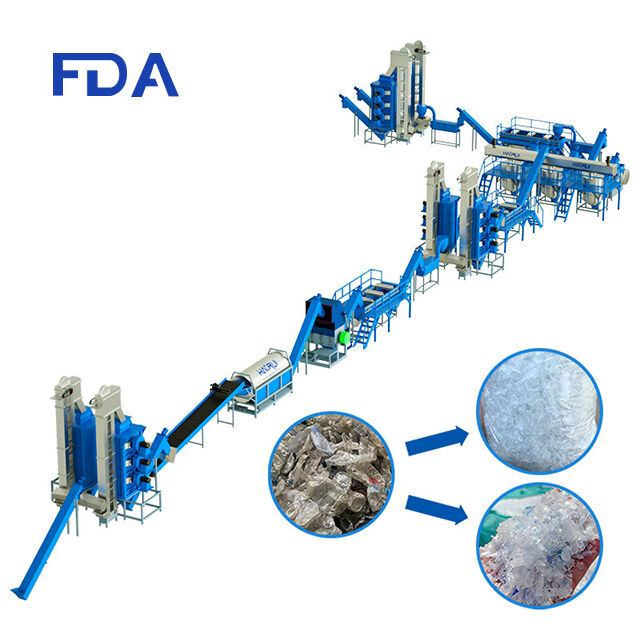
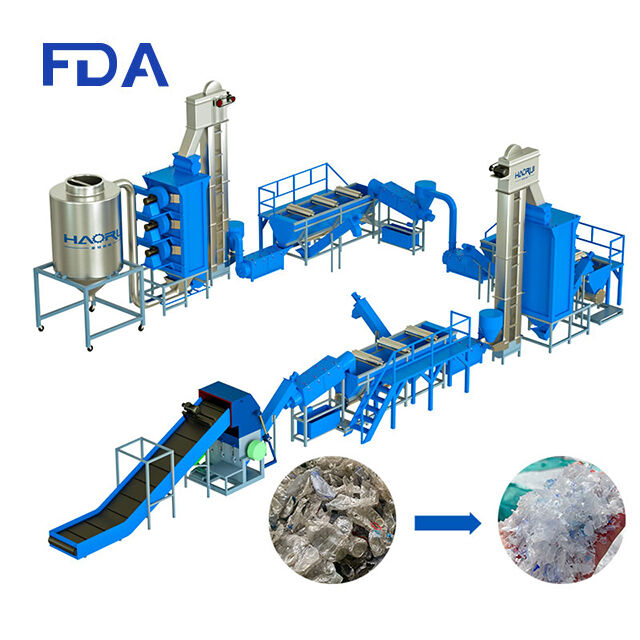
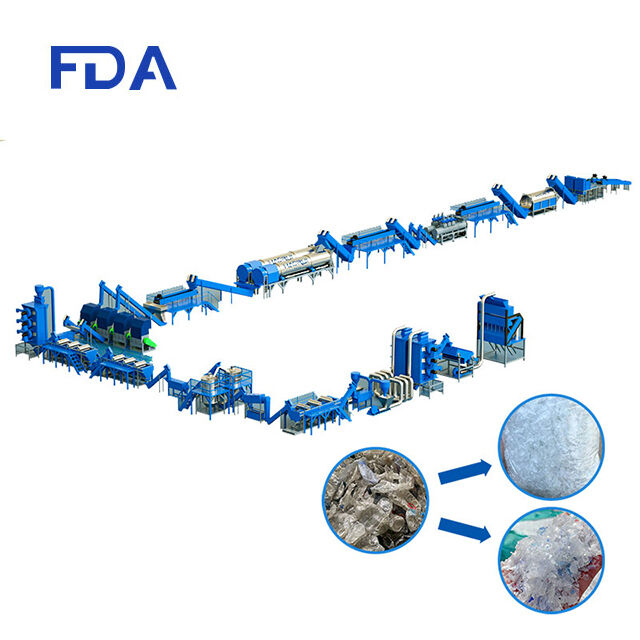
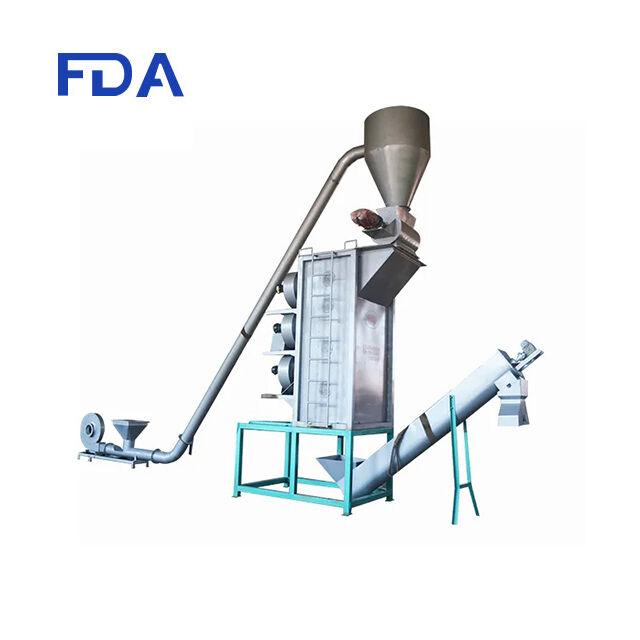
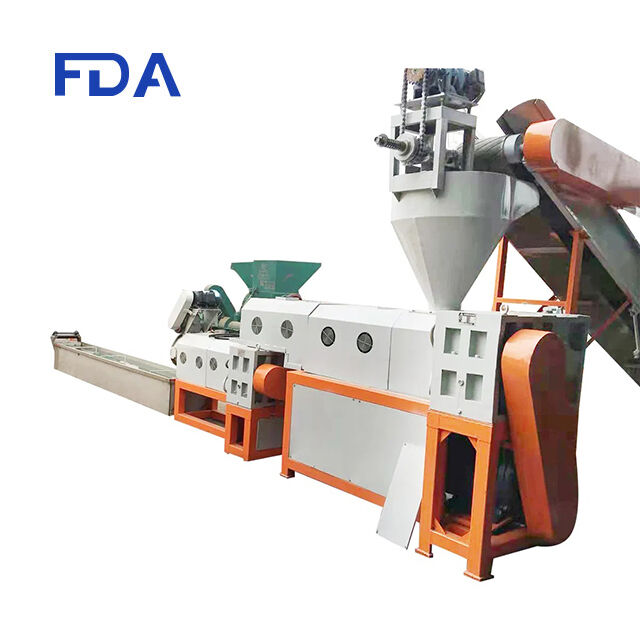
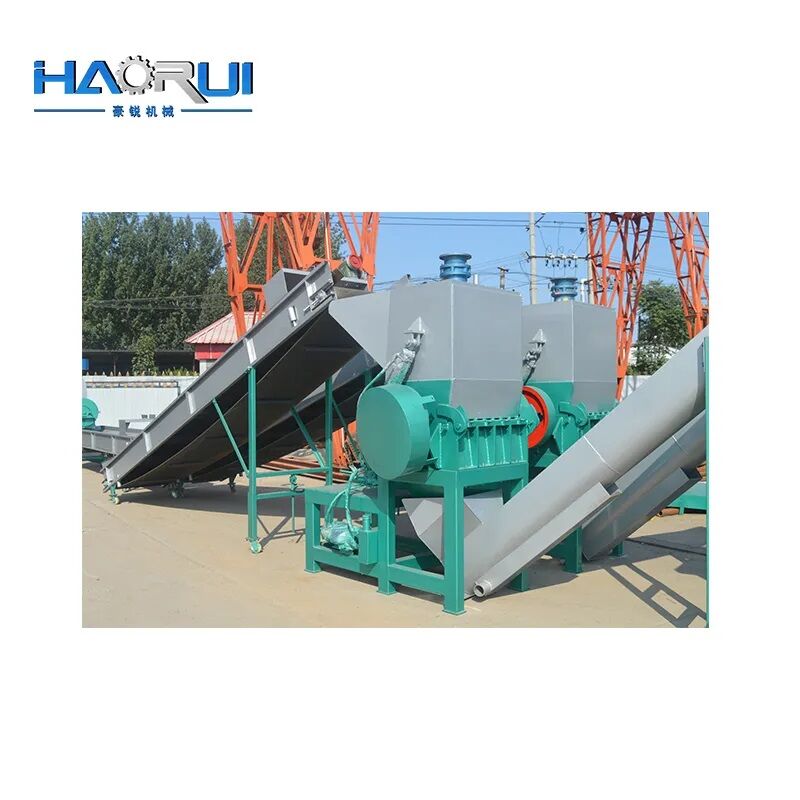
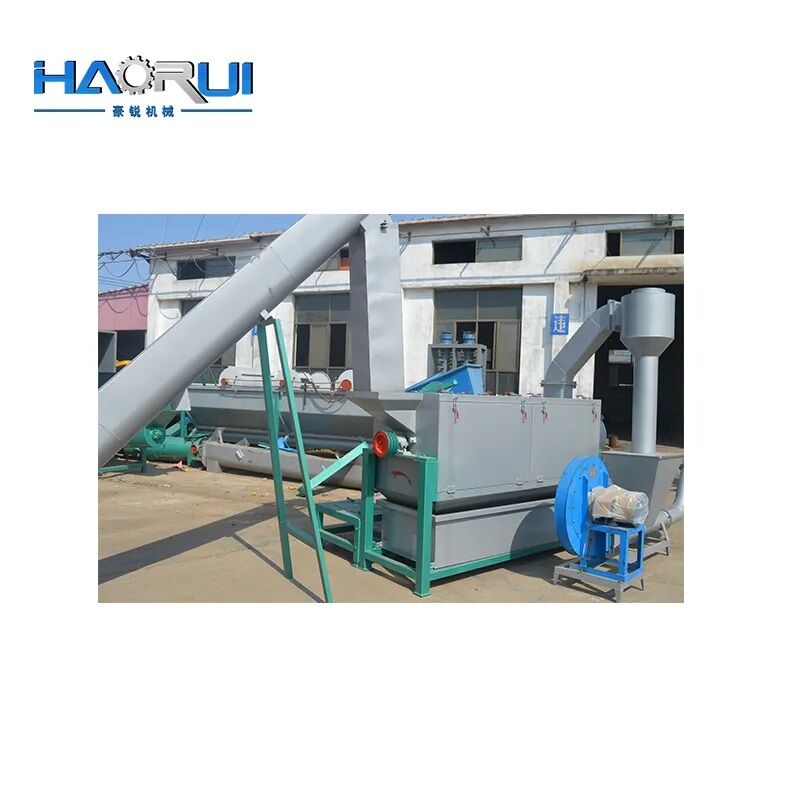
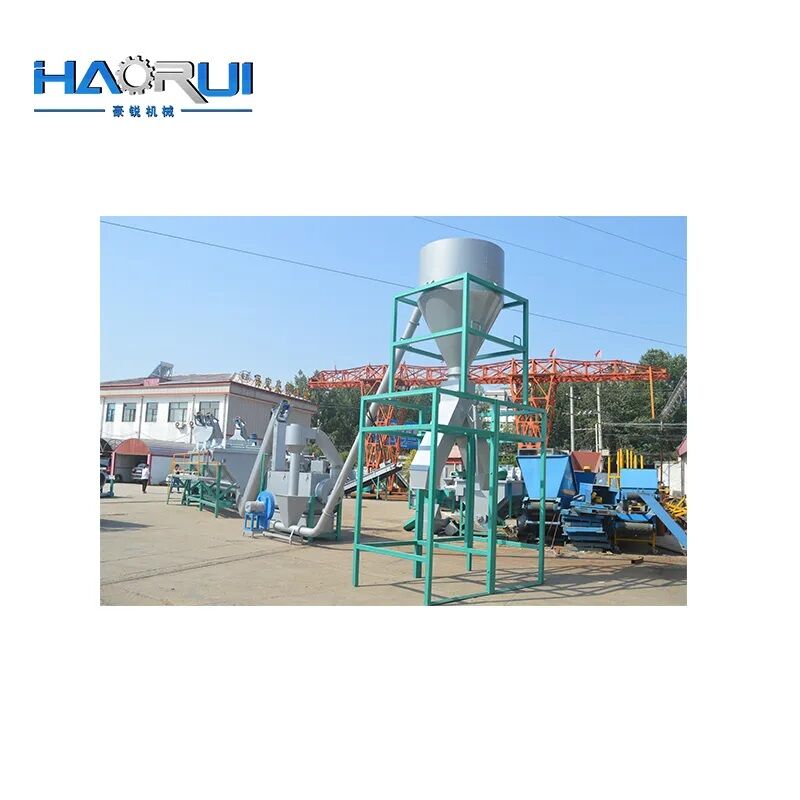
The food grade pet bottle washing recycling line is an integrated B2B food grade cleaning system designed to process post-consumer and post-industrial pet bottles into clean,high-quality recycled PET flakes.The line combines automated feeding,bottle opening,sorting,crushing,washing,drying,and material separation to improve production efficiency while reducing manual labor and operating costs.
Built for high-volume B2B recycling operations,the food grade pet bottle cleaning system is suitable for recycling facilities,pet bottle manufacturers,packaging companies,waste management providers,and plastic processing plants.Its hygienic,durable construction and food-grade processing configuration support the production of recycled pet feedstock for demanding downstream applications.
Note:The washed pet flakes produced by this pet bottle washing line may require additional advanced purification,decontamination,extrusion,and certification processes before they can be used in direct food-contact applications.
Key Features
Fully Automatic Feeding System
- Automatic bale or loose-bottle feeding
- Continuous material transfer throughout the production line
- Reduced dependence on manual handling
- Stable feeding speed for consistent processing capacity
- Optional conveyor systems, bale breakers, and bottle debaling equipment
- Integrated metal detection and foreign-material removal options
High-Efficiency PET Bottle Recycling
The food grade B2B pet bottle washing line is engineered specifically for pet bottle recycling and can process a wide range of post-consumer bottle materials,including:
- Transparent PET bottles
- Colored PET bottles
- Beverage bottles
- Mineral water bottles
- Juice and soft drink bottles
- Food and household product containers
- Post-industrial PET bottle scrap
Depending on the configuration,the food grade pet bottle recycling line can separate bottles by color,remove non-pet materials,and produce uniform pet flakes for reuse in fiber,strapping,sheet,injection molding,and other recycling applications.
Food-Grade Processing Configuration
For applications requiring high cleanliness and low contamination,the FDA approved food grade pet bottle recycling machine can be equipped with food-grade contact components and enhanced washing technology,including:
- Stainless steel washing tanks and contact surfaces
- Hygienic piping and drainage design
- High-temperature hot washing
- Detergent-assisted contaminant removal
- Multiple rinsing stages
- Advanced label, cap, ring, and adhesive separation
- Reduced risk of cross-contamination
- Easy-access inspection and cleaning points
Food-grade configurations are intended to help remove oils,beverages,labels,adhesivesdirt,and other contaminants commonly found on used pet bottles.
Multi-Stage Washing Process
The complete food safe pet bottle washing machine may include several treatment stages to achieve high material cleanliness:
1. Pre-Sorting and Debaling
Removes large foreign objects and prepares compressed or loose bottles for processing.
2. Bottle Opening and Label Removal
Separates bottles from packaging materials and removes a significant portion of labels before size reduction.
3. Wet or Dry Crushing
Reduces whole bottles into pet flakes while improving material handling and washing efficiency.
4. Pre-Washing
Removes loose dirt,sand,beverage residue,and other surface contamination.
5. Hot Washing
Uses heated water and cleaning agents to loosen stubborn oils,adhesives,organic residue,and product contamination.
6. Friction Washing
Applies mechanical friction and water flow to clean the flake surface thoroughly.
7. Rinsing and Separation
Removes detergent,suspended contaminants,caps,rings,labels,and other non-pet materials.
8. Dewatering and Drying
Reduces residual moisture and prepares the pet flakes for storage or further processing.
9. Air Classification and Final Separation
Removes lightweight materials and improves flake purity.
10. Final Storage or Packing
Clean pet flakes can be transferred to storage silos,big-bag filling stations,or downstream extrusion equipment.
Main Equipment Components
A typical automatic food safe B2B recycling machine may include:
- Automatic feeding conveyor
- Bale breaker or bottle debaler
- Pre-sorting conveyor
- Label remover
- Magnetic metal separator
- Bottle crusher or wet granulator
- Pre-washing machine
- Hot washing tank
- High-speed friction washer
- Float-sink separation tank
- Rinsing tank
- Dewatering machine
- Thermal dryer or hot-air drying system
- Zigzag air separator
- Dust removal unit
- PET flake storage hopper
- Automatic weighing and packing system
- Electrical control cabinet
- PLC and touchscreen control system
The exact food safe plastic recycling equipment configuration can be adapted to the incoming bottle quality,required output purity,production capacity,available floor space,and end-use requirements.
Operational Benefits
Improved Production Efficiency
Automated material handling and continuous processing help maintain a stable production flow.This reduces bottlenecks associated with manual feeding and enables efficient operation in large-scale plastic recycling facilities.
Reduced Labor Requirements
Automatic conveyors,sorting systems,washing units,and packing equipment minimize manual intervention.Operators can supervise the process through a centralized control system.
High Material Recovery
The food safe pet bottle cleaning system is designed to recover usable pet from mixed bottle streams while separating caps,labels,metal,dirt,and other contaminants.Properly configured systems can help reduce material loss and improve the value of recovered plastic.
Consistent Flake Quality
Controlled crushing,washing,rinsing,drying,and separation stages help produce pet flakes with consistent size,cleanliness,and moisture levels.This supports more reliable downstream processing.
Lower Water and Energy Consumption
Optional water filtration,recirculation,heat recovery,and optimized motor controls can reduce operating costs.Water-saving systems help improve the environmental performance of the plastic recycling plant.
Durable Industrial Construction
Heavy-duty frames,corrosion-resistant components,industrial motors,and wear-resistant contact parts support continuous operation in demanding plastic recycling environments.
Typical Applications for Recycled PET Flakes
Washed and dried pet flakes can be used as feedstock for:
- Recycled polyester fiber
- PET strapping
- Non-food packaging
- Thermoformed sheets
- Injection-molded components
- Plastic profiles and boards
- Extrusion products
- Recycled PET pellets
- Bottle-to-bottle recycling after additional purification and decontamination
For direct food-contact packaging,the recycled material must meet the applicable regulatory,d